Shopping Cart


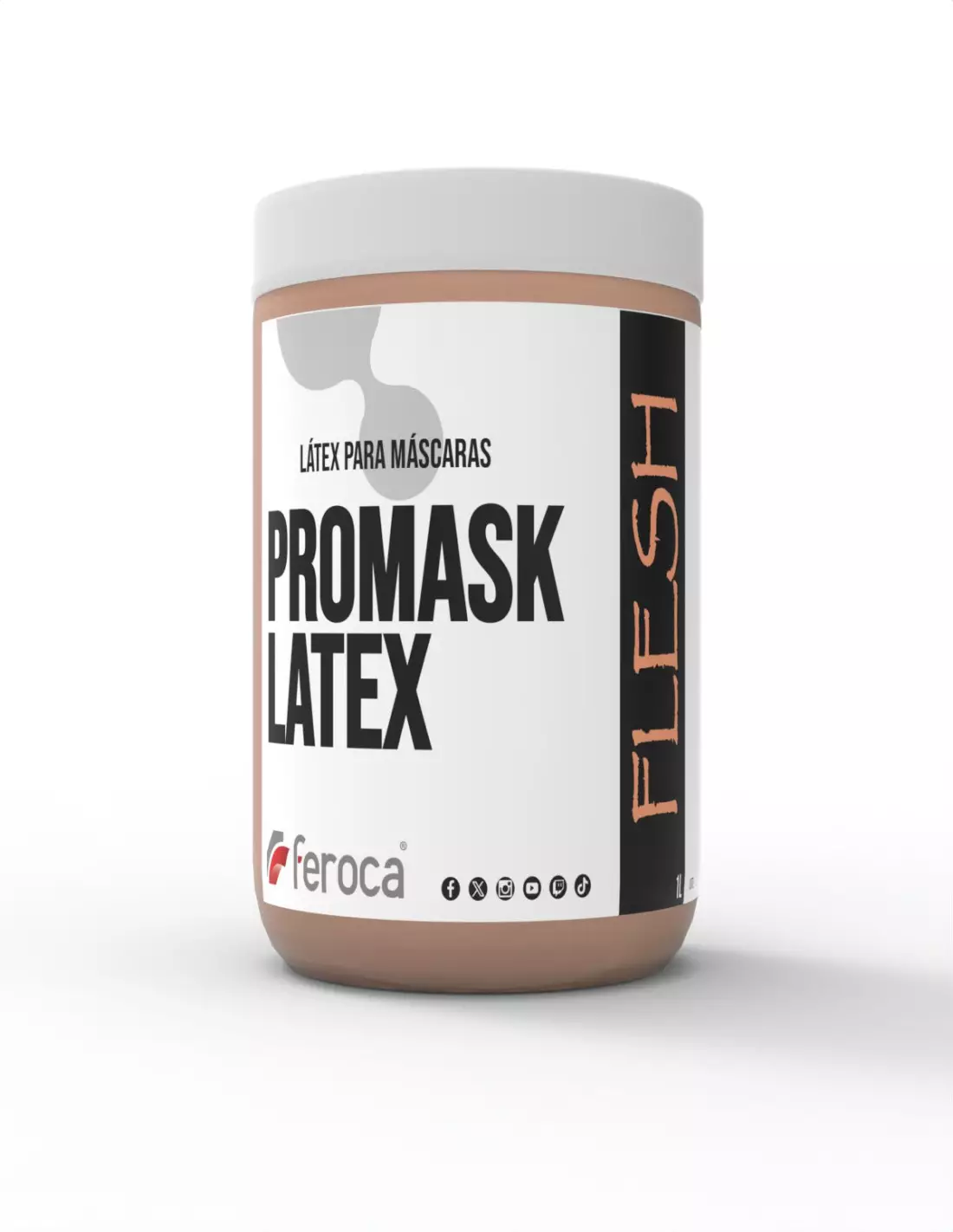
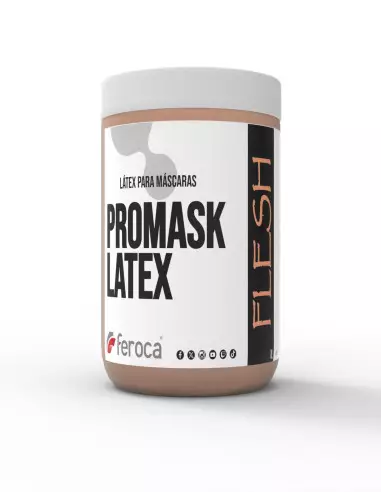
PROMASK LATEX - Latex for Masks
204462001
€15.00
18,15 € Tax incl.
18,15 € Tax incl.
Natural latex for masks and props, air-drying, brushable. Available in 4 colours. Add Permatex for maximum durability and UV protection.
PROMASK LATEX is a pre-vulcanised natural latex designed specifically for the manufacture of masks, props and prosthetics on a mould. It is applied by brush directly onto the mould, skins quickly and air-dries without the need for any additional process. Available in four shades — Natural, White, Flesh and Black — it adapts to any special effects, cosplay or theatrical production project.
Technical specifications
| Property | Detail |
|---|---|
| Material type | Pre-vulcanised natural latex |
| Cure method | Air drying (no additional vulcanisation required) |
| Application method | Brushable / layer by layer |
| Available colours | Natural, White, Flesh, Black |
| Recommended additive | Permatex (improves durability, UV resistance and anti-cracking) |
| Raw contact | Not suitable for direct contact with human skin when uncured |
| Contains | Natural latex + ammonia source |
What it is used for
PROMASK LATEX is the go-to material for making flexible special effects pieces and props. Its elasticity and ability to reproduce fine details make it especially valuable in professional and semi-professional production environments:
- Manufacturing full masks for theatre, film and cosplay
- Creating flexible props with high surface detail
- On-mould prosthetics for character make-up and special effects
- Prop pieces requiring flexibility and wear resistance
- Halloween and themed character projects
- Prototypes and decorative pieces where an elastic, durable skin is needed
How to use it
- Prepare the mould: make sure the mould is clean and dry. Apply a release agent if the mould material requires it (especially with plaster or gypsum moulds).
- First coat: apply PROMASK LATEX with a brush in a thin, even layer. Cover the entire mould surface leaving no untreated areas.
- Drying between coats: allow each coat to dry completely in air before applying the next. Time varies depending on coat thickness and ambient humidity.
- Building up coats: repeat the process for 5 to 10 coats depending on the desired thickness and strength. For more robust pieces, add extra coats in areas of tension.
- Permatex additive (optional but recommended): mix Permatex with the latex before applying to increase durability, crack resistance and UV protection.
- Demoulding: once the piece is fully cured, demould carefully by pulling the latex from the edges inward.
- Finishing and painting: the demoulded piece can be painted with latex-specific paints such as Mask Paint by Monster Makers for a professional finish.
Warning — Important safety information:
PROMASK LATEX contains natural latex and an ammonia source. Always use appropriate protection during handling (gloves and adequate ventilation). Not suitable for direct contact with human skin when uncured. Once cured and demoulded, the product can be used normally. People with latex allergies must avoid any contact with this material.
PROMASK LATEX contains natural latex and an ammonia source. Always use appropriate protection during handling (gloves and adequate ventilation). Not suitable for direct contact with human skin when uncured. Once cured and demoulded, the product can be used normally. People with latex allergies must avoid any contact with this material.
Usage tips
Control thickness with patience
The key to quality pieces is respecting the drying time between coats. Applying a new coat over a wet one creates bubbles and weak spots. Work in a well-ventilated space with a stable temperature: the latex dries faster and more evenly. In fine-detail areas, apply thinner coats with a fine-tipped brush.
Use Permatex for long-term use pieces
If the mask or prop will be subject to continuous use, sun exposure or long-term storage, adding Permatex to the latex mix from the first coats noticeably improves crack resistance and colour stability. Mix Permatex directly with the latex before applying and stir thoroughly until fully homogenised.
Choose the base colour to simplify the finish
PROMASK LATEX is available in four colours. Selecting the base shade closest to the final result reduces the number of paint coats needed in the finish. For pieces to be painted entirely, the Natural or White shade offers the best neutral base. For direct skin effects, the Flesh shade allows you to work with fewer coats of Mask Paint.
Frequently asked questions
Does mask latex need vulcanisation or additional treatment to cure?
No. PROMASK LATEX is factory pre-vulcanised. Curing happens simply by air drying, with no need for heat, UV light or any additional process. You only need to respect the drying time between coats.
How many coats are needed to get a durable mask?
Typically between 5 and 10 coats depending on the desired thickness and intended use. For occasional-use masks or decorative props, 5–6 coats are sufficient. For frequently used pieces or those that will be subjected to mechanical stress, 8–10 coats are recommended, with particular reinforcement at the edges and fold areas.
Can it be applied directly onto any type of mould?
PROMASK LATEX is compatible with plaster, gypsum, resin and other porous or semi-porous mould materials. With absorbent moulds such as plaster, it is recommended to apply a release agent or seal the mould surface before the first coat to facilitate demoulding and avoid damaging the piece.
Can the latex be painted once cured?
Yes. Once cured and demoulded, PROMASK LATEX can be painted with paints formulated specifically for latex, such as Mask Paint by Monster Makers. These paints remain flexible after drying and do not crack or peel with the movement of the piece.
Is it safe to wear the cured latex in contact with skin?
Once fully cured, the product can be used normally for its intended purpose. However, it contains natural latex, so it is not suitable for people with latex allergies. When uncured, it must not come into contact with skin. Always consult the product safety data sheet.
What is the difference between this latex and liquid latex for moulds?
PROMASK LATEX is formulated specifically for making masks and special effects pieces, with properties optimised for brush application in layers and a finer skin finish. Liquid latex for moulds is aimed primarily at making flexible moulds for reproduction. Both are natural air-drying latexes, but with different viscosities and characteristics depending on their application.
How long does each coat take to dry?
Drying time depends on coat thickness, temperature and ambient humidity. Under normal conditions (around 20–22 °C and moderate humidity), a thin coat dries in 15–30 minutes. In humid environments or with thicker coats, it may take longer. You can speed up the process with a fan at room temperature, but avoid excessive heat which could cause bubbles.
What colours are available and which should I choose for my project?
PROMASK LATEX is available in four colours: Natural, White, Flesh and Black. For pieces to be painted entirely, White or Natural are the best base. The Flesh shade is ideal for prosthetics or skin masks with minimal paint finishing. Black is useful for dark pieces or to reduce the number of paint coats in dark finishes.
No reviews
Tap to zoom