Shopping Cart



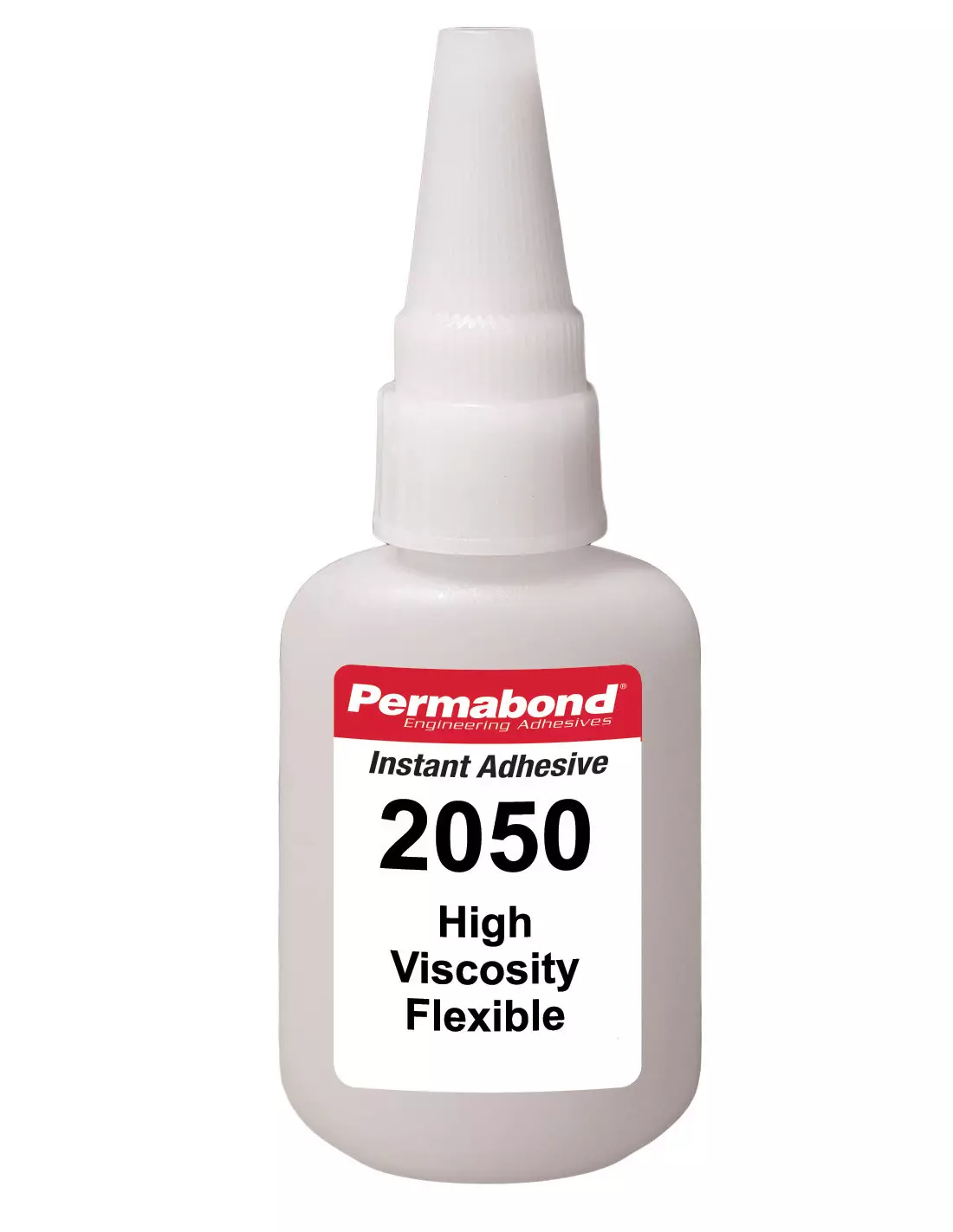
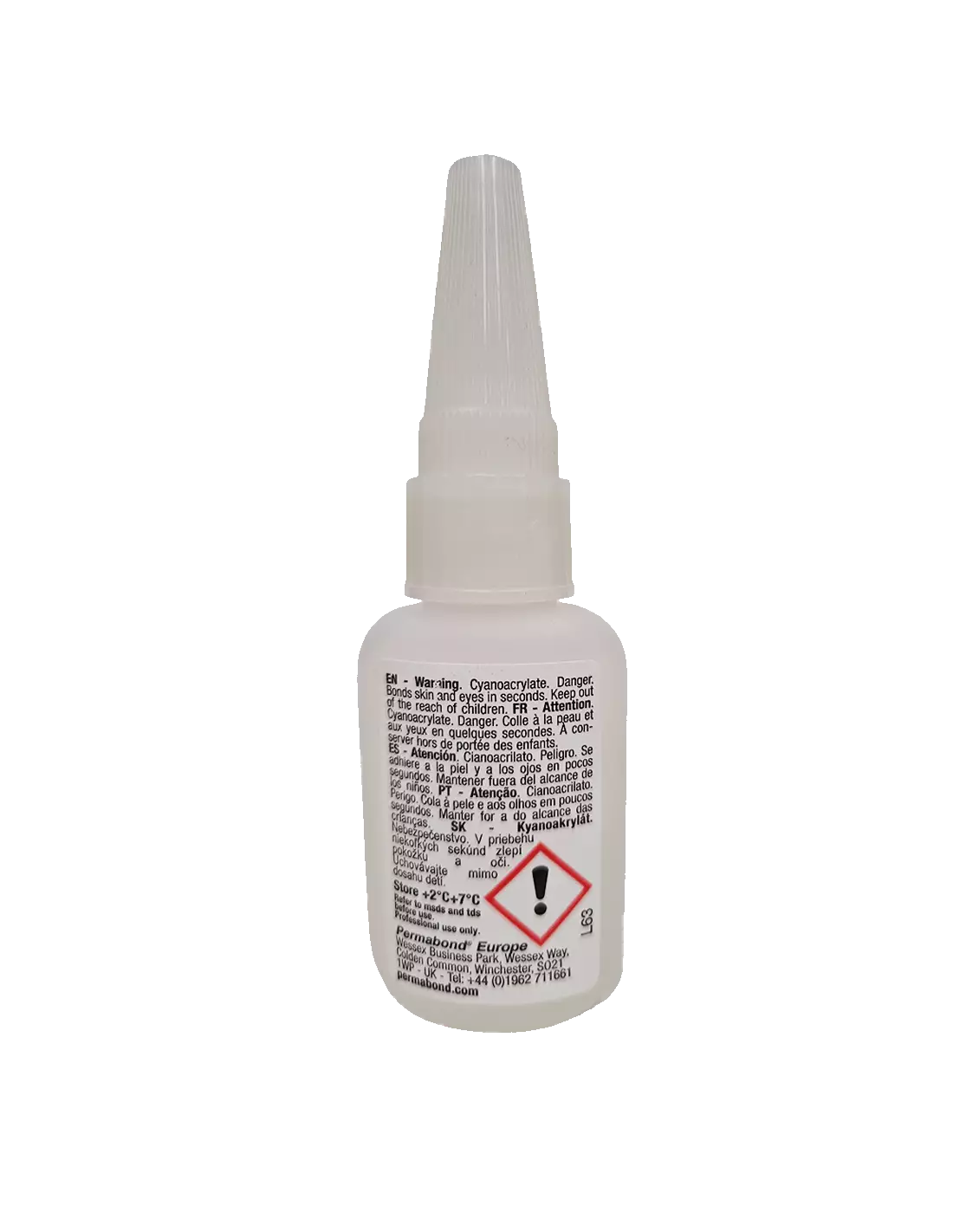
PERMABOND 2050- Semi-Flexible Cyan
406200000
€17.50
21,18 € Tax incl.
21,18 € Tax incl.
Semi-flexible cyanoacrylate 85D. Cure in 10–15 s, full strength in 24 h. Ideal for dynamic joints, vibration and dissimilar materials. 20 g.
Permabond 2050 is a semi-flexible cyanoacrylate adhesive with 85D hardness, designed for joints that must absorb impact, vibration and thermal cycling without cracking. It combines the fast cure speed characteristic of cyanoacrylates (10–15 second working time) with flexibility superior to standard grades, making it the right choice when the bond will work under dynamic conditions or between substrates of very different natures.
Technical specifications
| Parameter | Value |
|---|---|
| Type | Semi-flexible cyanoacrylate |
| Shore Hardness D | 85D |
| Working time | 10 – 15 seconds |
| Full cure | 24 hours |
| Gap filling | Superior to standard cyanoacrylate |
| Compatible surfaces | Plastics, rubbers, metals, leather, technical fabrics, semi-porous materials |
| Content | 20 g |
What it is used for
Permabond 2050 is designed for applications where the adhesive joint cannot be completely rigid. Its key advantage over a conventional cyanoacrylate is the ability to yield slightly under dynamic stress without losing cohesion, which extends the service life of the bond in demanding environments. It is particularly well suited for:
- Bonding flexible substrates such as rubber, neoprene or vulcanised silicone
- Adhering dissimilar materials: metal-to-plastic, plastic-to-rubber, leather-to-metal
- Repairs on parts subject to continuous vibration (automotive, machinery, sports equipment)
- Assemblies that experience thermal shock or repeated temperature cycles
- Special effects and FX prosthetics applications where the joint must move with the skin or base material
- Footwear and technical leather goods industry
- Electronics and components requiring an adhesive with vibration-damping capability
How to use it
- Prepare the surfaces: clean and degrease both surfaces to be bonded. Remove dust, oil or moisture with a suitable solvent and allow to dry completely.
- Check the fit: verify that the parts fit together correctly before applying the adhesive. The working time is very short and there is no margin for repositioning.
- Apply the adhesive: apply a thin, even layer to one of the two surfaces. With Permabond 2050 it is not necessary to apply to both sides; one drop per 6–10 cm² is sufficient.
- Join the parts: bring both surfaces together immediately and apply firm, steady pressure for 10–15 seconds.
- Hold in position: although initial fixture occurs within seconds, avoid subjecting the joint to significant stress for at least 1 hour.
- Full cure: maximum strength is reached at 24 hours at room temperature. In cold environments or low humidity, curing may be slower.
- Storage: close the bottle after each use, store upright in a cool, dry place away from direct light.
Caution: cyanoacrylate adhesives bond instantly to skin and mucous membranes. Work with nitrile gloves and in a well-ventilated space. In case of eye contact, rinse with plenty of water and seek medical advice. Do not inhale vapours generated during curing. Keep out of reach of children.
Usage tips
Control the amount of adhesive
The usual temptation with cyanoacrylates is to apply too much. With Permabond 2050, less is more: a thin layer ensures even curing and a stronger bond. Excess adhesive slows curing, creates visible white marks around the joint (blooming effect) and can weaken the bond by creating zones of uneven thickness. If you are working on porous or slightly rough materials, a slightly larger amount helps fill irregularities, but do not overdo it.
Humidity accelerates curing, cold slows it down
Cyanoacrylates cure by reaction with ambient and surface moisture. On dry days or in heavily heated spaces, initial curing may take longer than the 15 seconds stated. If you need to speed up the process, you can slightly dampen one of the surfaces with a barely damp cloth before applying the adhesive. Conversely, if you need a little more handling time, work in a drier environment or with surfaces at a lower temperature.
Difficult substrates: low surface energy plastics
Polypropylene (PP), polyethylene (PE) and PTFE have very low surface energy and cyanoacrylates do not wet them well without prior treatment. For these substrates, a surface activator or flame or plasma treatment significantly improves adhesion. In the case of very soft rubbers or vulcanised silicones, bonding is possible but it is advisable to run a prior test before production use, as the semi-flexible formulation of the 2050 is the most suitable in the cyanoacrylate range for this type of substrate.
Frequently asked questions
How does a semi-flexible cyanoacrylate differ from a standard one?
A standard cyanoacrylate cures to form a rigid joint that is brittle under repeated impacts or flexing. Permabond 2050, with 85D hardness, has a modified polymer chain that allows it to yield slightly under dynamic stress without fracturing. This translates into greater peel resistance, better performance under vibration and a longer service life in bonds on flexible or dissimilar substrates.
Can I use it on rubber or neoprene?
Yes. Permabond 2050 is particularly well suited for elastomeric substrates such as natural rubber, neoprene or EPDM. Its semi-flexible formulation follows the movement of the substrate and prevents fatigue debonding that would occur with a rigid cyanoacrylate. It is recommended to clean the surface thoroughly and, if the rubber has factory release agents, degrease it with solvent before applying.
How long do I have to reposition the parts after bonding?
The working time of Permabond 2050 is 10 to 15 seconds. After that time, initial fixture has already taken place and moving the parts will break the joint. Cyanoacrylates are not designed for repositioning: once the parts are joined, maintain pressure and do not attempt to correct the position. If you need to reposition, use a contact adhesive or a slower-curing adhesive suited to the application.
Does it resist heat and cold?
Permabond 2050 offers temperature resistance superior to that of standard cyanoacrylates, making it suitable for applications with thermal cycling. For the exact service temperature limits of your specific application, consult the Feroca technical team.
Does it work on surfaces with gaps or poor fit?
Yes, Permabond 2050 has a gap-filling capability superior to that of a standard-viscosity cyanoacrylate. This makes it suitable for rough, porous or slightly irregular surfaces. However, for very large gaps it is advisable to use a two-component adhesive or a structural epoxy, as no cyanoacrylate is designed to fill gaps of several millimetres.
Can I use it in prosthetics or special effects applications on skin?
Permabond 2050 is used in the special effects and FX prosthetics sector to bond vulcanised silicone parts or other flexible materials to each other or to supports. For bonding prosthetics directly onto human skin, specific medical-grade adhesives are available; Permabond 2050 is suitable for fabrication and assembly of the pieces, not as a dermal adhesive for direct use on skin.
How do I remove excess adhesive or debond a joint?
Cured cyanoacrylate can be softened with acetone or with solvents specifically formulated for cyanoacrylates. Apply the solvent to the joint area, allow it to act for a few minutes and carefully separate the parts. Bear in mind that acetone can attack certain plastics and surface finishes, so always test on a non-visible area first. For skin, use warm water and soap or vegetable oil; never forcibly pull apart bonded skin.
How long does the bottle last once opened?
Once opened, shelf life depends on storage. Close the bottle tightly after each use and store upright in a cool, dry place away from moisture and direct light. Under optimal conditions, an opened bottle can retain its properties for several months. If the adhesive has gelled or flows with difficulty, it should no longer be used.
No reviews
Tap to zoom