Shopping Cart



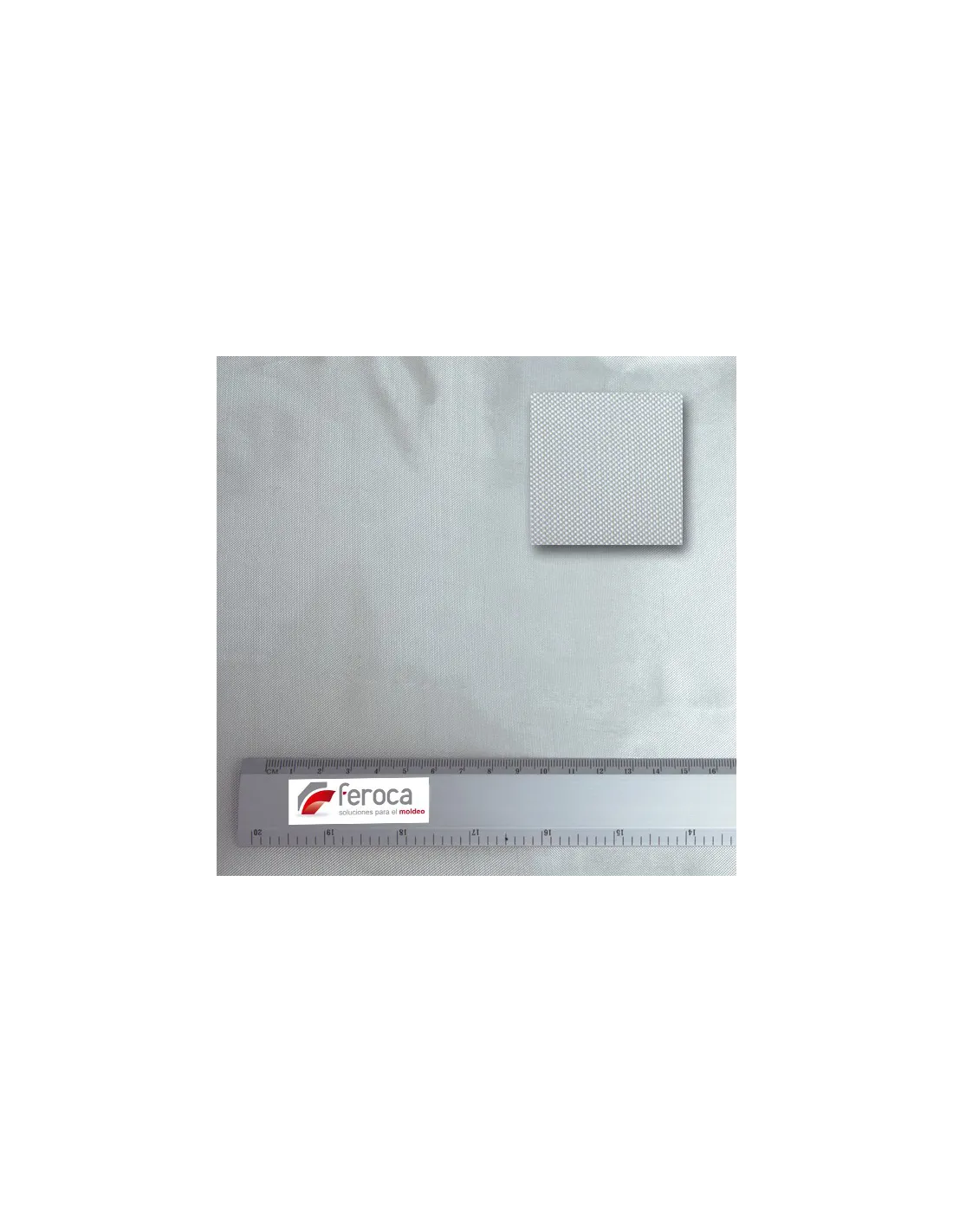
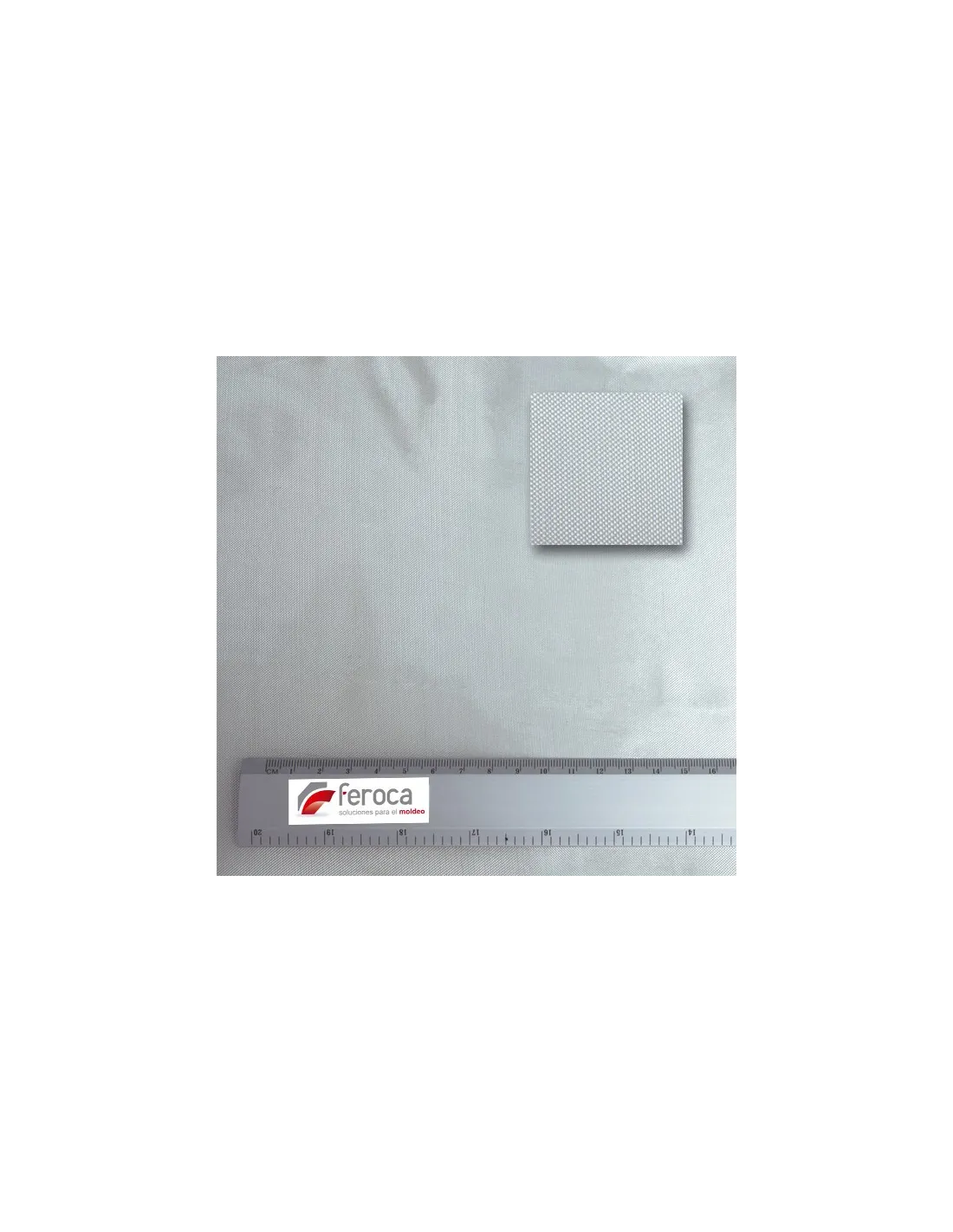
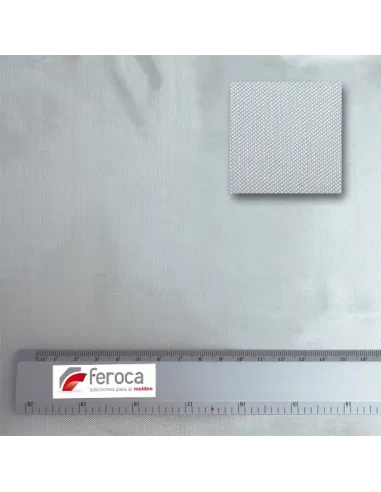
Woven Fiberglass 48 grm.
103048001
€7.50
9,08 € Tax incl.
9,08 € Tax incl.
48 g/m² fibreglass woven fabric for lightweight laminates with polyester or epoxy resin. Ideal for finishing layers and reinforcement on curved surfaces.
The 48 g/m² fibreglass woven fabric is the lightest in Feroca's fabric range, designed for finishing layers, thin reinforcements and laminates where fabric weight and transparency are the priority. Its open weave allows fast, even impregnation with polyester, epoxy or vinylester resins, integrating without generating excess thickness.
Technical specifications
| Parameter | Value |
|---|---|
| Weight | 48 g/m² |
| Reinforcement type | Fibreglass woven fabric |
| Fibre type | E-Glass |
| Compatible resins | Polyester, epoxy, vinylester |
| Main application | Lightweight laminates, finishing layers, mould shells |
What it is used for
Thanks to its low weight, this fabric acts as a transition or finishing layer within a laminate, without adding excessive stiffness or weight. It is especially useful when spot reinforcement is needed in areas of complex geometry, or when a thin sheet is required to act as a structural veil.
- Outer finishing layer in polyester or epoxy laminates to reduce visible weave texture
- Reinforcement of curved surfaces and tight angles where heavier fabrics do not conform well
- Shells and mother moulds for silicone or latex moulds in combination with heavier weight fabrics
- Fine repairs on polyester or epoxy parts where excess thickness is not acceptable
- First and last layer in multi-layer laminates to improve surface sealing
- Reinforcement of sculptures, prototypes and decorative resin parts
How to use it
- Prepare the surface or mould: clean, dry and apply release agent if the part is to be removed from the mould.
- Cut the fabric to the required size. For repair patches, cut two pieces of different sizes to stagger the transition and avoid abrupt steps in the laminate.
- Prepare the resin following the manufacturer's instructions. For polyester laminates you can use Ferpol 100BSX15, which is the standard reference for fibreglass laminates.
- Apply a first coat of resin to the surface using a brush or laminating roller.
- Place the 48 g/m² fabric onto the wet resin and press gently to ensure it sits flat, eliminating air bubbles.
- Impregnate the fabric with more resin, working the brush or roller in a single direction until the weave becomes translucent with no dry spots.
- If the laminate requires more thickness or strength, add layers of 105 g/m², 163 g/m² or 300 g/m² fabric between layers of the lightweight fabric.
- Allow to cure according to the resin's instructions. Do not handle the part before full cure.
Usage tips
Correct impregnation: key with lightweight fabrics
With low-weight fabrics like this 48 g/m², the tendency is to use too much resin, thinking more is needed for good impregnation. The opposite is true: a small amount of resin, well distributed, is sufficient. Excess resin increases weight, makes the part more brittle and can generate excessive heat during cure. The fabric should appear translucent but without pools of resin.
Position in the laminate
This 48 g/m² fabric works best as the first or last layer of the laminate. As the first layer, it integrates well with the gel coat or surface resin and improves the final appearance. As the last layer, it acts as a sealing veil that covers the weave of heavier fabrics. For the structural core of the laminate, combine it with 166 g/m² or 300 g/m² fabrics.
Cutting and handling
Always cut with sharp scissors or a craft knife on a hard surface. The 48 g/m² fabric is delicate and can fray easily at the edges if not cut cleanly. Handle it with gloves: glass microfibres are irritating to skin and mucous membranes. Work in a ventilated space and avoid inhaling dust that may be generated when cutting.
Frequently asked questions
What is the difference between a woven fabric and a fibreglass mat?
Woven fabric has oriented, interlaced fibres, which gives it greater directional mechanical strength and a better surface finish. Mat is made up of short randomly arranged fibres bound with a binder, which makes impregnation easier but offers less strength per layer. This 48 g/m² fabric is ideal when a thin, strong layer with a good finish is needed.
Which resins can I use with this fabric?
It is compatible with polyester, epoxy and vinylester resins. The choice of resin depends on the application: polyester is economical and common in general laminates; epoxy offers better adhesion, lower shrinkage and greater mechanical strength; vinylester combines properties of both and is a good option for wet or chemically aggressive environments.
How many layers of fabric do I need for a strong laminate?
It depends on the final weight the part requires and its intended use. For a mould shell or simple structural part, the usual approach is to use this 48 g/m² fabric as the first and last layer with two or more layers of 300 g/m² fabric in between. For decorative or low-stress parts, a few layers of lightweight fabric may be sufficient.
Does fibreglass dissolve with moisture or water?
No. Fibreglass does not dissolve or degrade with water. Once impregnated and cured with resin, the laminate is virtually waterproof. However, the resin can absorb moisture over time if it is not fully cured or if a resin not suited to wet environments is used.
Can I use this fabric to make a silicone mould shell?
Yes. Shells or mother moulds for silicone or latex moulds are commonly made with fibreglass and resin. In this case, the most efficient approach is to use this 48 g/m² fabric as the outer finishing layer and combine it with heavier weight fabric layers to give the structure rigidity. The shell holds the shape of the flexible mould during casting and makes it easier to handle.
Is it possible to use fibreglass fabric with acrylic resins?
Acrylic resins have a different viscosity and composition to polyester or epoxy, which can make impregnation of some fabrics difficult. For that type of resin, quadraxial fabrics that impregnate more easily are recommended. For standard laminates with polyester or epoxy, this 48 g/m² fabric works without any issues.
Can fibreglass be laminated onto flexible materials such as polyurethane rubber?
It is not recommended. Fibreglass fabrics are designed for rigid materials: they provide structural stability and strength, but on flexible materials they do not bond correctly and can delaminate. To reinforce polyurethane rubber, other techniques exist such as embedding textile fabrics within the casting.
How do I avoid bubbles when laminating with fibreglass?
Work at a stable ambient temperature (between 18 and 25 °C). Apply the resin before placing the fabric, then impregnate from the centre outwards in a single direction. Use a spike roller to burst bubbles. On complex geometries, make radial cuts in the fabric so it conforms to the shape without creases.
No reviews
Tap to zoom