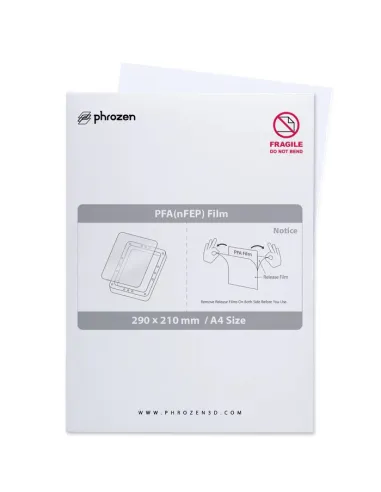
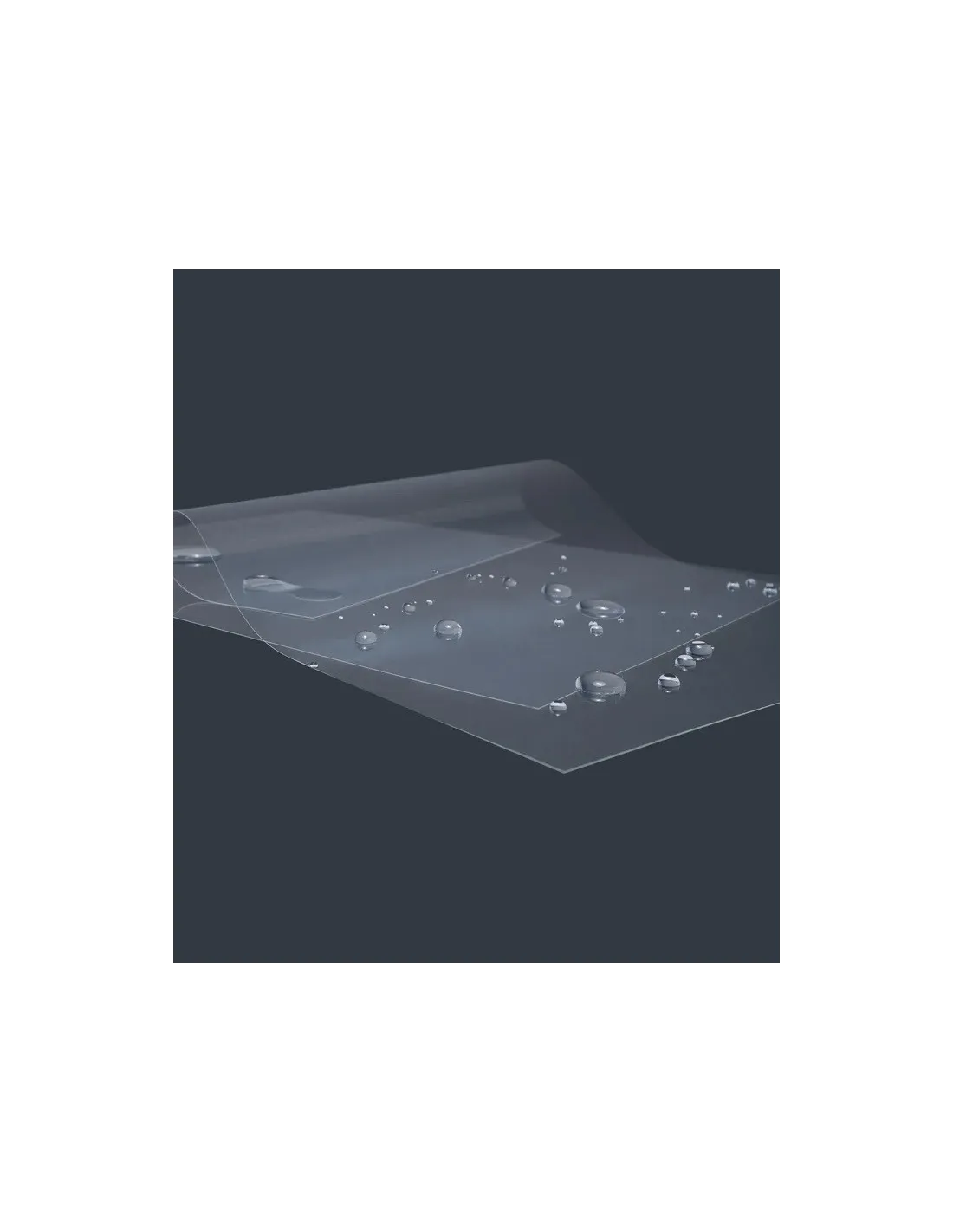
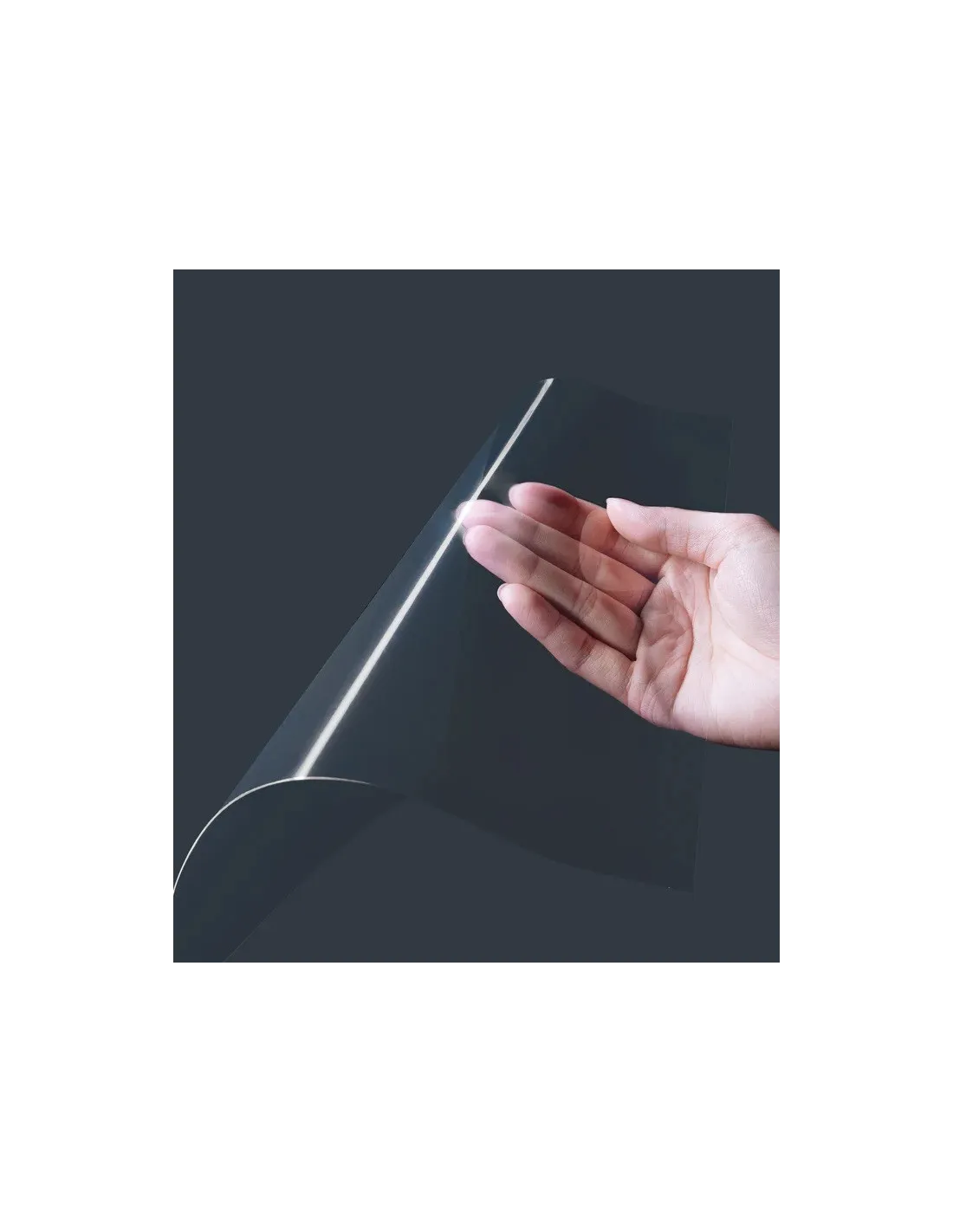
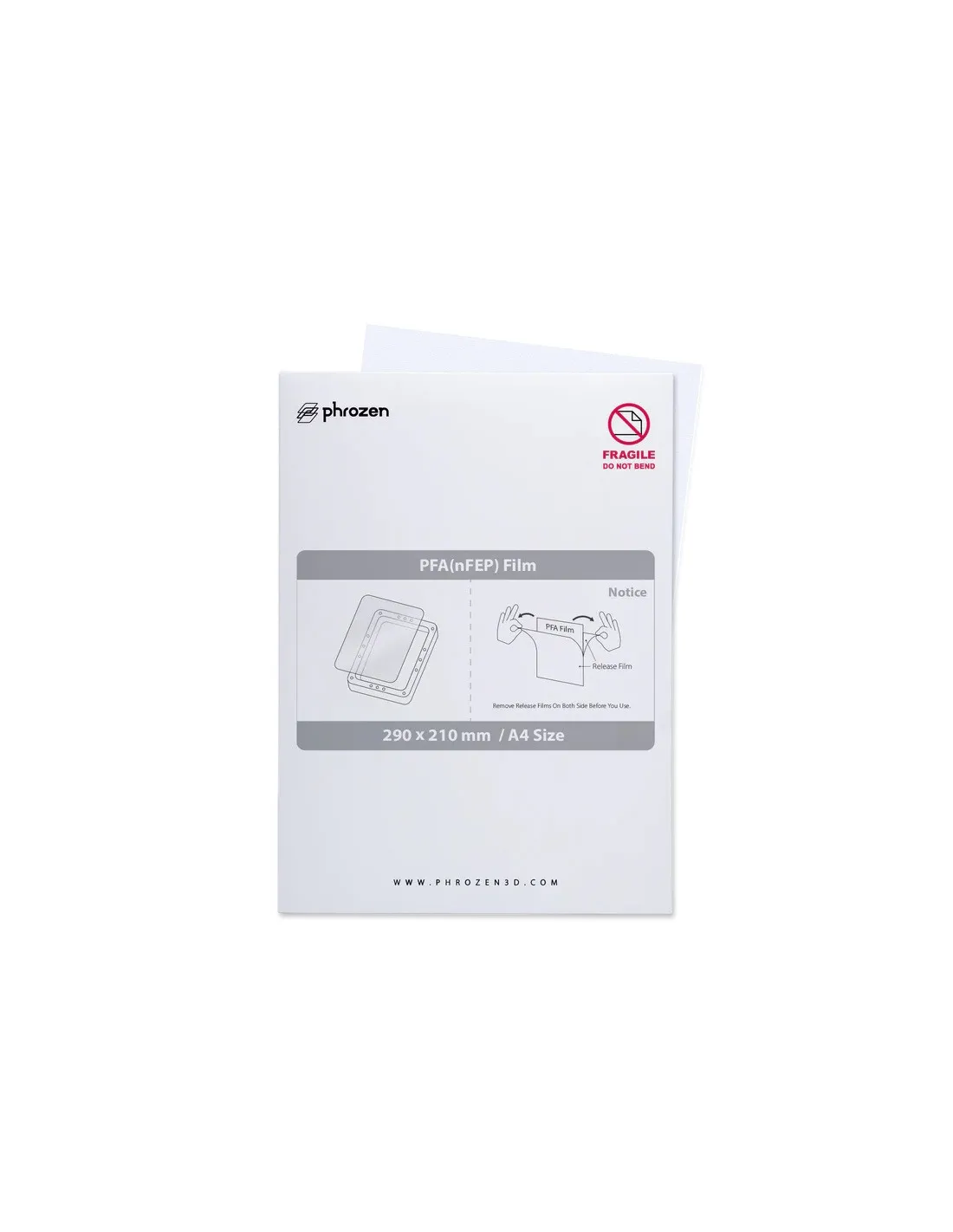
The Phrozen PFA (nFEP) film is the essential consumable to keep your resin printer in top condition. Designed to offer greater durability than conventional FEP films, it lets you print session after session with fewer interruptions and clean layer separation every time. Compatible with most A4-format Phrozen models, installation and replacement are quick and straightforward.
Technical specifications
| Parameter |
Value |
| Material |
PFA (nFEP) |
| Colour |
Transparent |
| Dimensions |
290 x 210 mm (A4) |
| Thickness |
150 microns |
| Weight |
10 g |
| Contents |
1 unit |
| Compatible models |
Phrozen Make / Make XL / Shuffle Lite / Shuffle / Shuffle XL / Shuffle XL 2019 / Shuffle 4K / Sonic / Sonic Mini / Sonic Mini 4K / Sonic 4K / Sonic Mighty 4K / <3D Sonic Mini 8K |
What it is used for
The PFA film acts as the bottom membrane of the resin vat in MSLA/LCD printers. It is the element that separates the liquid resin from the UV screen and allows each cured layer to peel cleanly towards the build platform. It replaces the standard FEP film with clear advantages in durability and ease of maintenance.
- Replacement of worn, scratched or punctured FEP film in the vat
- Improved print quality by reducing layer separation failures
- Periodic preventive maintenance of the resin vat
- Use with standard resins, ABS-Like Resin, flexible resins and high-definition 8K resins
- Installation in A4-format Phrozen printers listed under compatibility
How to use it
- Completely empty the resin vat and pour the resin back into its original container.
- Clean the inside of the vat with 99.9% isopropyl alcohol until all traces of cured or liquid resin are removed.
- Remove the screw or clamping system from the vat frame and carefully extract the old FEP/PFA film.
- Place the new PFA film centred over the frame, making sure it is taut and wrinkle-free.
- Secure the frame with the screws applying uniform tension: tighten in a cross pattern to avoid distortion.
- Visually check that the film is smooth and bubble-free before reinstalling the vat in the printer.
- Run a test print to verify correct layer separation.
Usage tips
Correct film tensioning
A film that is too loose creates waves on the surface and causes defective layers; too tight and it may tear on the first use. Tighten the screws progressively and in a cross pattern (as when fitting a wheel) until the film produces a clear, even note when lightly tapped with a finger.
Cleaning and maintenance between sessions
After each print session, filter the resin and clean the bottom of the vat with a soft wipe and isopropyl alcohol. Avoid using metal spatulas directly on the film: it can scratch and lose UV transmission. If you notice opacity or small whitish marks, it is a sign that the film is nearing the end of its useful life.
When to replace the film
Replace the PFA film when you notice loss of adhesion in the first layers, cloudy marks or general turbidity, micro-perforations, or when separation starts to require more force than usual. A film in good condition is transparent, flexible and free of marks. Always keeping a spare unit in the workshop prevents production from stopping at the most inconvenient moment.
Frequently asked questions
What is the difference between an FEP film and a PFA (nFEP) film?
FEP (fluoroethylene-propylene) is the most widespread standard material: affordable and easy to find. PFA (perfluoroalkoxy), also known as nFEP, is a fluorinated polymer with greater elasticity and chemical resistance. This translates into a longer service life, lower peel force between layer and film, and smoother print surfaces. This Phrozen 150-micron PFA film offers all those advantages in an A4 format compatible with their printer range.
How many prints does a film last before it needs replacing?
It depends on the type of resin, the geometry of the parts and the frequency of cleaning. Under normal conditions of use with standard resins, a PFA film can last between 2 and 5 litres of resin consumed. The Phrozen PFA film is designed to exceed the durability of conventional FEP films. Inspect it visually on a regular basis: turbidity, deep scratches or loss of tension are clear signs that it needs changing.
Is this film compatible with any 3D printing resin?
Yes, PFA is compatible with the vast majority of photopolymer resins for MSLA/LCD printing: standard resins, ABS-Like Resin, flexible, castable and high-resolution resins. Its excellent chemical resistance makes it suitable even with aggressive formulations. Always check the resin manufacturer's instructions in case they specify any vat restrictions.
What should I use to clean the film without damaging it?
The safest and most effective method is to clean the film with 99.9% isopropyl alcohol and a soft paper wipe or lint-free cloth that will not scratch it. Avoid abrasive scrubbers, metal spatulas and aggressive solvents such as acetone, which can degrade the film. Always move the wipe in gentle circular motions.
Is it complicated to install the film in the vat?
Not particularly, although it requires patience the first time. The basic process involves removing the vat frame, placing the film centred and taut, and re-screwing the frame in a cross pattern to ensure uniform tension. Many manufacturers, including Phrozen, have video guides for their specific models. With a little practice, the full replacement can be done in under 15 minutes.
Can I cut the film to size if my vat is a different size?
This film measures 290 x 210 mm (A4) and is designed for the Phrozen models listed under compatibility. If your printer has a vat of a similar or slightly smaller format, you could trim it with scissors or a craft knife, but bear in mind that you need sufficient overlap margin to clamp the film in the frame. For printers with a different format, check other sizes available in the catalogue.
Is protective equipment needed to handle the film?
The PFA film itself is inert and safe to handle. However, during the replacement process you will come into contact with liquid or partially cured resin, which can be irritating. Always use nitrile gloves and work in a ventilated space. If you handle large volumes of resin, also consider using a respirator with organic vapour filter.
Where can I get a Phrozen printer compatible with this film?