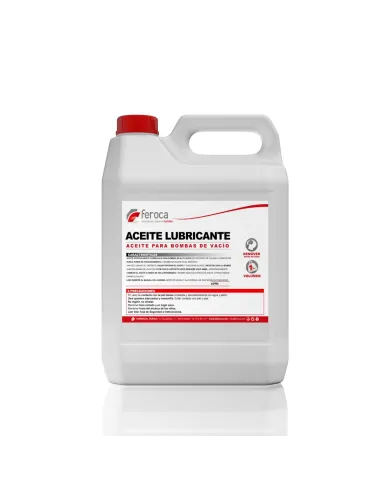
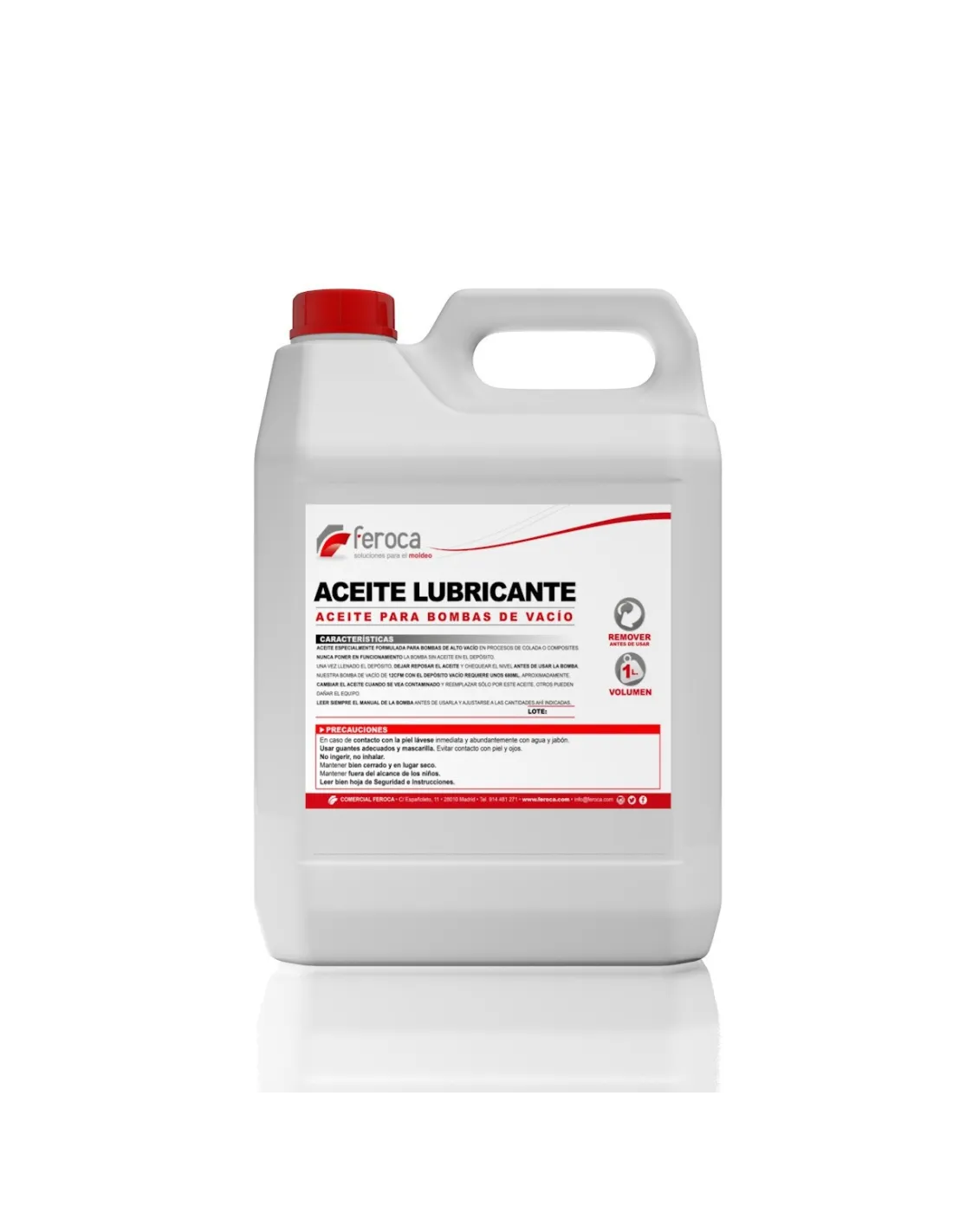
Oil specially formulated for high-vacuum pumps used in casting, degassing and composites processes. Maintaining the correct level and clean oil is essential for the pump to work efficiently and without internal damage. Always use this oil: replacing it with incompatible lubricants can irreversibly damage the equipment.
Technical specifications
| Parameter |
Detail |
| Product type |
Lubricating oil for vacuum pump |
| Application |
High-vacuum pumps (casting, degassing, composites) |
| Approximate quantity (12 CFM pump) |
Approx. 680 ml to fill an empty reservoir |
| Compatibility |
Rotary vane vacuum pumps |
| Waste disposal |
Dispose of at an authorised waste collection point or licensed waste manager |
What it is used for
This oil is designed exclusively to keep the vacuum pumps used in moulding workshops, composites and special effects in optimal condition. Without it, the pump overheats, loses efficiency and can suffer irreparable damage.
- Lubrication of rotary vane pumps in silicone and resin degassing processes
- Internal cooling of the pump mechanism during extended cycles
- Preventive maintenance of vacuum pumps in composites and infusion workshops
- Oil replenishment after periodic changes or when the oil appears contaminated (cloudy, dark or with particles)
- Use in complete vacuum systems for bubble removal in silicone moulds and resin parts
How to use it
- Before starting the pump for the first time or after an oil change, make sure the reservoir is completely empty.
- Pour the oil slowly through the fill port until reaching the level indicated in the reservoir sight glass. For a 12 CFM pump with an empty reservoir you will need approximately 680 ml.
- Allow the oil to rest for a few minutes to settle and release any air bubbles introduced during filling.
- Check the level in the sight glass before starting the pump. Never start the pump without oil in the reservoir.
- Read your pump's manual and always follow the quantities and specifications indicated by the manufacturer.
- Periodically monitor the condition of the oil. When it appears cloudy, dark or with particles in suspension, proceed with a complete oil change.
- To change the oil: turn off the pump, let it cool down, drain the used oil into a suitable container and take it to an authorised waste collection point or licensed waste manager. Visit sigpi.es to locate the nearest one.
- Refill with fresh oil to the correct level and verify before using the pump again.
Important: Never operate the pump without oil in the reservoir. Do not replace this oil with generic or automotive lubricants: other oils can damage the internal seals and the vane mechanism. Always dispose of used oil as waste at an authorised waste collection point or licensed waste manager.
Usage tips
Check the level before each session
Although oil is not consumed quickly, it is good practice to check the level in the sight glass before each working day. A pump with oil below the minimum operates under stress and can be damaged within just a few hours of use. If you notice the level dropping recurrently without apparent consumption, check for leaks in the reservoir or seals.
Recognise when to change the oil
Fresh oil has a clear and transparent colour. With use, it absorbs moisture and contaminants from the degassed materials (solvent vapours, resin monomers, etc.) and turns cloudy or yellowish. When this happens, change the oil without delay. Prolonging the use of contaminated oil reduces the pump's vacuum capacity and can corrode its internal components.
Storage and long-term maintenance
If you are going to store the pump for an extended period without using it, make sure the reservoir is at the correct oil level before storing it. This protects the vanes and internal seals from oxidation. Store any leftover oil in its original container, tightly closed and away from heat sources. Do not mix fresh oil with used oil or with other lubricants.
Frequently asked questions
How often should the oil in a vacuum pump be changed?
It depends on usage and the materials you degas. As a general rule, change the oil when it appears cloudy, dark or with particles. If you work daily with resins or silicones, check it every few weeks. With sporadic use, inspect it before each working session.
Can I use motor oil or hydraulic oil instead of the specific oil?
No. Generic oils are not formulated for the internal conditions of a vacuum pump and can deteriorate the rubber seals, attack the vanes or generate deposits that block the mechanism. Always use the specific vacuum pump oil to ensure proper operation and equipment lifespan.
What happens if I start the pump without oil?
The vane mechanism runs dry, generates excessive heat and can seize or melt within minutes. This type of damage is usually irreparable. Always check the level before starting.
How much oil do I need to fill a 12 CFM pump from scratch?
A 12 CFM vacuum pump with a completely empty reservoir requires approximately 680 ml of oil. Always consult your pump's manual, as capacities vary depending on the model.
Why does the oil turn cloudy after degassing resins?
When degassing resins or silicones, the pump extracts air along with small amounts of water vapour, monomers and solvents. These contaminants dissolve in the oil and make it cloudy over time. This is normal wear from the process: change the oil as soon as you notice that change in appearance.
How do I dispose of used oil correctly?
Used vacuum pump oil is a hazardous waste. Do not pour it down the drain or into the general waste bin. Take it to a municipal waste collection point or an authorised waste manager. In Spain you can locate drop-off points at sigpi.es.
Is vacuum pump oil also used in compressors?
No. This oil is formulated specifically for rotary vane vacuum pumps. Compressors have different lubrication requirements. Do not interchange oils between equipment.
What vacuum system do I need to degas silicones and resins?
To degas materials such as platinum silicones or polyurethane resins you need a vacuum pump and a vacuum chamber. Feroca offers the Complete Vacuum System for degassing, which includes everything needed to eliminate bubbles and obtain flawless parts and moulds.