Shopping Cart



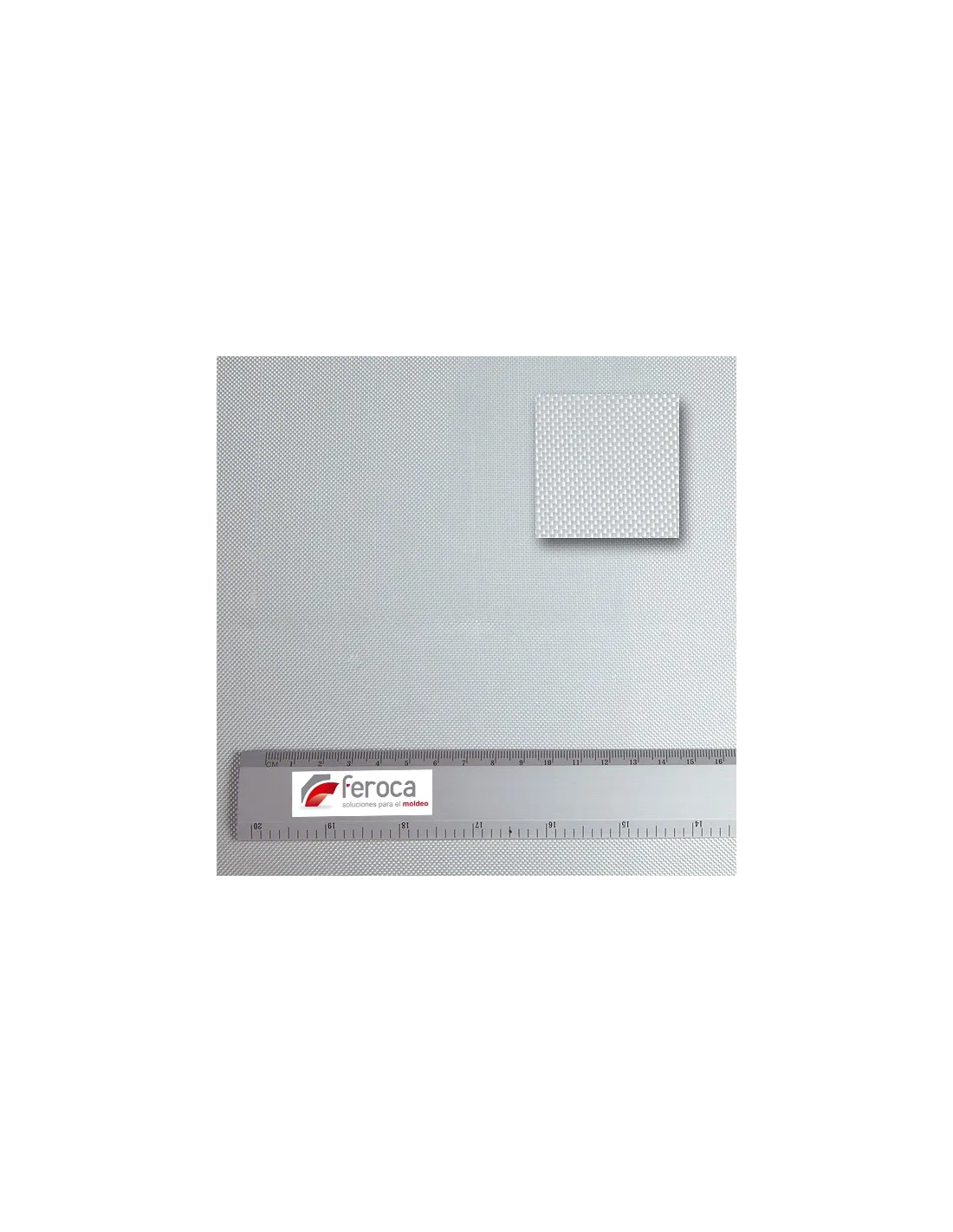
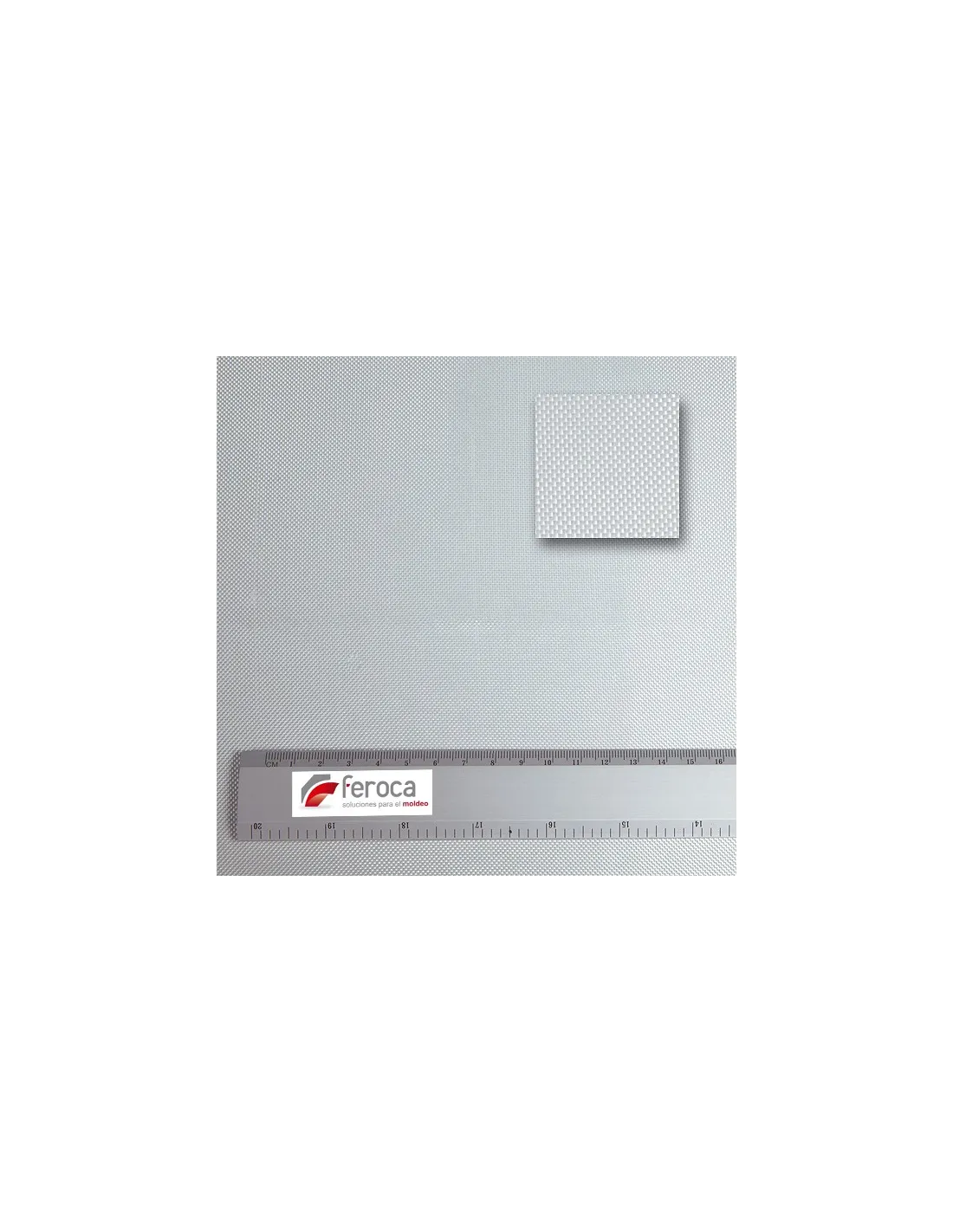
Woven Fiberglass 166 gsm.
103166001
€8.00
9,68 € Tax incl.
9,68 € Tax incl.
166 g/m² fibreglass woven fabric for structural laminates with polyester or epoxy resin. High strength and uniform impregnation.
The 166 g/m² fibreglass woven fabric is a medium-weight structural reinforcement ideal for laminates requiring superior mechanical strength compared to conventional mat. Its balanced weave facilitates impregnation with polyester, vinylester or epoxy resins, and adapts well to geometries with moderate curvature. It is the standard choice when a cleaner finish and greater strength than 300 g/m² mat are required.
Technical specifications
| Parameter | Value |
|---|---|
| Reinforcement type | Woven fibreglass fabric (plain weave) |
| Weight | 166 g/m² |
| Fibre type | E-glass (electronic grade) |
| Compatible resins | Polyester, vinylester, epoxy |
| Recommended application | Hand lay-up laminates, shells, structural reinforcements |
What it is used for
This fabric is used in applications where structural strength is needed without adding excessive weight to the laminate. Its medium weight makes it versatile for both lightweight composite parts and localised reinforcements in areas subject to high mechanical stress.
- Manufacturing rigid shells for silicone moulds (mother mould)
- Structural laminates for boats, bodywork and industrial parts
- Repair reinforcement on existing composite or fibreglass panels
- Construction of rigid moulds with epoxy or polyester resin
- Decorative laminates where the weave pattern is to remain visible
- Intermediate layers in sandwich constructions combined with mat or higher-weight fabric
- Reinforcement of plaster, resin or polyurethane foam parts
How to use it
- Prepare the surface: clean, dry and apply Release agent if working on a mould.
- Cut the fabric to the required size. If covering a repair area, cut two pieces in graduated sizes so the transition is gradual and no thick step is left.
- Prepare the polyester resin (such as Ferpol 100BSX15) or the epoxy resin according to the manufacturer's instructions, adding the catalyst at the correct ratio.
- Apply a first coat of resin to the surface using a brush or roller.
- Place the fabric onto the wet resin and press with a deaeration roller to remove bubbles and ensure complete impregnation.
- Apply additional resin over the fabric until it is fully saturated and translucent.
- If the laminate requires more layers, repeat the process before the previous layer has fully cured (wet lay-up) to ensure adhesion between layers.
- Allow to cure at appropriate temperature conditions. Do not expose to moisture during curing.
- Once cured, sand or trim the edges if necessary for the final finish.
Usage tips
Correct fabric impregnation
A well-impregnated fabric should appear translucent once the resin has saturated it. If you see opaque white areas, the resin has not fully penetrated: apply more resin and work with the roller in different directions. Excess resin is also a problem: it adds unnecessary weight and reduces final strength. The optimal resin/fabric ratio in a hand lay-up laminate is typically 40–50% fabric by weight.
Working on curved surfaces
The orthogonal weave fabric adapts well to gently curved surfaces, but on complex geometries it may tend to wrinkle. For pronounced curvatures, make cuts or darts in the fabric before impregnating it, or consider combining fabric layers with fibreglass mat, which conforms better to irregular shapes. The 48 g/m² fabric is also a good option for more complex geometries due to its greater flexibility.
Resin compatibility
This fabric is compatible with polyester resins (Ferpol 100BSX15 is recommended for standard laminates), vinylester and epoxy. Using epoxy resin will yield greater mechanical strength and better resistance to moisture. For acrylic resins, check specific compatibility with the manufacturer, as not all acrylic resins correctly impregnate tightly woven fabrics.
Frequently asked questions
How many layers of fabric do I need for a strong laminate?
It depends on the end use and the weight of each layer. For a rigid mould shell or a moderately used part, 2–3 well-impregnated layers of this 166 g/m² fabric are usually sufficient. For more demanding structural applications, combine multiple layers and, if necessary, alternate with mat to improve adhesion between laminates.
Can this fabric be used with epoxy resin?
Yes. Fibreglass woven fabric is compatible with epoxy, polyester and vinylester resins. The combination with epoxy offers the best mechanical strength, lower water absorption and better adhesion. It is the recommended option for high-precision moulds or parts that will be exposed to humid conditions.
What is the difference between woven fabric and fibreglass mat?
Woven fabric has fibres oriented in a defined direction (typically 0°/90°), which gives it greater mechanical strength in those directions and a cleaner finish. Mat is made of short fibres arranged randomly, conforms better to complex shapes and is more economical, but offers lower strength per layer. For quality laminates, both are often combined: mat to conform to the shape and woven fabric to provide strength.
Does fibreglass deteriorate in contact with water?
Fibreglass does not dissolve or degrade in contact with water. However, the resin that impregnates it can absorb moisture over time if it is not correctly cured or if a resin with low hydrolysis resistance is used. For use in humid environments or in contact with water, epoxy or vinylester resin is recommended instead of standard polyester.
Can it be used to reinforce plaster or foam parts?
Yes. Fibreglass fabric with epoxy or polyester resin is a very effective way to harden and protect plaster, polyurethane foam or even gel coat parts. It is applied directly onto the cured part with resin and left to dry. The result is a structural layer that significantly increases rigidity and impact resistance.
How do you make a rigid shell for a silicone mould?
Once the silicone mould has cured over the model, apply polyester or epoxy resin with a brush over the silicone (no Release agent needed, as silicone does not bond to resin) and build up layers of impregnated fibreglass fabric until the desired thickness is reached. 2–3 layers of this 166 g/m² fabric are sufficient for most workshop moulds. The shell holds the shape of the flexible mould and makes it easier to handle.
Which fabric should I choose if I need a different weight?
Feroca stocks fibreglass woven fabrics in various weights to suit every need. For lighter layers or complex geometries, the 48 g/m² fabric is more manageable. For intermediate weights, the 105 g/m² or the 163 g/m² are good options. Combining layers of different weights allows you to optimise the laminate for the intended use.
Is personal protection necessary when working with fibreglass?
Yes. Glass fibres are irritating to the skin, eyes and respiratory tract. When cutting or handling dry fabric, microparticles are released that can cause itching and irritation. Nitrile gloves, safety goggles and an FFP2 mask are recommended during cutting and lamination. Always work in a ventilated space, especially when handling resins with catalyst.
No reviews
Tap to zoom