Shopping Cart



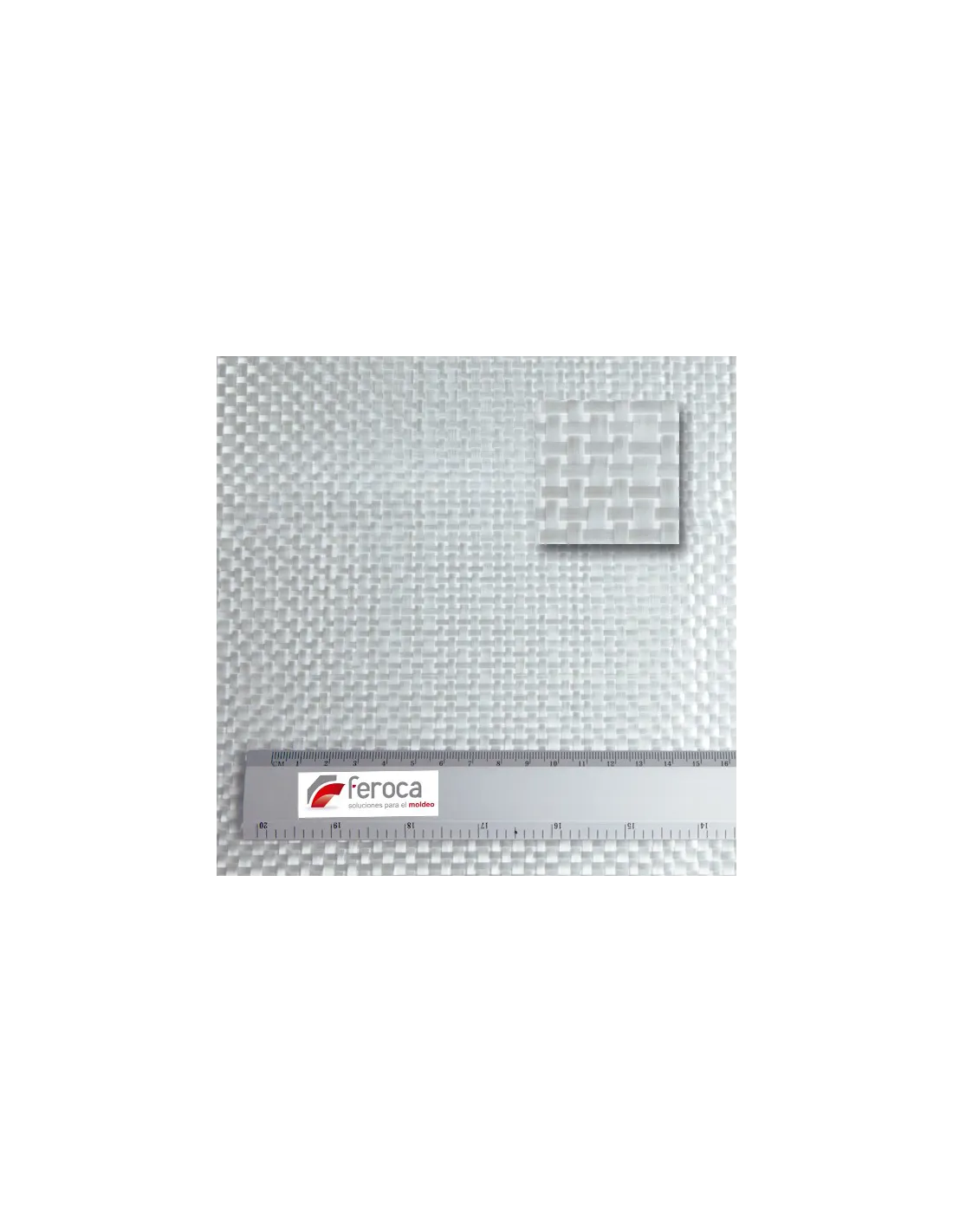
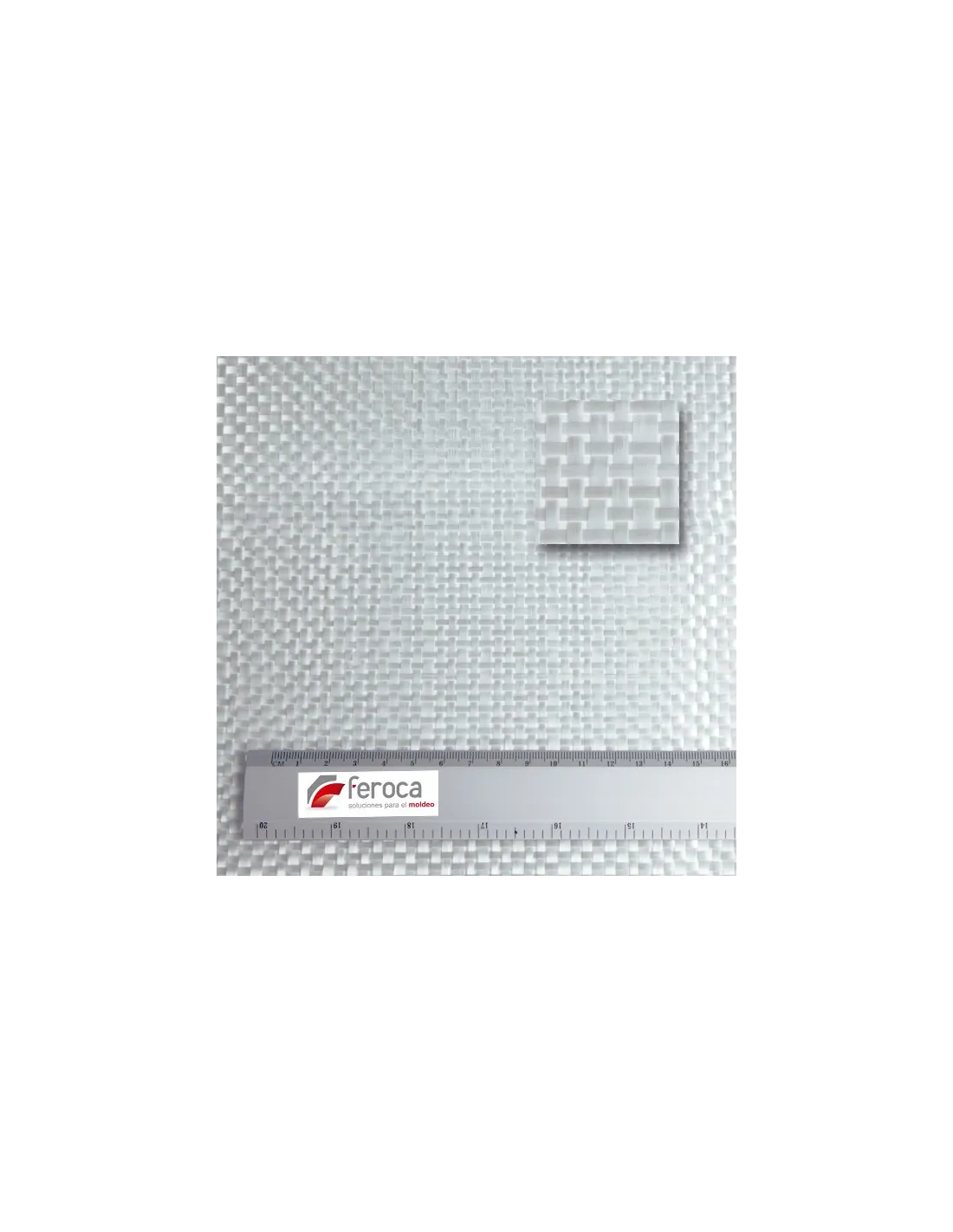
Woven Fiberglass 300 gsm.
152300001
€6.50
7,87 € Tax incl.
7,87 € Tax incl.
300 g/m² fibreglass woven fabric for structural laminates with polyester or epoxy resin. High mechanical strength.
The 300 g/m² fibreglass woven fabric is the standard reinforcement for structural laminates: stronger than mat but equally versatile, it impregnates well with polyester and epoxy resins and allows you to build parts with a clean, uniform finish. It is the go-to choice in composites workshops, bodywork repair, mould making and technical parts requiring rigidity and durability.
Technical specifications
| Parameter | Value |
|---|---|
| Weight | 300 g/m² |
| Material | Fibreglass (E-glass) |
| Type | Woven fabric |
| Compatible resins | Polyester, vinylester, epoxy |
| Main application | Structural laminates, moulds, repairs |
What it is used for
The 300 g/m² woven fabric is the general-purpose reinforcement in composites. It provides mechanical strength in tension and flexion, maintains the geometry of the part and is compatible with the most common hand lamination processes. It can be used alone or combined with mat or veil depending on the project requirements.
- Manufacturing rigid shells for silicone moulds (mother mould)
- Structural laminates with Ferpol 100BSX15 polyester resin or epoxy resins
- Reinforcement of decorative and functional composite parts
- Repair of bodywork, hulls, bathtubs and tanks
- Construction of rigid moulds from original models
- Combined with 300 g/m² mat for structures requiring greater thickness and rigidity
- Intermediate layers in multi-layer systems (gel coat + mat + woven + veil)
How to use it
- Cut the fabric to the size of the part. If you need to cover an irregular surface, make several cuts of slightly different sizes to stagger the layers and avoid visible steps.
- Prepare the surface: clean, degreased and, if it is a mould, with Release agent applied in several coats.
- Apply the first coat of resin to the surface with a roller or brush.
- Place the fabric over the wet resin and press with a bubble roller to ensure all filaments are well impregnated. Avoid wrinkles and air pockets.
- Apply another coat of resin on top of the fabric until it is completely saturated (translucent appearance).
- Repeat the process for any additional layers required by the design. For standard structures, two layers of 300 g/m² woven fabric provide good rigidity.
- If you want a smooth finish, end with a veil or lightweight 48 g/m² fabric impregnated in resin.
- Allow to cure at room temperature according to the instructions of the resin used before demoulding or machining.
Warning: During cutting and laminating of fibreglass, particles and filaments are generated that can irritate the skin, eyes and respiratory tract. Always work with nitrile gloves, protective goggles and an FFP2 or higher mask. Ventilate the workspace thoroughly, especially when using resins containing styrene (polyester, vinylester). Consult the safety data sheets of the resins used.
Usage tips
Choosing the right weight for each layer
The 300 g/m² woven fabric is not ideal as the first layer over the model: it may imprint the weave texture on the surface finish. Use it from the second layer onwards. For the first layer or final finish, opt for a lighter fabric such as the 105 g/m² fabric or the 48 g/m², which impregnate better in thin areas and give a cleaner finish.
Staggered layers for smooth transitions
When making repairs or reinforcing specific areas, cut two or more pieces of different sizes. Place the smallest one first and then the larger one. Staggering distributes the stresses and avoids the abrupt step that would occur if all layers ended at the same point.
Controlling impregnation
The fabric is properly impregnated when it stops being opaque white and becomes translucent. If white areas remain, add more resin and go over them with the bubble roller. Excess resin weakens the laminate: aim for the minimum amount needed to saturate the filaments without leaving free resin.
Frequently asked questions
What is the difference between woven fibreglass fabric and mat?
Woven fabric has filaments interlaced in an ordered structure, which gives it greater mechanical strength in tension and flexion. Mat has filaments arranged randomly and bonded with a binder, which makes draping over complex shapes easier but offers less structural strength. For laminates requiring rigidity and strength, 300 g/m² woven fabric is the preferred option; for covering very complex geometries or as a first impregnation layer, mat may be more practical.
How many layers do I need for a rigid part?
It depends on the end use, but as a practical reference: two layers of 300 g/m² woven fabric with polyester or epoxy resin provide a strong laminate for lightweight moulds, shells and decorative parts. For demanding structural applications (load-bearing parts, production moulds), it is recommended to increase to 3–4 layers or combine with mat. The indicative final thickness with two layers of 300 g/m² is approximately 1–1.5 mm.
Can it be used with epoxy resin as well as polyester?
Yes. The 300 g/m² fibreglass woven fabric is compatible with polyester, vinylester and epoxy resins. Epoxy offers better adhesion, lower shrinkage and superior final mechanical properties, although it is more expensive. For high-precision moulds or parts, epoxy is recommended. For repair work or general production, polyester resin such as Ferpol 100BSX15 is the most economical option and more than adequate.
Does fibreglass deteriorate with water or moisture?
Fibreglass does not dissolve or degrade in contact with water. However, moisture during the lamination process can affect resin cure and cause defects (bubbles, dry areas, reduced adhesion). Always work with dry fabric in an environment with controlled relative humidity, ideally below 70%.
Can a silicone mould be reinforced with fibreglass?
Yes, it is common practice. The rigid shell (or mother mould) is built by applying layers of 300 g/m² fibreglass woven fabric impregnated in resin directly onto the already-cured silicone mould. This shell maintains the shape of the flexible mould, makes it easier to handle and prevents deformation during casting. For the first layer of the shell it is recommended to use a lighter fabric such as the 163 g/m² to better conform to details before adding the 300 g/m² layers.
Can fibreglass be laminated over polyurethane rubber?
It is not recommended. Reinforcement fabrics are designed to work with rigid matrices (polyester, epoxy, vinylester resins). On flexible materials such as polyurethane rubber, the fibre cannot provide rigidity effectively and adhesion between the fabric and the flexible rubber is usually poor, which can lead to delamination.
Which fabric is best for the surface finish of a part?
For surface finishing, it is recommended to use the lightest fabric available: the 48 g/m² fabric or the 105 g/m². The 300 g/m² fabric can imprint the weave on the surface if used as the final layer. Use it for the inner structural layers and finish with a lightweight layer for a smooth result.
How should fibreglass fabric be stored correctly?
Store the fabric rolled up in a dry place, away from moisture and sources of heat or direct sunlight. Fibreglass itself is stable, but accumulated moisture can hinder subsequent impregnation. If the fabric has been kept in a humid environment, allow it to dry at room temperature before use.
No reviews
Tap to zoom