Shopping Cart



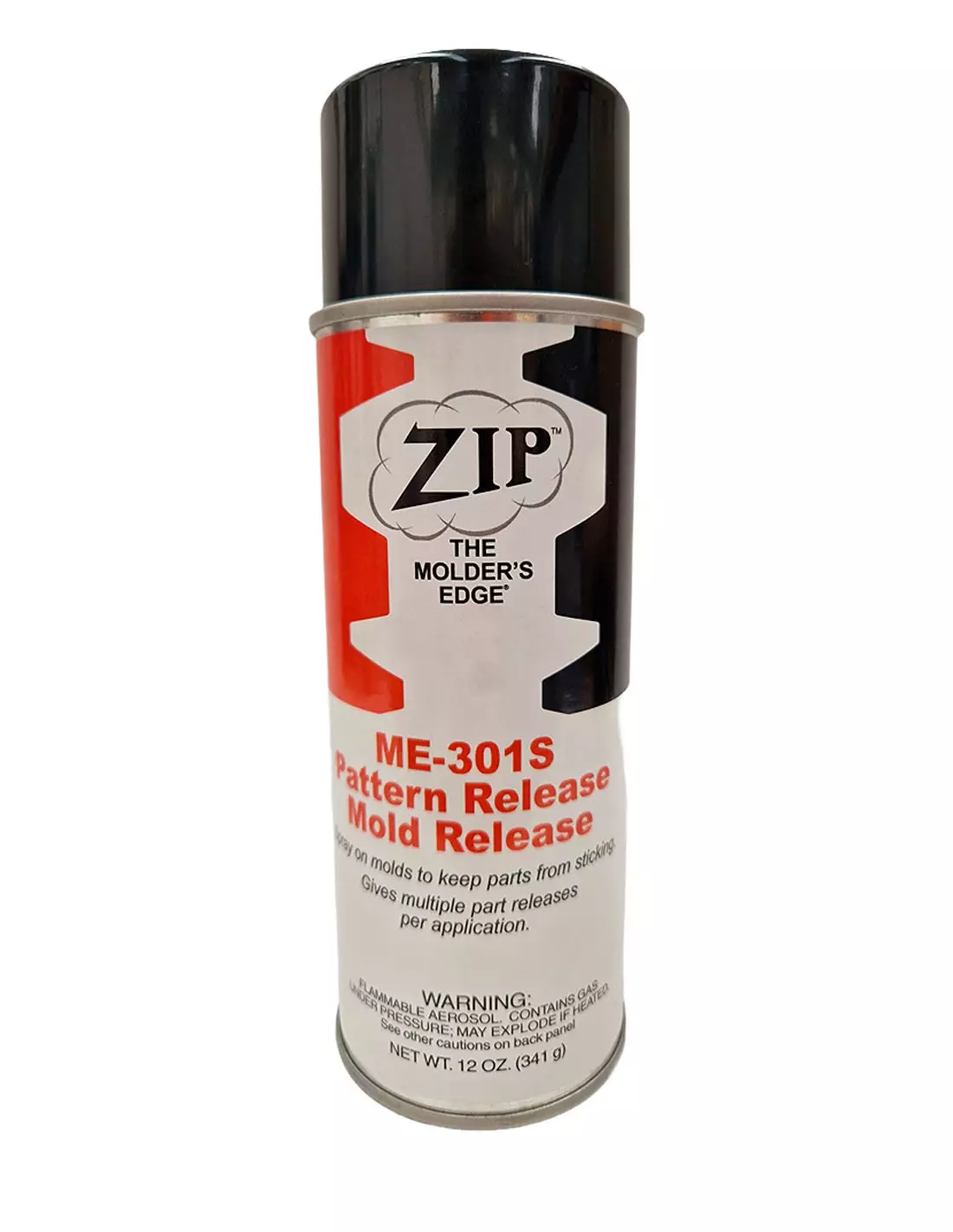
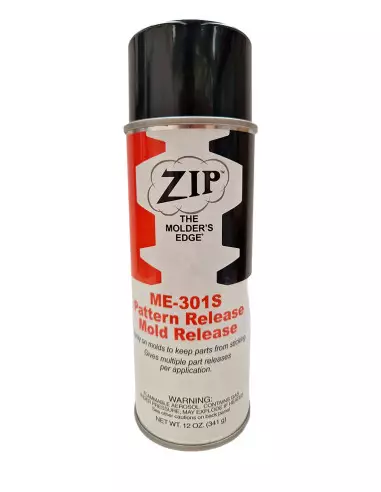
Stoner ME 301S (Eject-IT 33Petrolease )
590700001
€27.00
32,67 € Tax incl.
32,67 € Tax incl.
Petroleum jelly spray release agent. Ideal for platinum and tin silicones, urethanes, and Super Baldiez. 341 g can.
Stoner ME 301S (formerly known as Eject-IT 33 / Petrolease) is a petrolatum-based release agent in aerosol format that lets you apply a thin, even coat over any mold in seconds. Forget brushing on petroleum jelly by hand: this spray gives you all its benefits — universal compatibility, smooth release, no inhibition — without the mess or clumping. It is the go-to release agent for encapsulated silicones, urethanes, and special effects applications.
Technical specifications
| Property | Value |
|---|---|
| Product type | Spray release agent |
| Chemical base | Petroleum jelly (petrolatum) |
| Format | Aerosol |
| Net content | 341 g |
| Compatibility | Platinum silicone, tin silicone, urethanes, resins, foams |
| Platinum inhibition | Does not inhibit |
| Finish | Translucent / slightly greasy |
| Application | Direct spray onto the mold |
What it is used for
Stoner ME 301S is a versatile release agent designed for special effects workshops, prosthetics manufacturing, urethane molding, and composites. Its petrolatum base makes it especially suitable for materials that require a neutral, non-reactive release agent.
- Releasing encapsulated silicone applications (Platsil Gel and similar) from rigid or flexible molds.
- Releasing Super Baldiez pieces from any type of mold.
- Releasing urethane rubbers and polyurethane foams.
- Releasing polyester and epoxy resins (in non-porous molds).
- Separator between layers of materials that could bond to each other during the manufacturing process.
- Temporary protection of silicone, plaster, or fiberglass molds between uses.
- Special effects and prosthetics applications where a gentle, easy-to-apply release agent is needed.
How to use it
- Make sure the mold is clean, dry, and free of residue from previous materials.
- Shake the can well before use.
- Apply the spray at a distance of about 20–30 cm from the mold, using even strokes to achieve a thin, uniform coat.
- Cover all internal surfaces of the mold, including angles and hard-to-reach areas.
- Wait several minutes for the propellant to evaporate completely before pouring or applying the molding material. This step is critical.
- If the mold is very absorbent (plaster, gypsum), apply a second thin coat after the first has evaporated.
- Pour or apply the molding material in the usual way.
- Once the material has cured, demold carefully. If necessary, apply a small burst of air between the piece and the mold to help separation.
Warning — Use with platinum (addition) silicones: Stoner ME 301S is compatible with platinum silicones and does not cause inhibition. However, if the same mold has previously been used with other materials or release agents containing sulfur, tin, amines, latex, or certain cyanoacrylate adhesives, these contaminants may inhibit the cure of the platinum silicone even if you apply this spray on top. Always clean the mold thoroughly before switching materials.
Usage tips
Avoid over-application
A thin coat is sufficient and better than a thick one. Excess petroleum jelly can build up in fine details of the mold and reproduce on the finished piece as dull spots or marks. If you see pooling or heavily loaded shiny areas, remove the excess with a soft brush or gauze before pouring the material.
Propellant evaporation time
The most overlooked and most important step: the aerosol propellant needs to evaporate completely before introducing the molding material. If you do not wait long enough (minimum 3–5 minutes, longer in cold or humid environments), the propellant can generate bubbles or affect the cure, especially in platinum silicones. If in doubt, wait longer.
Compatibility with Super Baldiez and encapsulated silicones
Stoner ME 301S is the release agent of choice for demolding encapsulated silicone applications such as Platsil Gel and for Super Baldiez pieces. In these cases, apply a generous but even coat over the entire mold, paying particular attention to the edges and mold parting areas, where adhesion tends to be greatest.
Frequently asked questions
Does this spray release agent inhibit the cure of platinum silicones?
No. Stoner ME 301S is formulated on a petrolatum base and does not contain sulfur, tin, or amines, which are the main inhibiting agents for platinum silicones. You can use it with complete confidence with any addition-cure silicone.
Can it be used on plaster or gypsum molds?
Yes. Plaster and gypsum are porous materials that absorb the release agent well. In this case it is advisable to apply two thin coats, allowing the propellant to evaporate between each one, to ensure complete coverage and prevent the molding material from penetrating the pores and bonding.
How long should you wait before pouring the material after applying the spray?
At least 3–5 minutes under normal temperature and ventilation conditions. In cold, humid, or poorly ventilated environments, increase this time. The propellant must have evaporated completely before introducing any reactive material, especially platinum silicones.
Is it compatible with silicone molds for casting resins?
Yes. Stoner ME 301S works well as a release agent in silicone molds for casting polyurethane and epoxy resins. Apply a thin, even coat, allow the propellant to evaporate, and pour the resin. You can also consider Stoner E313 if you frequently work with epoxy resins.
How does this spray differ from a silicone-based aerosol release agent?
The chemical base is different: Stoner ME 301S uses petroleum jelly (petrolatum), while silicone-based spray release agents use polydimethylsiloxane. Petrolatum is preferable when a matte finish or compatibility with special effects materials (Super Baldiez, encapsulated silicones) is the priority. Silicone spray can leave a shinier finish and in some cases affect inter-layer adhesion if not managed correctly.
Can I use this release agent to separate two layers of silicone from each other?
Yes. Stoner ME 301S is effective as a barrier between layers of silicone (for example, in the manufacture of bi-material molds or in the creation of independent layers of encapsulated silicone). Apply a thin coat over the first cured layer, allow the propellant to evaporate, and proceed with the second layer.
How many applications does a 341 g can provide?
It depends on the size of the molds and the thickness of the coat applied. For small or medium-sized special effects or prosthetics molds, a 341 g can yields many dozens of applications. Since it is applied in very thin coats, the yield is high compared to brush-applied petroleum jelly paste.
Is there a spray alternative if I need a more neutral or petroleum-free release agent?
Yes. For work with epoxy resins or when you need a different-base release agent, Stoner E313 is a good alternative. If you are looking for a silicone-based spray release agent, Molykote Separator Spray is another option in the Feroca catalogue. For petroleum jelly in spray form in a different format, there is also Kontakt 701.
- Type
- Release agent
No reviews
Tap to zoom