Shopping Cart



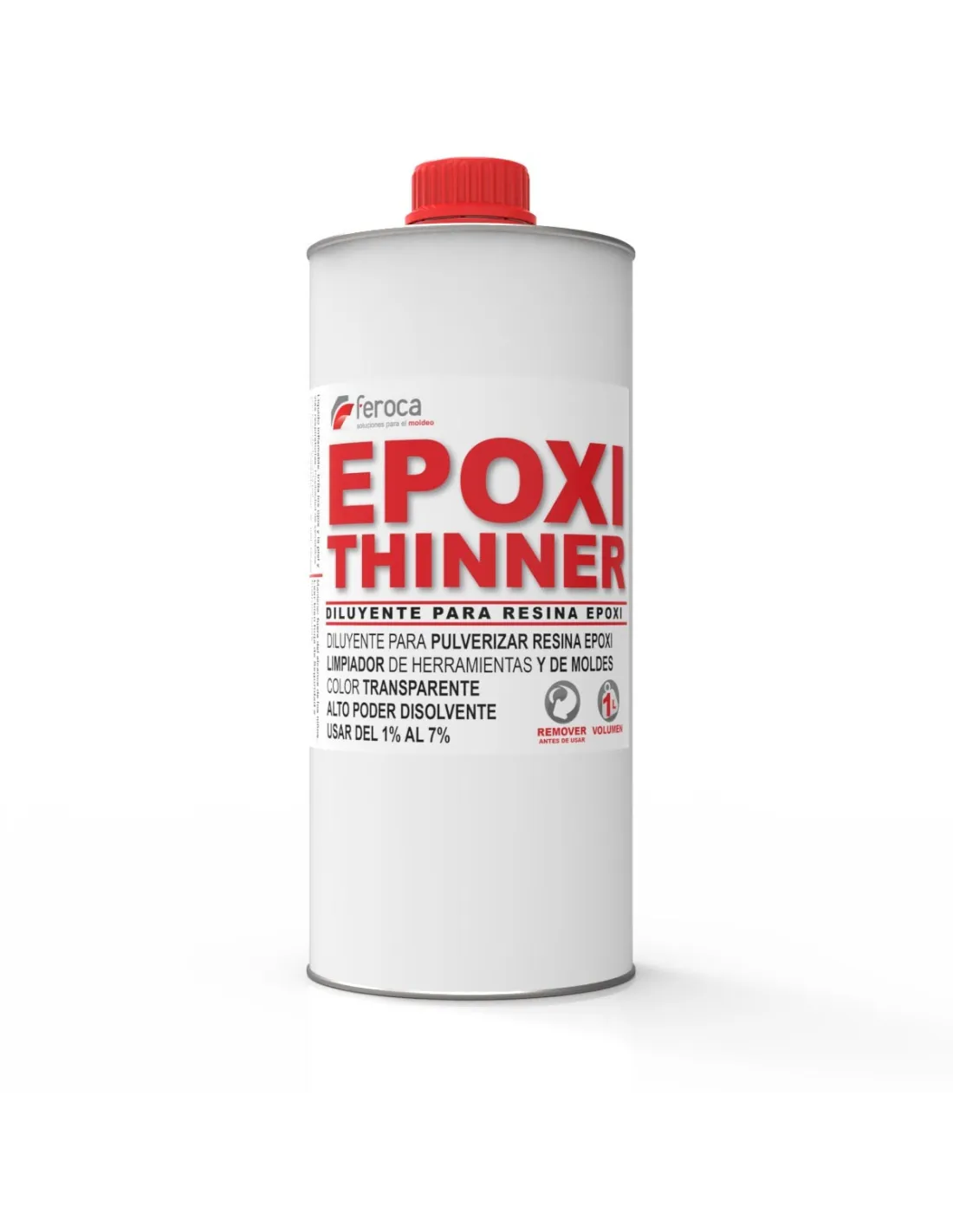
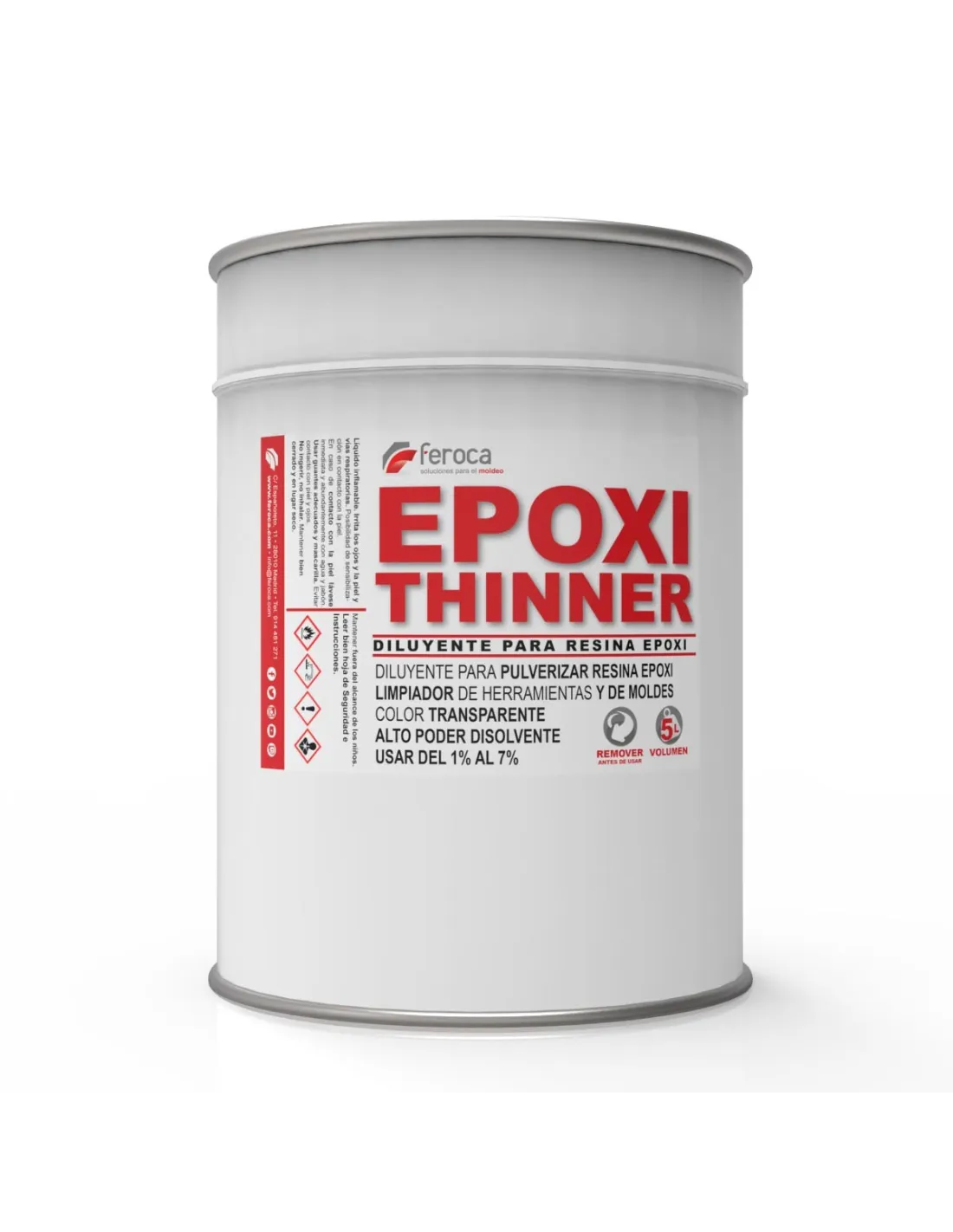
Epoxi Thinner -Thinner for epoxy resin
401210001
€8.10
9,80 € Tax incl.
9,80 € Tax incl.
This product cannot be shipped by air. To the Balearic Islands it is sent by sea freight. For deliveries to the Canary Islands, please contact us before ordering.
Xylene/butanol-based thinner for epoxy resins. Reduces viscosity, cleans tools and dissolves uncured epoxy residues.
Epoxi Thinner is a high-solvency xylene/butanol-based thinner, specifically formulated for epoxy resin systems. Use it to reduce viscosity before application, clean tools and moulds, or remove uncured epoxy residues. Clear and effective, it is an essential workshop staple if you regularly work with epoxy.
Technical specifications
| Property | Value |
|---|---|
| Base composition | Xylene / Butanol |
| Colour | Clear |
| Solvency power | High |
| Flammability | Flammable |
| Compatibility | Epoxy resin systems |
What it is used for
Epoxi Thinner has three main workshop uses: reducing the viscosity of an already-mixed epoxy resin to make spray or brush application easier, cleaning equipment before the resin cures, and dissolving fresh epoxy residues from moulds and surfaces. It is compatible with most two-component epoxy formulations.
- Thinner for sprayed or brush/roller-applied epoxy resins
- Viscosity reduction in epoxy primers and floor coatings
- Cleaning brushes, paintbrushes and spatulas after use
- Cleaning moulds contaminated with uncured epoxy residues
- Removing epoxy residues from surfaces before curing
- Pre-degreasing in surface preparation
How to use it
- As a thinner: First mix the epoxy resin with its hardener in the ratio indicated by the manufacturer. Add Epoxi Thinner gradually, stirring vigorously until the desired consistency is reached. Do not overdo it: too much thinner can compromise the final mechanical properties of the epoxy.
- As a brush and tool cleaner: Pour a small amount of Epoxi Thinner into a container and submerge the tool. Agitate and scrub until all resin residues are removed. Repeat if necessary and allow to air dry.
- As a mould cleaner: Soak a lint-free cloth with Epoxi Thinner and scrub the mould surface thoroughly. Allow to evaporate completely before applying release agent or pouring fresh resin.
- As a solvent for uncured residues: Apply directly to the affected area, allow to act for a few seconds and wipe off with a cloth. On thicker layers, the operation may need to be repeated.
Safety warning: Epoxi Thinner is flammable and harmful if inhaled or in prolonged contact with skin. Always work in well-ventilated areas, away from ignition sources. Wear nitrile gloves and, if ventilation is insufficient, a respirator with an organic vapour filter. Avoid contact with eyes. Waste is classified as hazardous: do not pour down the drain or onto the ground. Keep out of reach of children.
Usage tips
Dose carefully when thinning
Adding too much thinner to an epoxy resin alters its stoichiometry and can cause incomplete curing, loss of hardness or adhesion problems. As a general rule, do not exceed 5–10% by weight of the total mix unless the epoxy system you are using states otherwise. Always add it after correctly mixing the resin with its hardener.
Clean tools as soon as possible
Epoxi Thinner is very effective on fresh or gelling epoxy resin, but loses effectiveness once the epoxy has cured. Clean brushes, paintbrushes and spatulas immediately after use. If the resin has already started to gel, you will need more product and longer contact time. Once fully cured, the thinner will not be sufficient.
Ventilation and storage
Due to its xylene/butanol base, Epoxi Thinner vapours are heavy and tend to accumulate at floor level. Ventilate the workshop by opening at floor level if possible, not just at the top. Store in a cool, dry place away from heat sources or sparks, with the container tightly closed. If you are working with epoxy for tanks or coating systems in confined spaces, take extra precautions with ventilation.
Frequently asked questions
Can I use this thinner with any epoxy resin?
Epoxi Thinner is compatible with most two-component solvent-based or room-temperature-mix epoxy systems. It is always advisable to carry out a small preliminary test if you are working with a specific epoxy system for technical coatings or high chemical resistance applications, as in some cases the manufacturer's formulation may limit the use of external thinners.
How much thinner can I add to the resin without compromising the result?
As a general guideline, do not exceed 5–10% by weight of the total resin + hardener mix. Exceeding that ratio can reduce final hardness, extend curing time or cause incomplete curing. Always add Epoxi Thinner after correctly mixing the two components, in small amounts and stirring well between each addition.
Can it be used to clean already-cured epoxy?
Not effectively. Epoxi Thinner works well on fresh or gelling epoxy resin, but once the epoxy has fully cured the solvent does not have enough power to dissolve it. To remove cured epoxy, sanding or mechanical milling is generally required.
Can I use it to clean a mould before pouring the resin?
Yes. Apply Epoxi Thinner with a cloth to the mould, scrub well to remove resin residues, dust or contaminants and allow to evaporate completely before continuing. It is important that the solvent has fully evaporated before applying release agent or pouring the resin, as solvent residues can interfere with curing.
Is it the same as acetone for cleaning epoxy?
Not exactly. Both Epoxi Thinner and acetone can be used to clean uncured epoxy residues, but Epoxi Thinner is specifically formulated for epoxy systems and has greater solvency power over these resins. Acetone evaporates faster and can be useful for quick, superficial cleaning, while Epoxi Thinner is more suitable when you need to dissolve denser residues or reduce viscosity before application.
Can it be used to prepare a surface before bonding or coating with epoxy?
Yes, Epoxi Thinner can be used as a pre-degreaser on surfaces that are to be coated or bonded with epoxy. Apply with a clean cloth, allow to evaporate completely and work on the clean surface. For more thorough preparation on critical parts, you may also consider using isopropyl alcohol as a complement.
Are there any restrictions on use in enclosed spaces?
Yes. Being a xylene/butanol-based product, it generates flammable and harmful vapours that accumulate at low levels. In enclosed or poorly ventilated spaces there is a risk of inhalation and ignition. Always work with forced ventilation, away from flames, sparks or hot elements. If the work is in a very confined space (inside tanks, cisterns), use appropriate respiratory protective equipment for organic vapours.
How should I dispose of waste from this product?
Epoxi Thinner waste, as well as impregnated cloths and materials, are classified as hazardous waste. Do not pour them down the drain, onto the ground or into ordinary waste containers. Dispose of them at your local hazardous waste collection point or authorised hazardous waste management facility.
No reviews
Tap to zoom