Shopping Cart


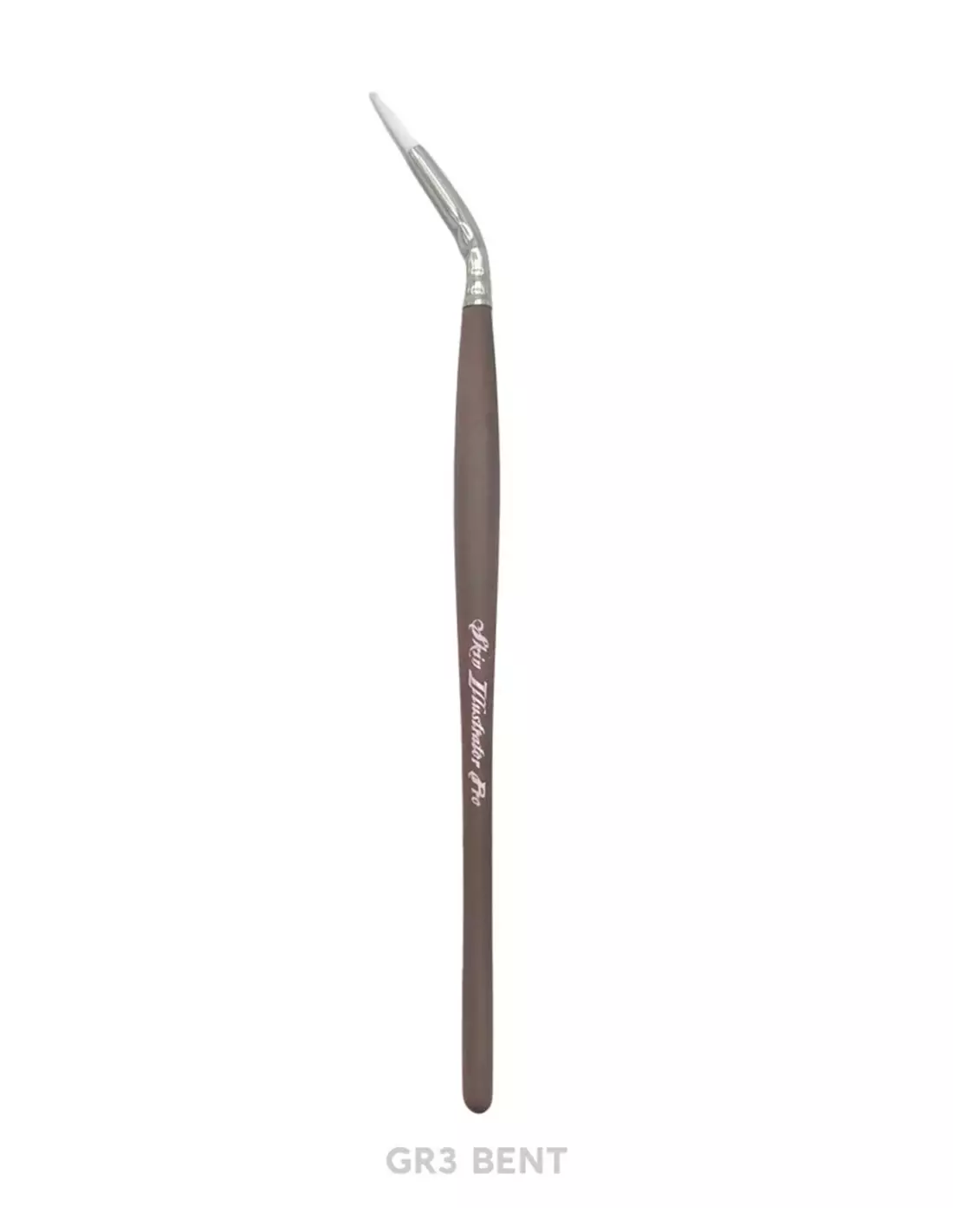
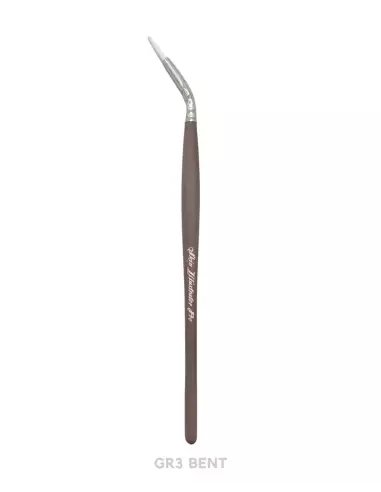
Skin Illustrator Pro Brushes - GR Series Bent
270072403
Product available with different options
€12.00
14,52 € Tax incl.
14,52 € Tax incl.
Skin Illustrator Pro GR Series Bent brushes for professional FX makeup. Vegan synthetic bristles resistant to solvents and adhesives.
The Skin Illustrator Pro GR Series Bent brushes are round adhesive brushes, handcrafted by expert European artisans using premium vegan synthetic bristles. Their distinctive bent and angled shape allows you to work with precision in hard-to-reach areas — prosthetic edges, nasal contours, periorbital zones — while keeping your hands out of your line of sight. They are designed to withstand the most demanding solvents and adhesives used in special effects makeup.
Technical specifications
| Feature | Detail |
|---|---|
| Series | GR Series Bent |
| Brush type | Round adhesive brush |
| Available sizes | GR3, GR6, GR8 |
| Bristles | Vegan synthetic fibres |
| Ferrule | Seamless nickel |
| Handle | Ergonomic, matte and faceted |
| Resistance | FX solvents and adhesives |
| Manufacturing | Handcrafted, European makers |
| Sustainability | Sustainable materials, animal hair-free |
What it's used for
The bent shape of the GR Bent series makes it the go-to tool for any special effects makeup professional who needs precision in hard-to-reach areas. It is especially useful when working with latex foam, silicone or gelatine prosthetics, where edge control is critical for a convincing result.
- Applying and adhering facial and body prosthetics with FX adhesives
- Removing and lifting prosthetic edges with solvents without damaging the piece
- Painting and toning directly on silicone or foam prosthetics
- Working prosthetic edges in hard-to-reach areas: nasal zone, orbital areas, jawline
- Applying activators and sealers in thin, controlled layers
- Blending and detailing with precision without blocking the work area with your hand
- Character makeup for theatre, film, television and photography
How to use it
- Choose the right size: GR3 for very fine areas and delicate edges, GR6 for general adhesive work, and GR8 for larger surfaces or when you need more adhesive per stroke.
- Load the brush sparingly: whether applying adhesive or solvent, take a controlled amount to avoid excess that could compromise the prosthetic edge.
- Make use of the bent angle: orient the curve towards the work area to maintain a direct line of sight without placing your hand between the brush and the prosthetic.
- Apply adhesive in a thin layer: spread the product in short strokes from the interior of the prosthetic towards the edge, respecting the open time of the adhesive you are using.
- Press and blend the edge: once the prosthetic is positioned, use the side of the bristles to press and seal the edge onto the skin.
- Clean the brush immediately: after each use, clean the bristles with the appropriate solvent for the adhesive used. Do not allow the adhesive to cure on the fibres.
- Store with bristles protected: store brushes horizontally or with the tip facing up to maintain bristle shape.
Tips and tricks
Workshop maintenance and cleaning
The solvent resistance of the ferrule and handle paint is a real advantage on set, but that doesn't mean you can neglect cleaning. Clean the bristles with the appropriate solvent for the adhesive used (isopropyl alcohol, diluted acetone or the product's specific remover) right after each use. If the adhesive starts to cure on the fibres, brush strokes will lose precision and the brush's lifespan will be significantly shortened.
Making the most of the angle in tricky areas
The bent design is specifically intended to allow the artist to keep their elbow and forearm in a natural position while working on areas such as the upper eyelid, nasal contour or temple. If you find yourself straining your wrist to see the work area, try rotating the handle until the brush angle aligns with the direction of the stroke. Small adjustments in handle orientation make a big difference in final control.
Combining with other brushes in the series
The GR Bent series pairs perfectly with fine liner or filbert tip brushes for subsequent paint work on an already-adhered prosthetic. Use the GR Bent for adhesion and edges, and combine it with fine liner brushes for painting details and character work on the already secured prosthetic.
Frequently asked questions
What is the difference between a straight brush and a bent brush for adhering prosthetics?
A straight brush forces the artist to place their hand between the work area and their line of sight, making control difficult in small or geometrically complex zones. GR Series Bent brushes have an angled tip, so you can apply adhesive while keeping the handle in a comfortable position without blocking what you are doing. This translates into greater edge precision and less fatigue during long sessions.
Are these brushes suitable for use with all types of FX adhesives?
Yes. The seamless nickel ferrule and solvent-resistant base paint on the handle are designed to withstand solvent-based adhesives, acrylic adhesives and removers commonly used in professional FX makeup. The vegan synthetic bristles do not deteriorate when exposed to the solvents typically used in the workshop, as long as they are cleaned correctly after each use.
What brush size do I need for each type of work?
The GR Bent series is available in three sizes: GR3 is the finest, ideal for very thin edges, corners and high-precision areas such as eyelids or nasal passages. GR6 is the general-purpose size, versatile for most facial prosthetics. GR8 is designed for larger adhesion surfaces, such as bald cap, forehead or body prosthetics, where more adhesive needs to be distributed per stroke.
Can these brushes be washed with soap and water?
For water-based or alcohol-based makeup residue, soap and water may be sufficient. However, for FX adhesives and solvent-based removers, you need to use the appropriate solvent. After solvent cleaning, a final wash with mild soap and warm water helps remove residue and keeps the bristles in good condition. Never submerge the full handle in liquid, as prolonged exposure to water can damage the ferrule joining area.
How long do these brushes last with continuous professional use?
With proper cleaning after each session, GR Series Bent brushes are built to withstand intensive professional use over an extended period. The key is not allowing adhesives to cure on the bristles and storing them correctly. Synthetic fibre, unlike natural hair, maintains its shape and stiffness more consistently over time and against the solvents commonly used in FX.
Are they suitable for makeup artists starting out in special effects?
Yes, although designed for professional use, the faceted ergonomic handle and bent shape make it easier to learn adhesion technique. The brush angle helps from the outset to understand how to control the adhesive and maintain visibility over the work area, making them very useful for those developing their FX makeup skills.
How should they be stored correctly to protect the bristles?
Store clean brushes horizontally or with the tip facing up, never with the bristles resting on a surface. If transporting them to a set or on a shoot, use a brush case or roll that keeps them separated and protects the tip shape. The bent angle makes these brushes somewhat more delicate to transport than straight ones, so protecting the head is especially important.
No reviews
Tap to zoom