Shopping Cart



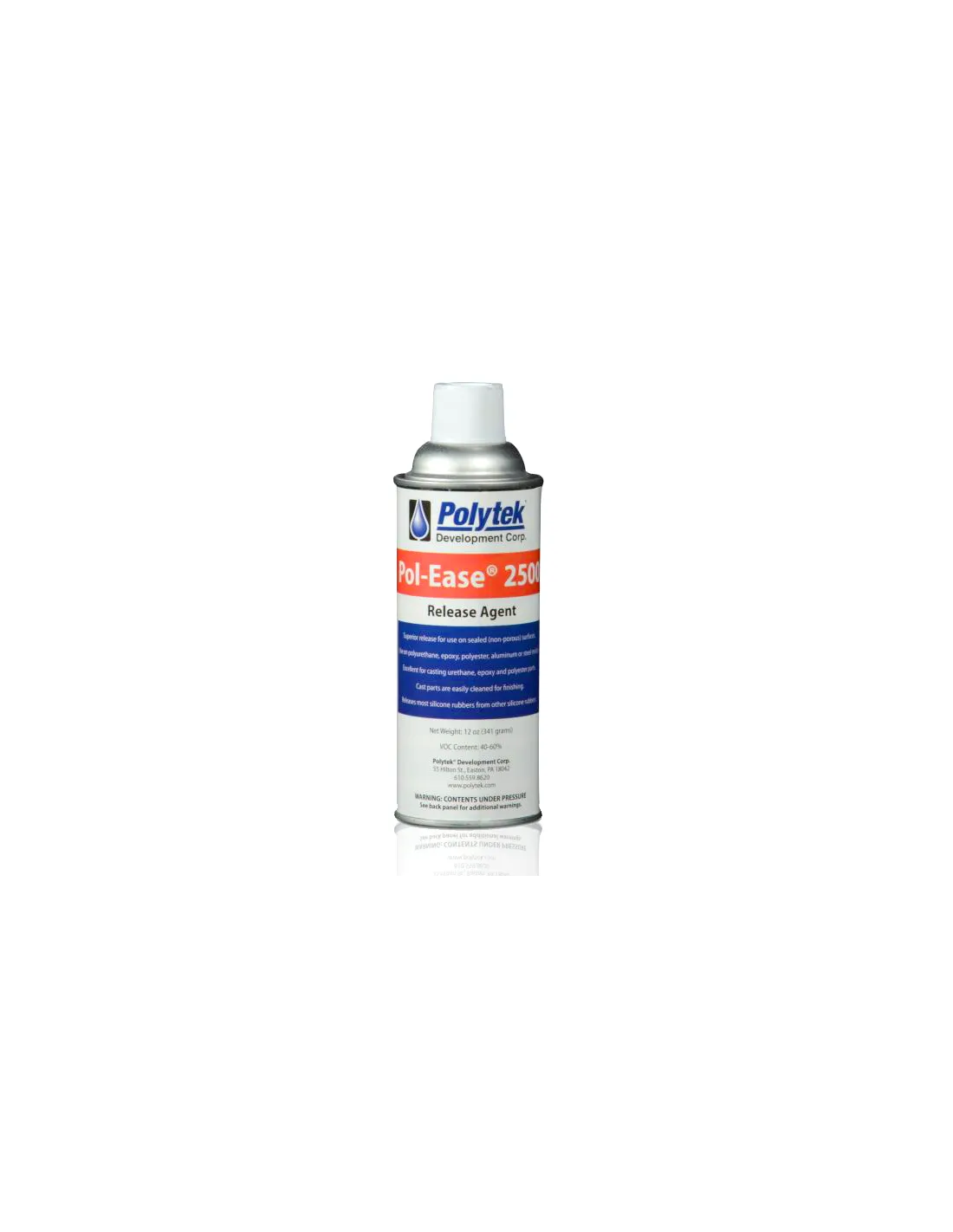
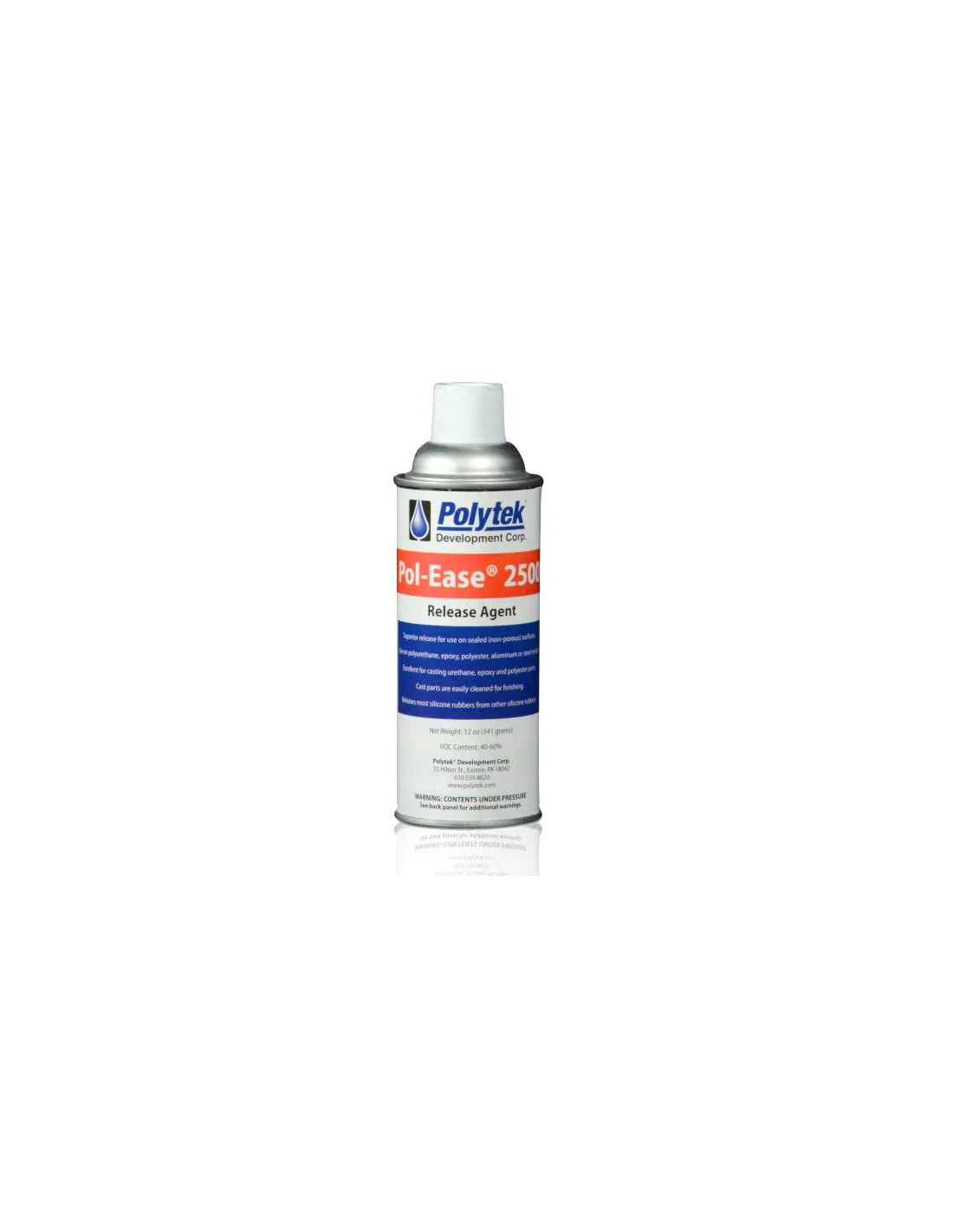
Pol-Ease 2500 -Universal Aerosol Release Agent-
205002000
€21.00
25,41 € Tax incl.
25,41 € Tax incl.
Universal wax-based aerosol release agent. Compatible with polyurethanes, polyester, silicones and thermoplastics. 341 g can.
Pol-Ease 2500 is a universal wax-based release agent in aerosol format, designed to facilitate demolding across a wide variety of materials and substrates. Its versatile formulation makes it the go-to choice in the workshop when you need a reliable release agent for everyday use with polyurethanes, polyester resins, silicones and thermoplastics.
Technical specifications
| Property | Value |
|---|---|
| Type | Wax-based release agent |
| Format | Aerosol |
| Net content | 341 g |
| Material compatibility | Polyurethanes (rubber and resin), polyester resins, silicones, thermoplastics |
| Mold compatibility | Polyurethane rubber, silicone, metal molds |
| Use | General purpose |
What it is used for
Pol-Ease 2500 is intended for any workshop working with multiple materials that needs an all-purpose release agent. It covers the vast majority of common mold-casting combinations, from prototype production to short runs.
- Release of polyurethane rubber from the original model
- Release of polyurethane resin from polyurethane rubber molds
- Release of silicone from the original model
- Release of silicone on silicone
- Release of polyurethane resin from silicone molds
- Casting into metal molds (aluminium, steel)
- Protection of reusable molds in serial production
- Use with polyester resins in lamination and casting processes
How to use it
- Make sure the mold surface is clean, dry and free of residue from previous castings.
- Shake the aerosol well for at least 30 seconds before use.
- Apply a thin, even coat from a distance of 20–30 cm, using crosswise movements to cover the entire surface.
- Allow the carrier solvent to evaporate for 1–2 minutes until the surface looks slightly matte.
- If the mold is new or very porous, apply 2–3 coats allowing each one to dry before the next.
- Proceed with the casting of the material as normal.
- Wait for the full cure time before demolding.
- Reapply the release agent before each new casting.
Usage tips
Polyurethane rubber molds
Continued use of Pol-Ease 2500 on urethane rubber molds can slightly shorten mold life. For long production runs with this type of mold, consider alternating with a silicone spray release agent to reduce accumulated surface stress.
First application on new molds
On freshly made molds — especially resin or plaster ones — surface porosity can absorb the release agent quickly. Apply three successive coats, allowing each to dry thoroughly, to create an effective barrier before the first casting.
Temperature and ventilation
Always apply in a well-ventilated area at room temperature (between 15 and 30 °C). Cold temperatures reduce atomisation and can result in uneven coats. If the workshop is cold, warm the aerosol slightly before use (never over a flame or near direct heat sources).
Frequently asked questions
Does an aerosol release agent work with all casting materials?
Pol-Ease 2500 is formulated to cover the most common workshop combinations: polyurethanes, polyester resins, silicones and thermoplastics. However, it is always advisable to test on a small area of the mold before using it in full production, especially with new materials or molds.
Should it be applied before every casting or is a single application enough?
To ensure clean demolding, apply Pol-Ease 2500 before every casting. On very smooth molds and with non-aggressive materials it may hold up for an additional casting or two, but the recommended workshop practice is to renew the coat with each cycle.
Can it be used with silicone molds?
Yes. Pol-Ease 2500 is compatible with silicone molds, especially when casting polyurethane resins into them. It is also effective for silicone-on-silicone castings to prevent mold sections from bonding together.
Does the release agent affect the surface finish of the part?
A properly applied coat (thin and even) of Pol-Ease 2500 does not noticeably alter the finish of the part. An excessive application can leave a slight haze or texture on very glossy surfaces; in that case, reduce the amount applied or lightly buff the part after demolding.
Is it suitable for metal molds?
Yes, Pol-Ease 2500 works correctly on aluminium and steel molds. It is a practical option for polyurethane or polyester castings in workshop or production metal tooling.
How long does it take to be ready for use after application?
The waiting time is short: 1–2 minutes at room temperature are sufficient for the carrier solvent to evaporate and the wax layer to become active. In cold or humid environments, wait a couple of extra minutes before casting.
What is the difference between this release agent and a silicone spray release agent?
Pol-Ease 2500 is wax-based, which makes it more neutral and versatile for a wider variety of material combinations. A silicone spray release agent may be preferable in applications requiring greater slip action, but can interfere with subsequent painting or finishing processes. For general workshop use, Pol-Ease 2500 is the most all-round option.
Is there an alternative for very porous surfaces or epoxy resins?
For epoxy resins or particularly porous surfaces, a dedicated release agent such as Stoner E313 may be more suitable, as it is formulated to give better results in these specific situations.
- Type
- Wax-based release agent
No reviews
Tap to zoom