Shopping Cart



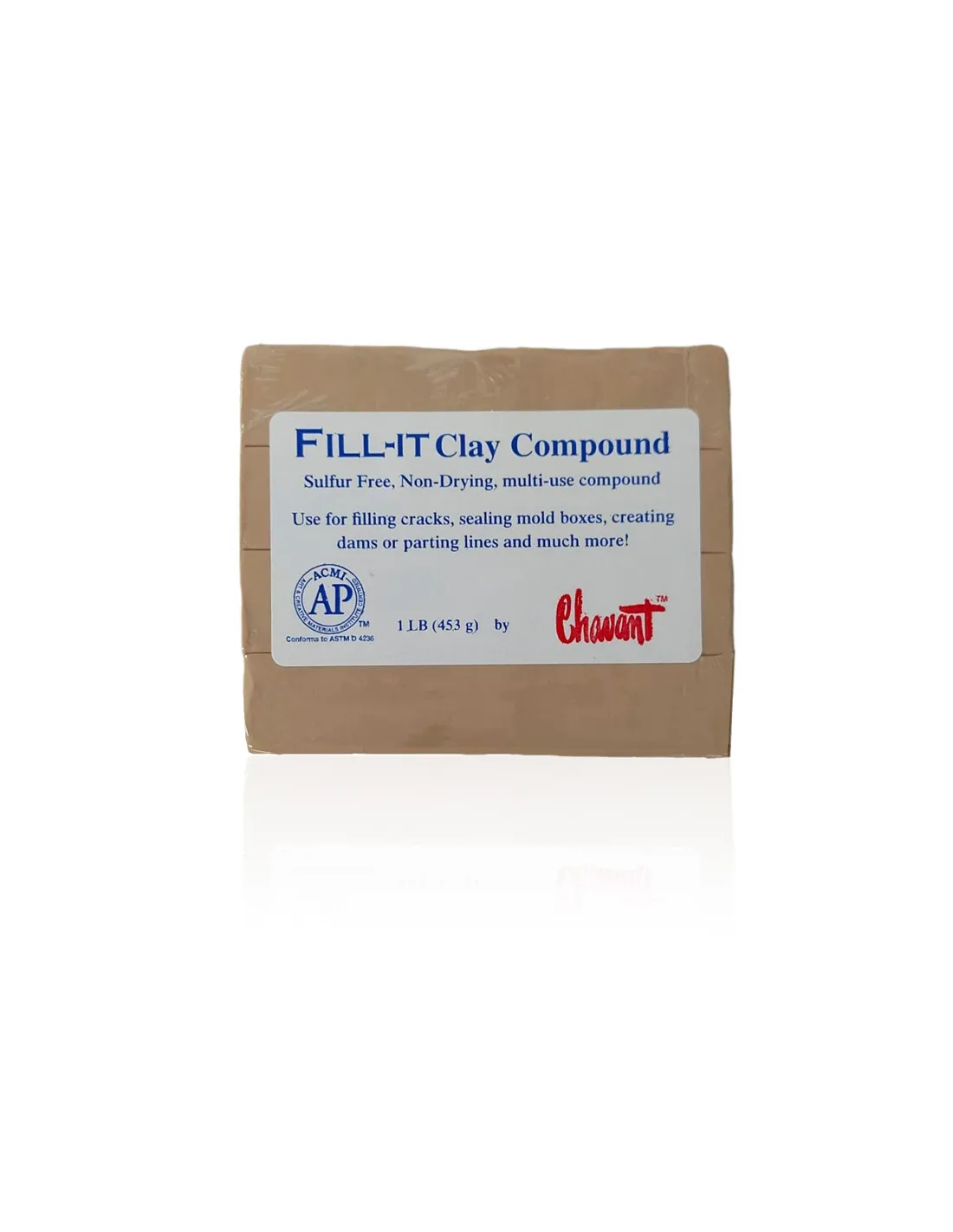
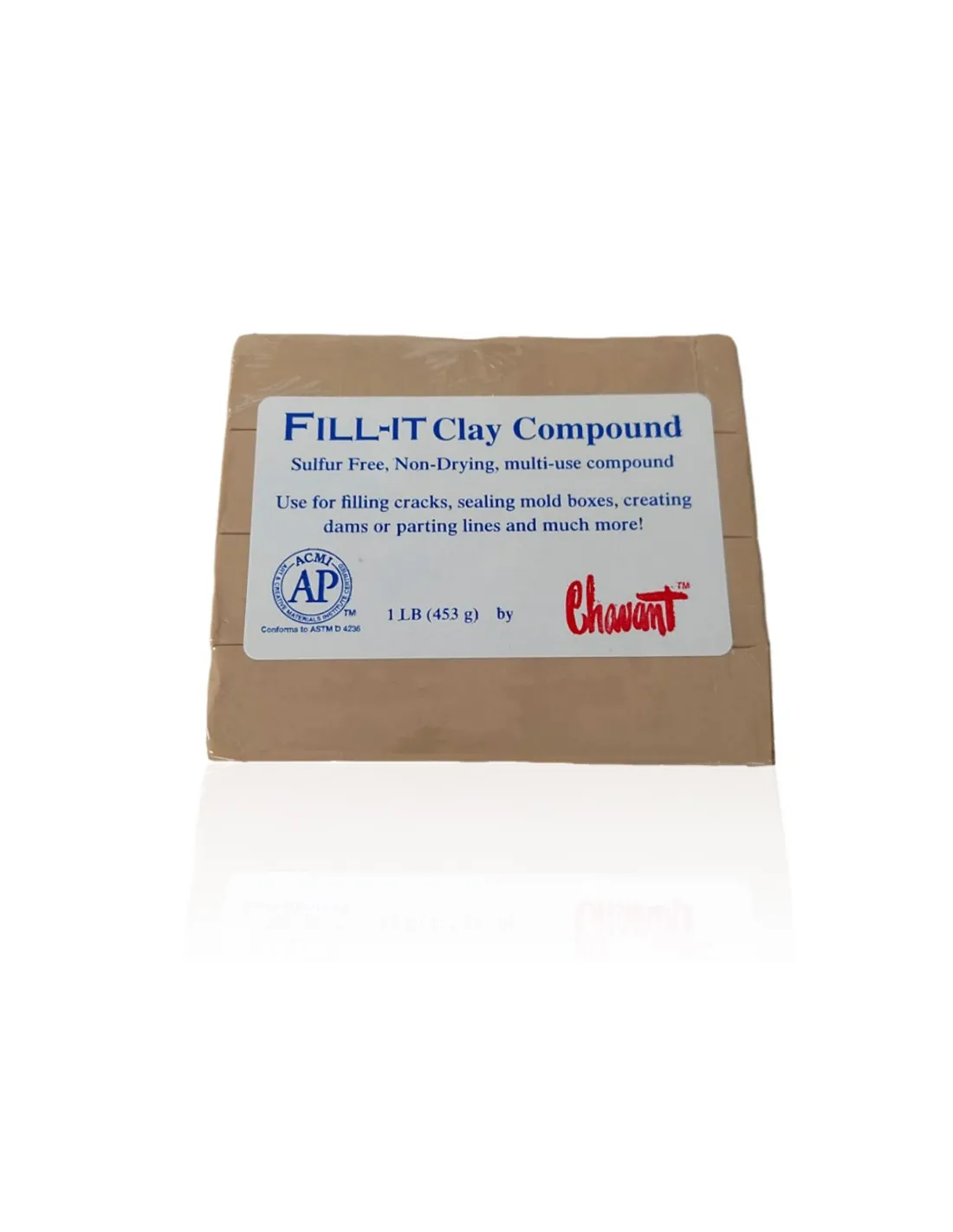
Fill-It from Chavant -Plastiline for Mold Sealing-
204300700
€8.50
10,29 € Tax incl.
10,29 € Tax incl.
Chavant Fill-It sulfur-free clay for mold sealing, dams and parting lines. 453 g block, beige, very flexible and does not dry out.
Fill-It by Chavant is a professional sulfur-free clay designed specifically for workshop mold making: sealing mold boxes, building containment dams and defining parting lines with precision. Its soft and flexible formula makes it workable right from the start, with no heat tools required, and it never dries out or cracks over time, making it an indispensable reference in any platinum silicone mold making workshop.
Technical specifications
| Property | Value |
|---|---|
| Color | Beige |
| Weight per block | 453 g |
| Sulfur content | Sulfur-free |
| Maximum working temperature | 32 °C (above this it becomes excessively soft) |
| Presentation | Block pre-cut into 4 pieces |
| Base | Mineral clay / wax |
| Dries or cracks | No |
| Reusable | Yes, indefinitely |
What it is used for
Fill-It is designed for the auxiliary tasks of professional mold making: it is not an artistic modelling clay, but a functional tool that solves the most common problems in mold construction. Since it contains no sulfur, it is fully compatible with platinum (addition) silicones with no risk of cure inhibition.
- Sealing mold boxes: prevents silicone or resin leaks during pouring
- Building containment dams for two-part or multi-part molds
- Defining parting lines on complex geometry pieces
- Filling and repairing cracks in existing molds
- Supporting and levelling pieces during the mold making process
- Creating pour spouts and vents
- Sealing joints between mold box panels (wood, melamine, HDPE)
How to use it
- Separate one of the four pre-cut pieces from the block according to the amount you need.
- Rub the piece between your hands for a few seconds: body heat is enough to soften it and make it workable.
- If you need a smoother surface, slightly dampen your fingers or use mineral spirits, turpentine or a citrus solvent applied in a small amount on the clay surface as a lubricant.
- Apply the clay to the area to be sealed, dam or parting line, pressing firmly to ensure adhesion and a tight seal.
- Smooth the surface with a spatula, sculpting tool or damp finger until you achieve the desired finish.
- Pour the silicone or resin as normal. Fill-It will hold the weight of the material without deforming or seeping through.
- Once demoulded, remove the clay, knead it again and store it in its original wrapper to reuse it on the next job.
Compatibility with platinum silicones: Fill-It by Chavant is formulated without sulfur, so it is safe to use alongside addition (platinum) silicones. However, bear in mind that other materials present in the same mold can inhibit curing: sulfur-containing clays, cyanoacrylate adhesives, latex, plasticised PVC or paints with metallic driers. If you have any doubts about a material in contact with your platinum silicone, always carry out a prior cure test on a small area before pouring the full batch.
Usage tips
Temperature control in the workshop
Fill-It works correctly at room temperature (up to 32 °C). In warm workshops or during summer, store it in a cool place before use: if it is too soft, it will be sticky and difficult to control. In winter or in cold workshops, a couple of minutes of vigorous rubbing between your hands is enough to activate it without any external heat.
Surface finishing and gap-free sealing
To achieve a tight seal without micro-leaks, press the clay at an angle against the mold box wall and then run your finger or a silicone spatula over it with a light sweeping motion. Add a few drops of mineral spirits or citrus solvent on your finger if you need a smoother finish. Always check the entire perimeter before pouring: a small gap in the sealing line can ruin the mold.
Reuse and storage
Fill-It does not oxidise, does not dry out and can be heated and cooled as many times as needed without losing its properties. After each use, clean the clay of any cured silicone or resin residue, knead it and wrap it up again. A well-kept block lasts years in the workshop. If there are silicone residues stuck to it, use mineral spirits to clean the surface before storing it.
Frequently asked questions
Can I use this clay directly in contact with platinum silicones?
Yes. Fill-It by Chavant is formulated without sulfur, so it does not inhibit the curing of addition (platinum) silicones. This is precisely one of its main uses: sealing dams and parting lines in platinum silicone molds with no risk of the contact area remaining uncured.
Does it need to be heated before working with it?
No. Fill-It is soft enough to work with the heat of your hands. Rub the piece between your palms for a few seconds and it will be ready. Do not heat it above 32 °C: it would become too sticky and lose workability.
Can it be used for artistic modelling or detail sculpting?
That is not its purpose. Fill-It is designed for sealing, filling and building dams, not for precision sculpting. If you are looking for a professional clay for modelling and detail work, take a look at the Chavant Hard or Chavant Medium ranges, depending on the hardness level you need.
How many times can it be reused?
Indefinitely. Fill-It does not dry out, does not crack and does not oxidise. It can be heated and cooled repeatedly without any change in its properties. Simply clean it of solid residue after each use and store it wrapped up for the next job.
What is the purpose of the block pre-cut into four pieces?
The pre-cut format makes it easier to distribute the clay along the mold's cut lines and dams without having to cut the entire block. Each piece is approximately the right amount for a long sealing run, although you can break each piece down further as needed.
What lubricants can I use to smooth the surface?
You can use small amounts of water, mineral spirits, turpentine, citrus-based solvents or isopropyl alcohol applied on your finger or a spatula. These substances act as a surface lubricant and allow you to achieve a smoother finish without altering the properties of the clay.
Is it compatible with condensation (tin) silicone molds?
Yes. Since it contains no sulfur or components that interfere with condensation curing, Fill-It can also be used for dams and seals in tin silicone molds without any problem.
What should I do if the clay is too soft in the workshop?
If the ambient temperature exceeds 32 °C, store the clay in a cooler place (for example, in an air-conditioned area or in a refrigerator for a few minutes) before working with it. In warm environments, work with small pieces to maintain control.
- Color
- Beige

No reviews
Tap to zoom
