Shopping Cart


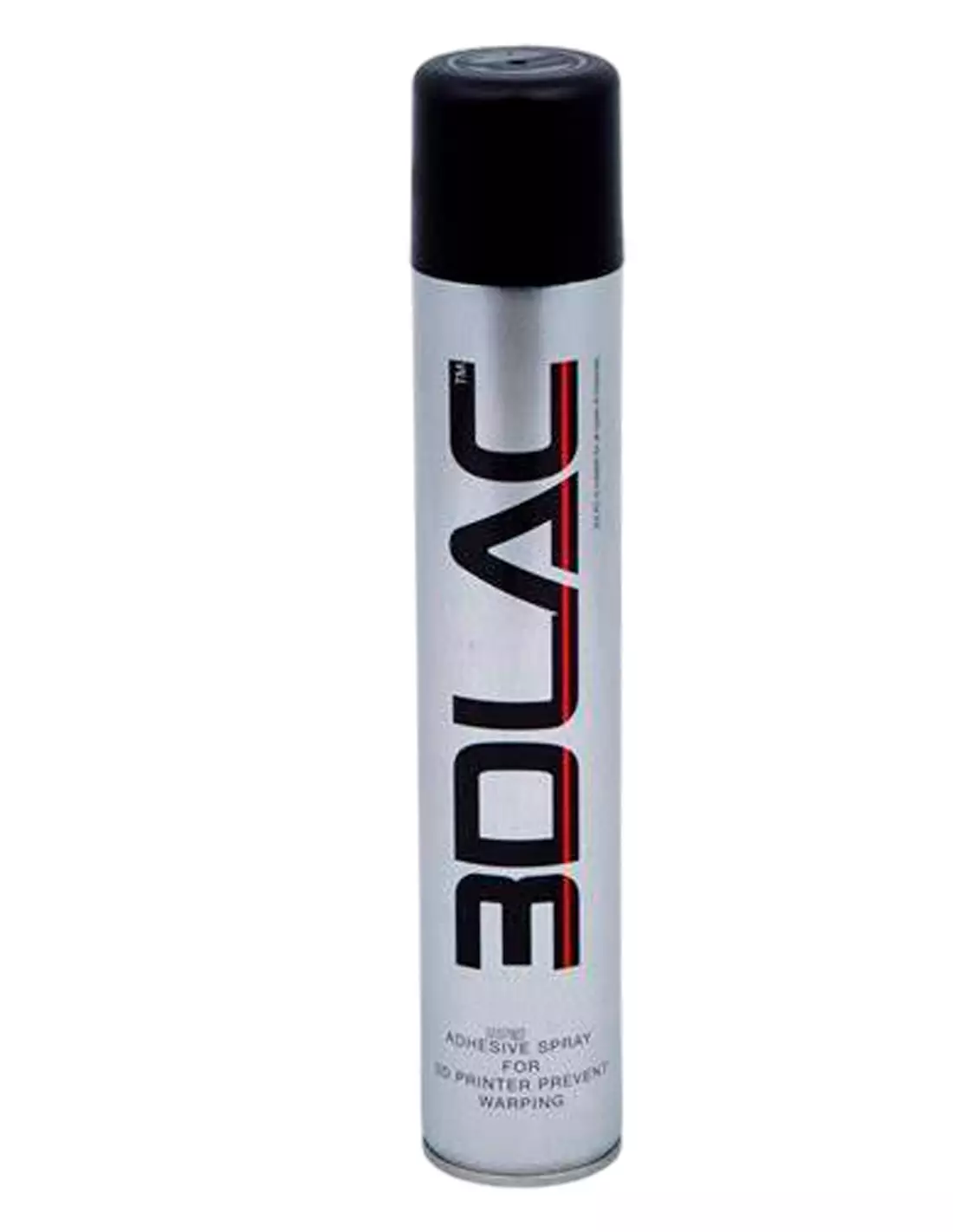
3DLAC - FDM Spray Adhesive
406210000
€10.00
12,10 € Tax incl.
12,10 € Tax incl.
This product cannot be shipped by air. To the Balearic Islands it is sent by sea freight. For deliveries to the Canary Islands, please contact us before ordering.
Anti-warping adhesive spray for FDM 3D printing. Compatible with PLA, ABS, PETG. Ultra-fast drying. 400 ml can.
3DLAC is the reference adhesive spray for FDM 3D printers. Formulated specifically for heated beds, it ensures the first layer adheres firmly and eliminates warping in materials prone to lifting such as ABS or PETG. A 400 ml can that lasts many prints if you apply thin coats.
Technical specifications
| Feature | Value |
|---|---|
| Format | Aerosol spray |
| Content | 400 ml |
| Adhesive type | Anti-warping for FDM printing |
| Drying | Ultra-fast (minutes at room temperature) |
| Filament compatibility | PLA, ABS, PETG and other common FDM materials |
| Cleaning | Water or isopropyl alcohol |
| Recommended application distance | 20–30 cm |
What it's used for
3DLAC solves one of the most common problems in FDM printing: parts detaching from the bed during printing. By applying a uniform coat over the print surface, it creates an adhesive base that holds the molten filament from the first layer and releases it easily once the part cools down.
- First layer adhesion on FDM printers with heated or cold bed
- Warping prevention on ABS, PETG and other filaments prone to shrinkage
- Printing large parts with a large contact area with the bed
- Compatibility with glass, PEI, anodised aluminium and borosilicate glass surfaces
- Use when printing flexible materials that tend to shift during printing
How to use it
- Shake the can well for at least 30 seconds before each use.
- Make sure the bed is clean and free of residue from previous prints. Use 99.9% isopropyl alcohol to clean it if necessary, and allow to dry completely.
- Position the bed or protect it with paper if you don't want the spray to reach other parts of the printer.
- Apply a thin, even coat over the print surface from a distance of 20–30 cm. There is no need to soak the bed — a light coat is sufficient and more effective.
- Allow to dry for a few minutes before starting the print.
- Once printing is complete and the bed has cooled, the part should release easily. If not, cool the bed further or carefully use a spatula.
- Clean adhesive residue from the bed with water or isopropyl alcohol before the next application.
- After each use, purge the valve by inverting the spray and pressing briefly until only gas comes out. This prevents the valve from clogging.
Usage tips
Thin coat, better results
The most common mistake is applying too much product. A thin, even coat is more effective than a thick one: it dries faster, adhesion is more consistent and the part releases better when it cools. If you notice excess spray in any area, wipe it with a dry paper towel before it dries completely.
Bed temperature and materials
3DLAC works well with the bed at room temperature, but performs best on heated beds. For PLA, 50–60 °C is sufficient; for ABS, work between 90–110 °C. The higher the bed temperature, the greater the adhesion during printing and the easier the release when cooling. If printing PETG, bear in mind that this material already has good adhesion on its own: apply a very thin coat to avoid the part sticking too firmly.
Spray maintenance and bed cleaning
Always purge the valve by inverting the can when you finish. If the valve clogs, remove it and clean it with isopropyl alcohol. To clean the bed between prints, warm water is sufficient in most cases; for surfaces with built-up residue, 99.9% isopropyl alcohol dissolves the adhesive without damaging glass, PEI or anodised aluminium. Make sure the surface is completely dry before reapplying the spray.
Frequently asked questions
Do I need to apply the adhesive before every print?
It depends on the surface and the material. In many cases, a single application of 3DLAC holds up through several consecutive prints. Reapply when you notice the first layer is no longer gripping well or when you clean the bed between jobs.
Does it work on cold beds?
Yes, 3DLAC also works on cold beds, although its performance is optimal on heated beds. If printing PLA on a cold bed, apply a thin coat and allow it to dry thoroughly before starting the print.
Which print surfaces is it compatible with?
3DLAC is compatible with the most common surfaces: borosilicate glass, tempered glass, anodised aluminium, PEI and generic BuildTak surfaces. Use on surfaces with delicate coatings is not recommended without first testing on a small area.
How do I remove the part once printing is complete?
As the bed cools, most parts release on their own or with a gentle push. If the part does not release easily, allow the bed to cool further or apply a small amount of water at the edges. Avoid forcing it with sharp tools that could damage the surface.
Can it be used on removable flexible surfaces?
Yes. On flexible magnetic surfaces, apply 3DLAC in the same way. When you remove the sheet and flex it, the part detaches easily. The adhesive can then be cleaned off with water or isopropyl alcohol without damaging the sheet.
Is it compatible with all filaments?
3DLAC is designed for the most common FDM filaments: PLA, ABS, PETG, TPU and other standard materials. For engineering filaments such as nylon, polycarbonate or carbon fibre, it may need to be combined with a high bed temperature and a closed enclosure for best results.
Do I need protection when applying it?
As it is an aerosol, it is recommended to apply it in a ventilated space and wear nitrile gloves to avoid skin contact. In small or poorly ventilated spaces, it is advisable to use a mask with organic vapour filter.
How should the can be stored correctly?
Store the can upright, away from heat sources and direct sunlight. Always purge the valve after use to prevent clogging. The recommended storage temperature is between 5 °C and 40 °C.
No reviews
Tap to zoom