Shopping Cart


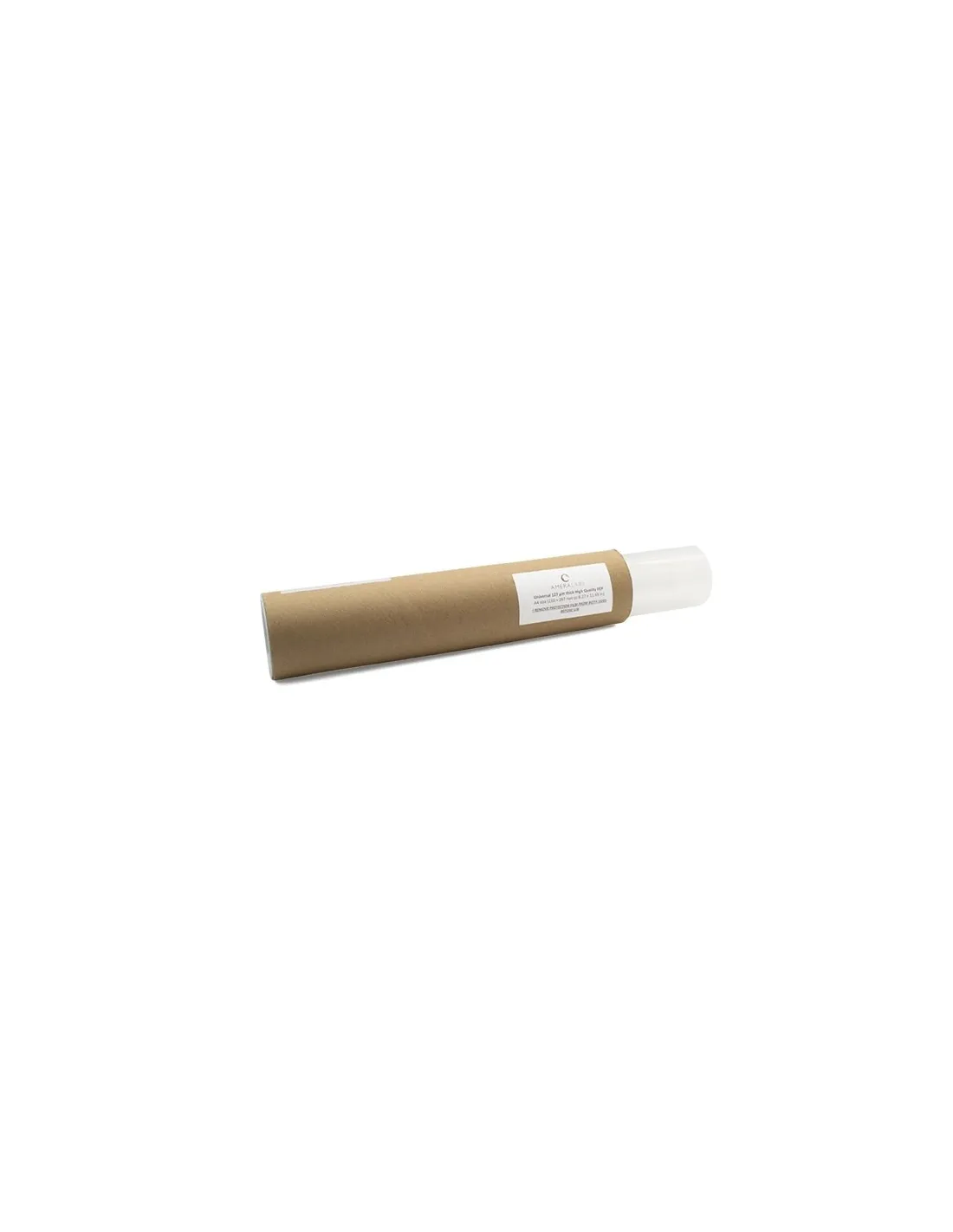
NFEP film (PFA) A4 127 microns
220120310
€21.00
25,41 € Tax incl.
25,41 € Tax incl.
Pre-cut A4 nFEP (PFA) film, 127 microns. 10 times more flex-resistant than standard FEP. A durable release film alternative for resin 3D printing.
The nFEP film (also known as PFA or perfluoroalkoxy) is a release film for resin 3D printers that outperforms conventional FEP in resistance to repeated flexing. This pre-cut A4 format at 127 microns allows you to replace your vat film with precision and without waste, significantly extending the lifespan of your vat.
Technical specifications
| Parameter | Value |
|---|---|
| Composition | PFA (perfluoroalkoxy) |
| Alternative trade name | nFEP, non-FEP, PFA film |
| Thickness | 127 microns |
| Format | Pre-cut A4 sheet |
| Flex resistance vs FEP | 10 times higher |
What it is used for
This film is used as a release film in the vat of LCD and MSLA resin 3D printers. Its greater flex resistance makes it a preferred option for medium and large format printers, or for users looking to maximise the durability of their consumables.
- Replacement for the standard FEP film in resin 3D printer vats
- A4 or smaller format LCD and MSLA printers
- Users with few print failures who prioritise film longevity
- Large screens where tension on the film is greater
- Production environments with continuous print cycles
How to use it
- Empty and thoroughly clean the printer vat. Use 99.9% isopropyl alcohol to remove any cured or uncured resin residue.
- Carefully remove the old film without forcing the vat frame.
- Place the nFEP A4 sheet over the vat frame, centring it and making sure it lies flat without wrinkles or bubbles.
- Secure the film following your vat's tensioning system (perimeter screws, pressure frame, etc.). Apply uniform and progressive tension.
- Visually check that the surface is flat and free of deformations before pouring in the resin.
- Pour in the resin and run a test print to verify correct adhesion of the first layer and film release behaviour.
Usage tips
Handling and cleaning
The nFEP surface is more susceptible to scratching than conventional FEP. When removing failed parts stuck to the film, use plastic or silicone tools — never metal. To clean resin residue, apply 99.9% isopropyl alcohol with a soft microfibre cloth using circular motions without excessive pressure. Always work with powder-free nitrile gloves to avoid contact with uncured resin.
Correct film tensioning
Excessive tensioning can deform the vat frame and cause bed calibration issues. Insufficient tensioning produces ripples that directly affect print quality. Apply gradual and symmetrical tension, checking with raking light that the surface is perfectly flat. If your vat has a tension indicator, use it.
When to choose nFEP over FEP
nFEP is the best option if you print frequently, have few accidental film tears, and work with solid geometry models without very fine supports. For parts with thin and very dense supports, conventional FEP may offer better release results in some cases. Evaluate both options if your part typology is highly varied.
Frequently asked questions
What is the real difference between nFEP film and standard FEP?
The nFEP film (PFA, perfluoroalkoxy) is up to 10 times more resistant to repeated flexing than conventional FEP, resulting in a considerably longer lifespan. It also stretches less during layer peeling, which can speed up the release process. Its main drawback is that its surface is somewhat softer and more prone to mechanical scratching.
What printer size is the A4 format designed for?
The A4 format (210 x 297 mm) is compatible with most LCD and MSLA printers on the market with screens up to approximately 8.9 inches. For printers with larger vats, check your vat dimensions before purchasing. The precise A4 cut makes fitting easier and minimises material waste.
How often should the vat film be replaced?
It depends on print volume and the type of resin used. With nFEP, the lifespan is notably longer than with standard FEP thanks to its superior flex resistance. As a general guideline, it is recommended to visually inspect the film every 1–2 litres of resin printed and replace it at the first sign of significant opacity, deep scratches, or loss of tension.
Can it be used with any type of resin for 3D printing?
Yes. The nFEP film (PFA) is chemically inert and compatible with standard, ABS-Like Resin, flexible, engineering, and general photopolymer resins used in LCD and MSLA printers. Its release behaviour is suitable for the vast majority of formulations on the market.
How do I clean the film correctly without damaging it?
Always use 99.9% isopropyl alcohol and a soft microfibre cloth. Avoid any abrasive materials or metal tools on the nFEP surface. Work with nitrile gloves to protect yourself from uncured resin, which is a skin irritant.
Is any protective equipment necessary when handling the film and resin?
Yes. Uncured photopolymer resin is irritating and potentially sensitising. Always use powder-free nitrile gloves and work in well-ventilated spaces. For extended resin work sessions, adequate respiratory protection is recommended, such as the 3M 4251 Reusable Mask.
Does nFEP film reduce print failures compared to FEP?
Not necessarily. Tests carried out indicate that the print failure rate does not improve significantly with nFEP compared to conventional FEP. The main benefit of nFEP is its durability and resistance to flex-induced tearing, not a drastic reduction in failures. For parts with very fine supports, standard FEP may even perform better.
How do I know the film is correctly tensioned before printing?
The film should be completely flat, with no wrinkles, bubbles, or visibly slack areas. Check this with raking light or by illuminating the empty vat from below. If your vat has perimeter tensioning screws, tighten them in a cross pattern progressively, as when mounting a wheel. Uniform tension is key to achieving stable first layers and good adhesion.
No reviews
Tap to zoom