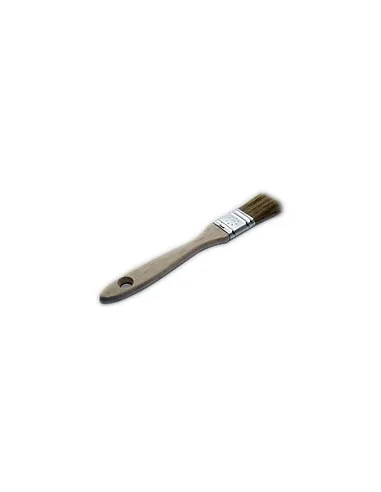
The Special Laminating Brush is a brush designed specifically for working with polyester, epoxy and vinylester resins in laminating processes with fibreglass, carbon or aramid. Its bristles are selected to withstand prolonged contact with resins and solvents, and it is equally useful for applying silicone in mould layers and hand moulding work.
Technical specifications
| Feature |
Detail |
| Tool type |
Laminating brush / paddle brush |
| Main applications |
Resin and fibre laminates, silicone application |
| Compatibility |
Polyester, epoxy, vinylester resins and silicones |
| Chemical resistance |
Bristles resistant to solvents and reactive resins |
What it is used for
This brush is designed for professionals and workshops working with hand lay-up laminating systems and for those applying silicones in moulding. Correct use speeds up the process, improves fibre impregnation and reduces the appearance of bubbles in the laminate.
- Impregnating fibreglass mat with epoxy resin for laminates or polyester resin
- Applying successive layers in carbon, kevlar or aramid laminates
- Spreading the first layer of gel coat or resin onto the mould
- Applying moulding silicone on irregular or highly detailed surfaces
- Distributing resin evenly before using the laminating roller or the metal air-release roller
- Composite part repair work in the workshop
How to use it
- Prepare the resin in a casting ladle or suitable container, following the manufacturer's mixing ratios (for polyester resin, approximately 1.5% catalyst by weight).
- Cut the fibre to the required size with the special scissors for carbon, kevlar or aramid and place it on the mould surface.
- Load the brush with resin and apply it to the fibre with gentle movements, working from the inside outwards, to begin impregnating it without displacing the fabric.
- Continue adding resin with the brush until the fibre is completely saturated and transparent.
- Pass the laminating roller or air-release roller to eliminate air bubbles and consolidate the laminate.
- Repeat the process layer by layer until the desired thickness is achieved, respecting the gel times indicated by the resin manufacturer.
- When finished, clean the brush immediately with the appropriate solvent for the resin used (acetone for polyester, epoxy solvent for epoxy systems).
Usage tips
Immediate cleaning — the key to extending tool life
Resins harden quickly once the system is catalysed. Clean the brush as soon as you finish each working batch, before the resin gels. Once cured between the bristles, the tool becomes unusable. Use the appropriate solvent for each type of resin and squeeze the brush out well after washing.
Application technique to avoid bubbles
Apply the resin with the brush using gentle movements, without excessive scrubbing. Vigorous scrubbing introduces air into the laminate. The brush's function is to saturate the fibre; bubble removal is the job of the air-release roller. Do not overload the brush with too much resin at once: it is better to apply several moderate loads than a single excessive one.
Use with moulding silicones
When applying moulding silicone with a brush (brush-on technique), use the brush to spread each layer with short, controlled movements. Make sure the previous layer has cured completely before applying the next one. This prevents the layers from mixing and ensures a uniform thickness throughout the mould.
Frequently asked questions
What is the difference between a laminating brush and a conventional paint brush?
Conventional paint brushes have bristles that dissolve or deform on contact with reactive resins and their solvents. The Special Laminating Brush is made with materials resistant to these chemical agents, ensuring that the bristles do not shed or contaminate the laminate during work.
Can I use this brush with epoxy resin as well as polyester resin?
Yes. The brush is compatible with the main resin systems for laminating: polyester, epoxy and vinylester. Make sure to clean it with the appropriate solvent for each system after each use.
What solvent should I use to clean the brush after using polyester resin?
For polyester and vinylester resins, acetone is the standard cleaning solvent. For epoxy systems, use the specific solvent recommended by the resin manufacturer. In both cases, clean before the resin gels.
How many layers of fibre can be applied in one working session?
It depends on the type of resin and ambient temperature. With polyester resin at normal workshop temperature (20–25 °C), you can apply 2–3 layers of 300 g/m² mat before the system gels, provided you work efficiently. For thicker laminates, it is common practice to allow partial gelling between series of layers to control exotherm.
Can it be used to apply gel coat?
Yes. The brush is suitable for spreading gel coat onto the mould surface before starting the laminate. Apply the gel coat in uniform layers of 0.4–0.6 mm and allow it to cure until tacky to the touch (gel state) before starting the lay-up.
Is it suitable for brush-on silicone application on large-surface moulds?
Yes, it is one of its standard workshop applications. For large-surface moulds, work in sections and maintain a uniform thickness with each pass. Always follow the instructions of the silicone you are using to respect the inter-coat times.
Do I need any other tools besides the brush for a proper laminate?
For a professional-quality laminate, the brush is complemented by a laminating roller to consolidate the fibre and a metal air-release roller to eliminate air pockets. You will also need appropriate scissors to cut the fibre and a container for mixing and measuring the resin.