Shopping Cart


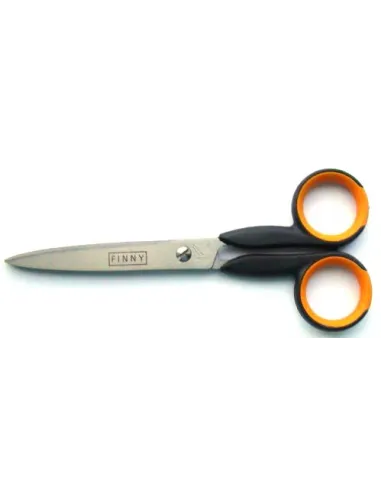
Carbon / Kevlar / Aramid Special Scissors
207291500
€25.00
30,25 € Tax incl.
30,25 € Tax incl.
Micro-serrated scissors for precise cutting of carbon fibre, kevlar and aramid. Available with straight or curved blade (20 cm) for angled cutting.
The special scissors for carbon, kevlar and aramid are the essential tool when working with high-strength technical fibres. Their double micro-serrated blade grips and cuts these fibres without fraying or slipping, delivering a clean, controlled cut that conventional scissors simply cannot achieve. If you need to cut at an angle or work on curved surfaces, the 20 cm curved blade model is the most precise option.
Technical specifications
| Feature | Detail |
|---|---|
| Cutting material | Carbon fibre, kevlar, aramid and high-strength technical fibres |
| Blade type | Double micro-serrated blade |
| Available variants | Straight blade / Curved blade (20 cm) for angled cutting |
| Recommended use | Dry laminates and technical fibre preforms |
What it's used for
These scissors are specifically designed for cutting technical fibres that, due to their interwoven structure and hardness, resist or damage the edge of standard scissors. The micro-serration on the blades prevents the fibre from slipping during cutting, which is essential for obtaining clean pieces and precise edges in laminating work.
- Cutting carbon fibre fabrics and weaves (unidirectional, twill, plain)
- Cutting kevlar and aramid fibre in various weights
- Trimming preforms for complex moulds
- Adjusting fabrics before impregnation with epoxy resin
- Preparing layers for infusion or hand lay-up laminates
- Angled cutting on curved surfaces (curved blade model 20 cm)
How to use it
- Lay the carbon, kevlar or aramid fabric flat on a clean, level surface.
- Mark the cutting lines with masking tape or a workshop marker for greater precision.
- Position the scissor blades perpendicular to the fabric or at the desired angle if using the curved blade model.
- Cut with continuous, steady strokes, using the full length of the blades to avoid sawing motions that fray the fibre.
- For curves or tight angles, use the 20 cm curved blade model and work in short, controlled passes.
- Once the pieces are cut, integrate them into your laminating process with the carbon/epoxy laminating kit and apply with a laminating roller to properly impregnate the layers.
Usage tips
Keep the blades clean and dry
Uncured epoxy or polyester resin can stick to the blades if the scissors come into contact with already-impregnated fabrics. Clean the blades with acetone or a suitable solvent immediately after each use. Do not cut resin-wet fabrics: always work dry before impregnation.
Always cut before impregnating
Cut all required pieces before mixing the resin. Once impregnation has started, working time is limited and stopping to cut is not advisable. Stack the pieces numbered or marked so you can place them in the mould in the correct order during laminating.
Use the curved blade for hard-to-reach areas
On moulds with complex shapes or small radii, the 20 cm curved blade model allows you to trim excess fabric already placed in the mould without damaging the surface. It is especially useful for profiling the edges of the part before the resin cures.
Frequently asked questions
Why won't regular scissors cut kevlar or carbon fibre?
Technical fibres such as kevlar and carbon are extremely resistant to cutting due to their molecular structure and weave. A conventional pair of scissors slips over these fibres, does not cut them cleanly and dulls quickly. These micro-serrated scissors grip the fibre with each tooth and cut without fraying, maintaining the edge for much longer.
Can I use these scissors for fibreglass?
Although optimised for kevlar, carbon and aramid, they can also be used with fibreglass fabrics. For intensive fibreglass work, the specific 28 cm fibreglass scissors offer a longer blade and are designed specifically for that material.
When should I choose the curved blade model instead of the straight one?
The 20 cm curved blade model is ideal when you need to cut at an angle, trim excess fabric already placed in a mould, or work in hard-to-reach areas. If your regular work involves cutting flat patterns on a table, the straight blade model is sufficient and more comfortable for long, straight cuts.
How do I prevent kevlar fabric from fraying when cutting?
Kevlar tends to fray at the edges if the cut is not clean. To minimise this, always use the scissors with the blades properly adjusted and cut with continuous strokes without hesitating. You can also apply a thin line of masking tape along the cutting line before cutting: the tape holds the fibres in place during the cut and is removed afterwards.
How often do the scissors need to be sharpened or replaced?
Durability depends on workload and fibre type. Carbon and aramid are abrasive and wear the edge faster than other fibres. If you notice the scissors starting to drag rather than cut, or that edges fray more than usual, this is a sign that the blades need attention. Regular cleaning and avoiding contact with cured resin considerably extends the service life.
What resin is recommended for carbon fibre laminates?
For carbon fibre laminates, epoxy resin is the standard choice for its excellent adhesion, low shrinkage and surface finish. The Feroca carbon/epoxy laminating kit includes everything you need to get started. For the final finish you can use the Epofer EX201+E202 epoxy top coat and polish with PolarShine 10.
Is it necessary to use a roller after impregnating the fibre layers?
Yes. The roller is essential for eliminating air bubbles, ensuring uniform impregnation and consolidating the layers together. The special laminating roller is ideal for spreading the resin, while the metal de-airing roller is used to remove trapped air between layers in critical areas.
No reviews
Tap to zoom