Shopping Cart



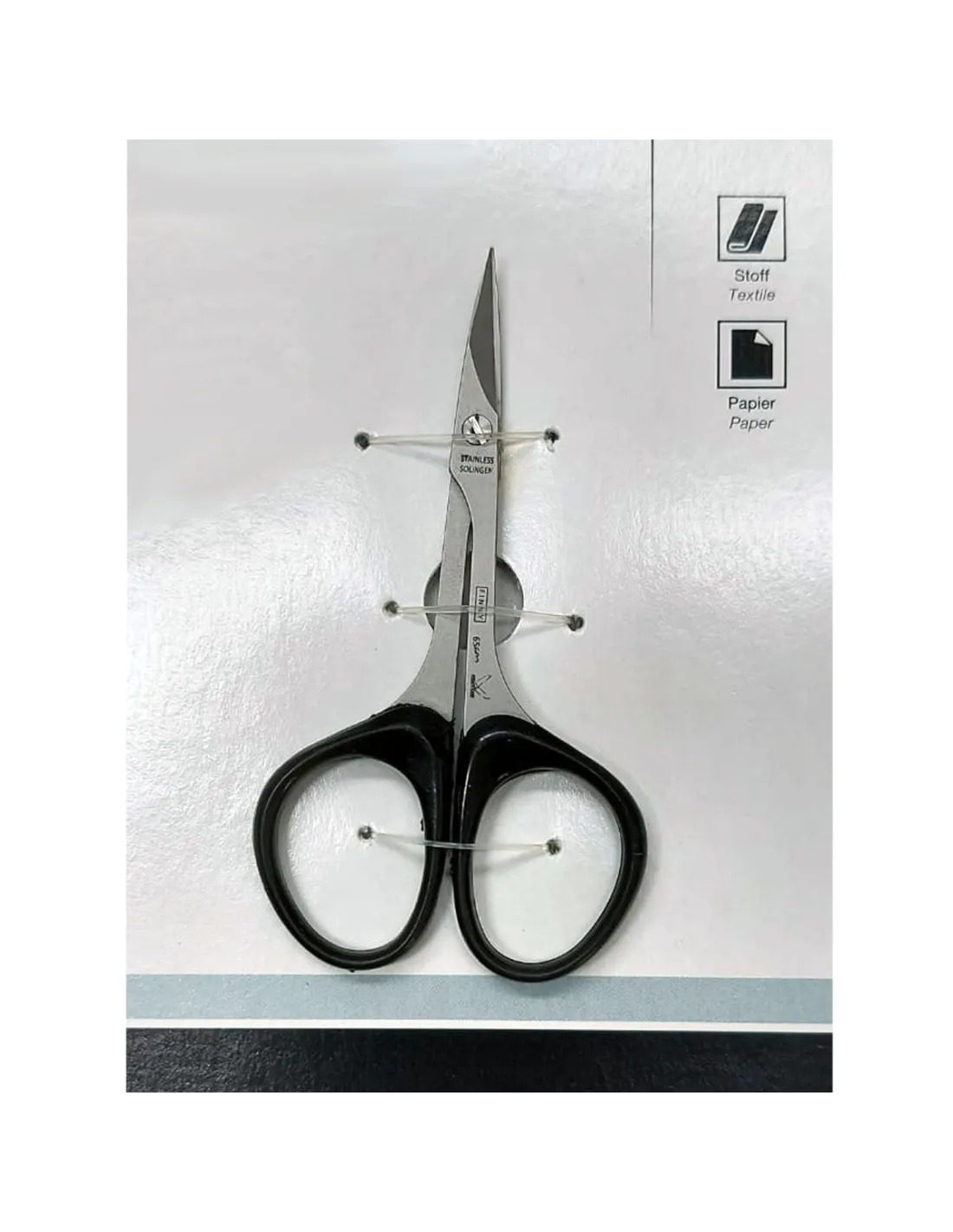
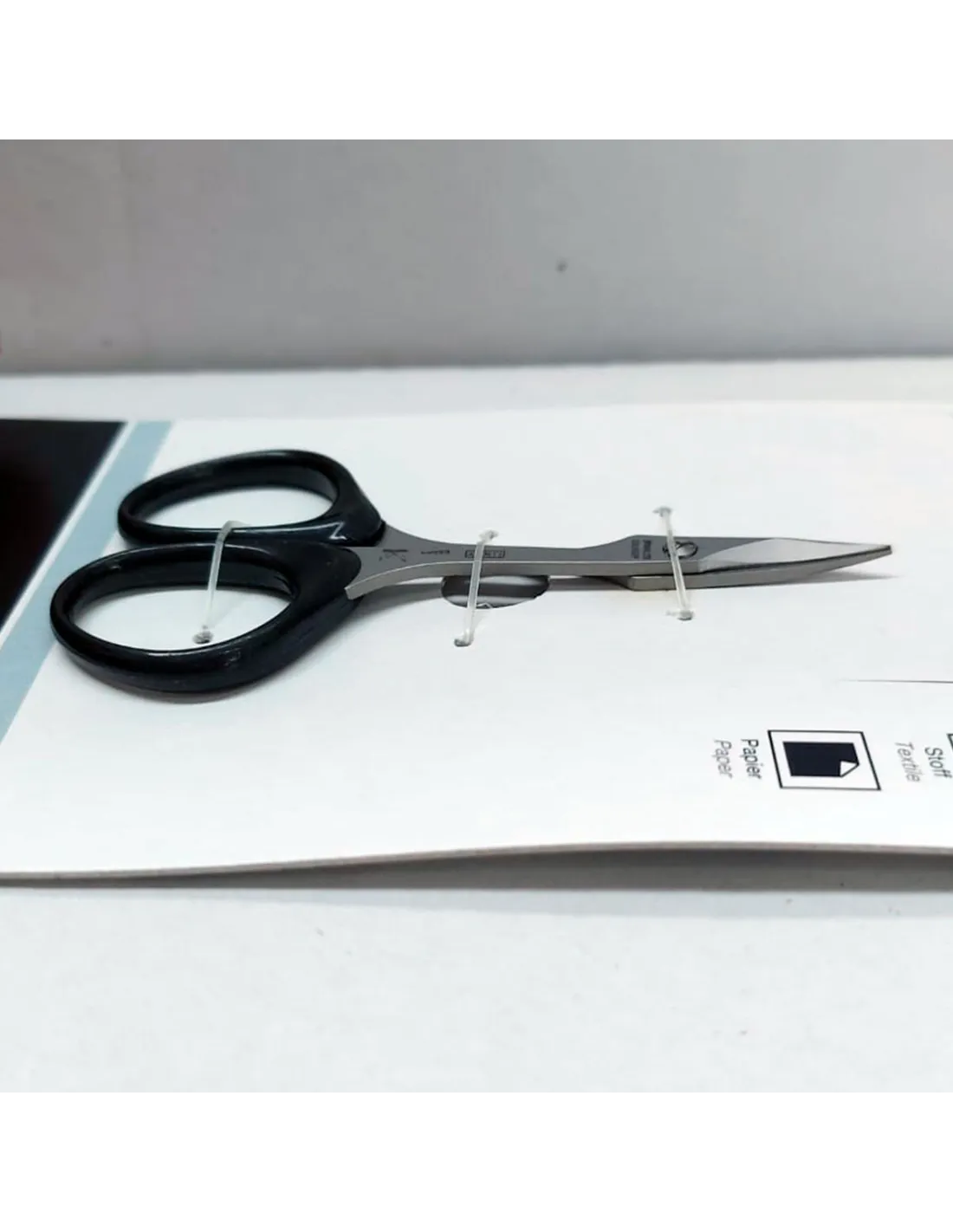
Curved Silicone Scissors 9cm
207392600
Temporarily out of stock
€19.00
22,99 € Tax incl.
22,99 € Tax incl.
9 cm curved scissors for trimming flash, edges and silicone excess with precision. Ideal for hard-to-reach areas in the workshop.
The 9 cm curved scissors are the essential finishing tool in any moulding, laminating or special effects workshop. The curved blade follows irregular contours and reaches areas that straight scissors cannot access, making flash trimming, silicone excess removal and edge cleanup clean and controlled with every pass.
Technical specifications
| Feature | Value |
|---|---|
| Total length | 9 cm |
| Blade type | Curved |
| Main use | Cutting silicone, flash and edges |
| Profile | Compact, for precision work |
What they are used for
These scissors are designed specifically for finishing and cleanup tasks in the workshop. Their compact size and curved blade make them particularly effective when working with silicone moulds, cast parts or laminates that require clean, controlled trimming without damaging the finished piece.
- Trimming flash and silicone excess from freshly demoulded parts
- Cleaning edges on resin or polyurethane parts
- Cutting fringe and excess on lightweight fibreglass laminates
- Reaching curved or interior areas that are hard to access
- Fine finishing of special effects and prosthetics pieces
- Precision work on scale models, miniatures and prototypes
- Trimming edges on latex or flexible polyurethane foam parts
How to use them
- Demould the part completely and place it on a stable, well-lit surface.
- Identify the areas with flash, excess material or irregular edges that need trimming.
- Orient the curved blade towards the area to be cut, using the curvature to follow the contour of the part without forcing the wrist angle.
- Make short, controlled cuts, progressing gradually along the edge. Avoid long single-stroke cuts in areas with relief detail.
- For interior or hard-to-reach areas, carefully insert the blade tip and work from the inside outwards.
- Wipe the blade with a cloth after each work session to keep the edge in good condition.
Usage tips
Work with the part in the correct position
Whenever possible, position the part so that the flash is accessible and the blade works in tension, not compression. If the silicone is very soft or warm (freshly demoulded), wait a few minutes for it to stabilise: it will cut better and with less risk of deformation.
Use the curvature to your advantage
The blade curvature is not merely aesthetic: it allows you to keep your hand away from the cutting surface while trimming in concave areas or recesses. Rotate the scissors rather than forcing the wrist angle; this gives you more precision and less fatigue during long jobs.
Blade maintenance
A blunt blade crushes the material instead of cutting it, leaving irregular edges. If you notice the blade dragging rather than cutting cleanly, it is time to sharpen or replace it. Store the scissors with the blades closed to protect the edge between uses.
Frequently asked questions
Can these scissors cut fibreglass or kevlar?
For standard fibreglass in lightweight laminates they can be used occasionally, but this is not their primary purpose. If you regularly work with fibreglass, kevlar or aramid, the most suitable option is a special carbon / kevlar / aramid scissors or the 28 cm fibreglass scissors, designed with hardened steel for that type of material.
Can I use them to cut latex or polyurethane foam?
Yes. These scissors work very well with thin sheet latex and flexible polyurethane foams. The curved blade allows trimming without folding the material and following complex silhouettes with ease.
What advantage does a curved blade have over a straight one?
The curvature keeps the hand and fingers away from the cutting surface, which improves visibility and reduces the risk of accidentally marking the piece. It is also much more comfortable for following curved contours and for working in interior or hard-to-reach areas of a mould or part.
How often should the scissors be cleaned and maintained?
Clean them after each work session, especially if you have been cutting uncured silicone or resin. Material residue can adhere to the blade and hinder future cuts. A dry cloth or one slightly dampened with a compatible solvent is sufficient. Always store them with the blades closed.
Are they suitable for continuous professional use?
Yes. They are designed for workshop use, with a robust construction built to withstand daily work with elastic materials such as silicones, latex and foams. For very demanding cuts on hard or reinforced materials, consult the range of specialist scissors at Feroca.
Where can I buy these scissors and other workshop materials?
You can purchase them from the Feroca online shop or at any of its physical stores: Feroca Madrid (Calle Españoleto, 11 - 28010 Madrid) and Feroca Fuenlabrada (Sierra Elvira, 22 - 28946 Fuenlabrada).
What scissors size is best for highly precise work?
For high-precision work in small areas, a compact format like these 9 cm scissors is the right choice. For work on large parts or with technical materials such as fibreglass, opt for longer scissors with a blade specific to that material.
No reviews
Tap to zoom