Shopping Cart



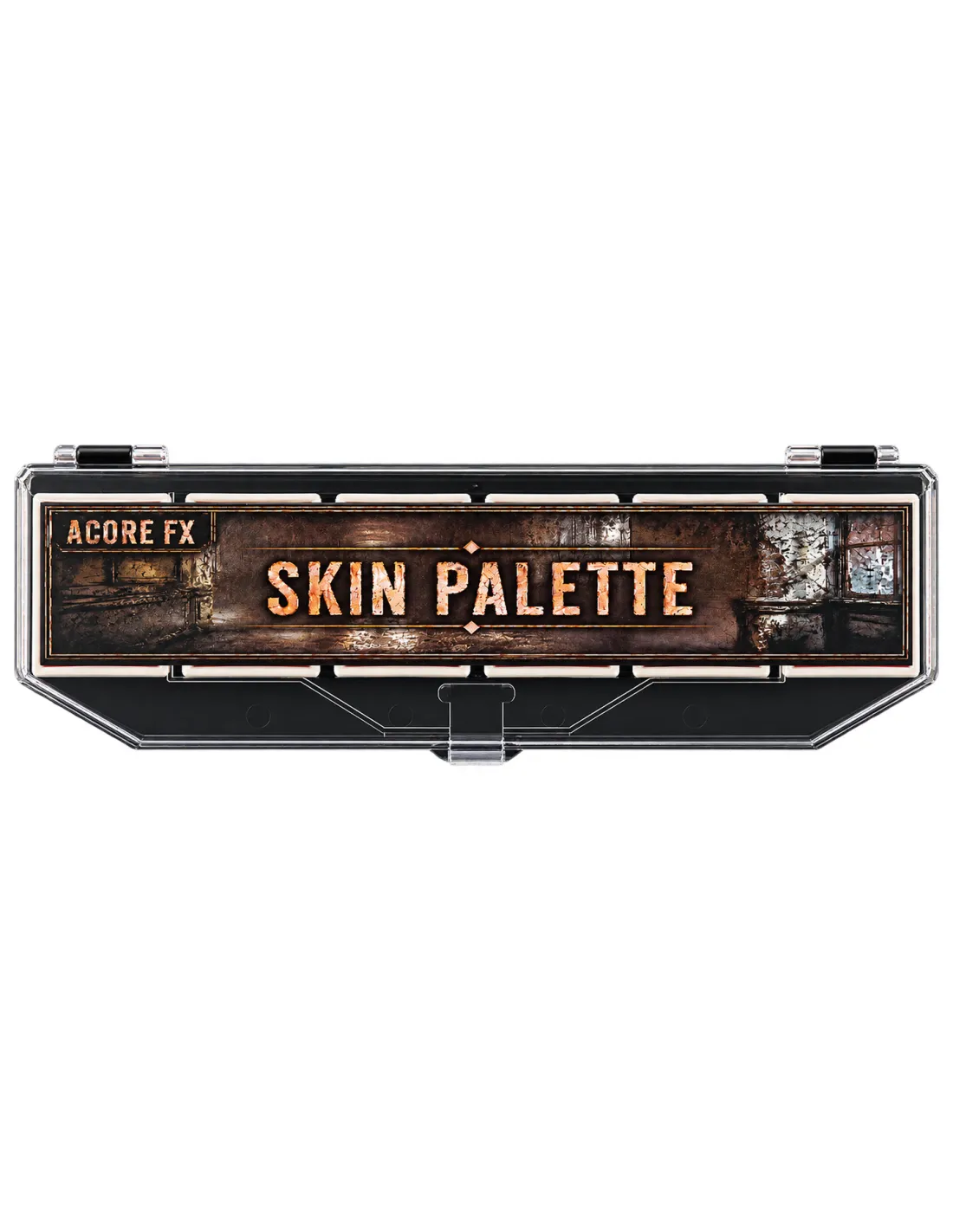
Acore FX - Skin Palette
270016001
€33.05
39,99 € Tax incl.
39,99 € Tax incl.
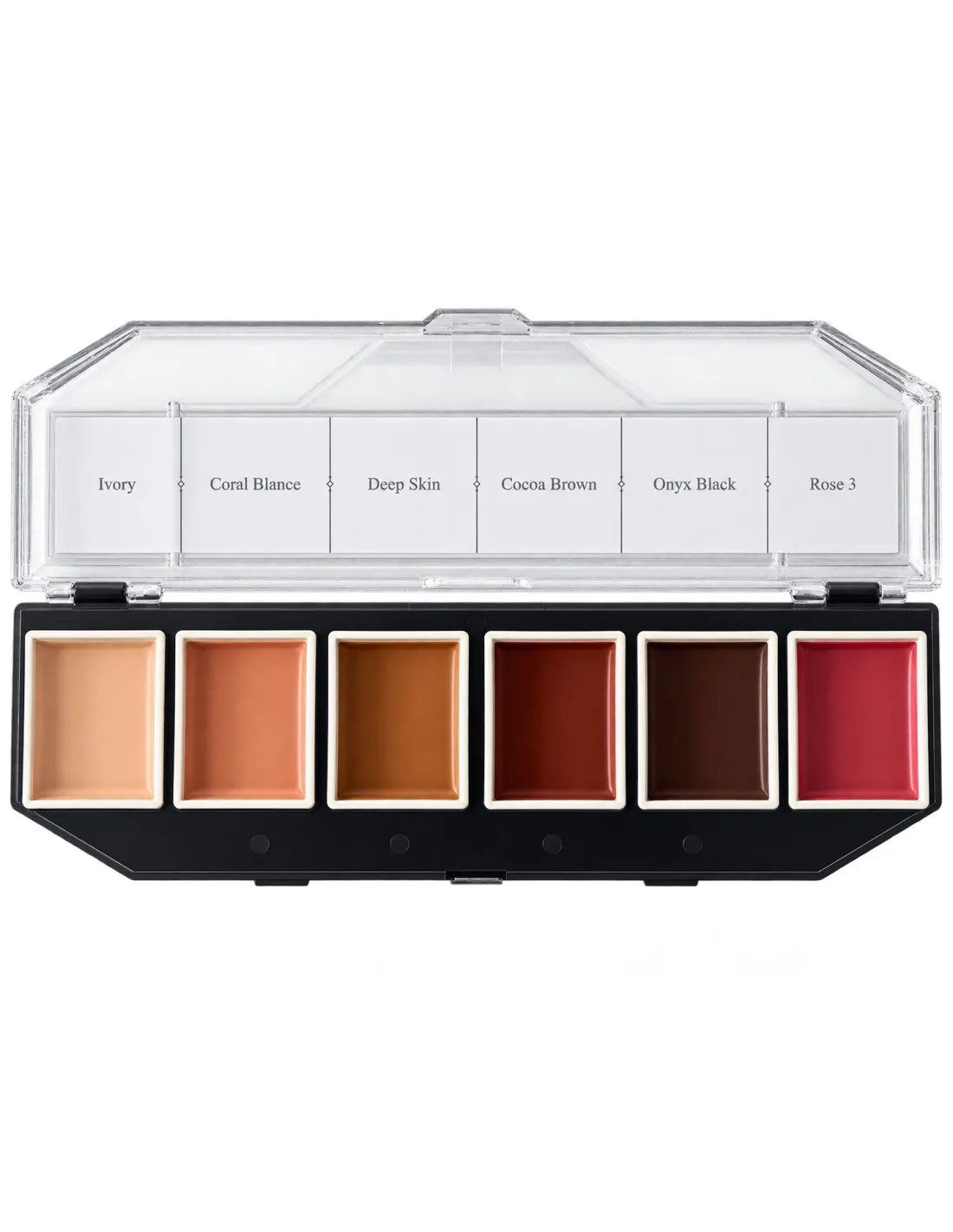
Alcohol-activated makeup palette with 6 skin tones (Ivory, Coral Balance, Deep Skin, Cocoa Brown, Onyx Black, Rose 3) for blending prosthetics and special effects. Includes 99% isopropyl alcohol activator (30 ml).
Acore FX - Skin Palette is an alcohol-activated makeup palette with 6 highly pigmented skin tones: Ivory, Coral Balance, Deep Skin, Cocoa Brown, Onyx Black and Rose 3. It's designed to recreate natural skin tones on skin, silicone and latex, blending prosthetics and special effects pieces believably with the performer's skin. It includes a 99% isopropyl alcohol activator (30 ml) to activate the colours.
Technical specifications
| Parameter | Value |
|---|---|
| Product type | Alcohol-activated makeup palette |
| Number of colours | 6 |
| Colours included | Ivory, Coral Balance, Deep Skin, Cocoa Brown, Onyx Black, Rose 3 |
| Format | Removable cell palette |
| Compatible surfaces | Natural skin, silicone, latex |
| Activation | 99% isopropyl alcohol (IPA) or an alcohol-based makeup activator |
| Main use | Professional SFX, character makeup |
What it's used for
The Skin Palette covers a wide range of skin tones, from the lightest to the darkest, designed to adapt to different skin types and lighting conditions:
- Matching a silicone or latex prosthetic to the performer's skin tone
- Blending the edges of a special effects piece so it disappears into the skin
- Adding warmth or depth with Coral Balance and Rose 3 on areas such as cheeks, nose or ears
- Creating aged, tired or unwell-looking skin tones by combining Ivory, Deep Skin and Onyx Black
- A skin base to build trauma effects on top of with Acore FX - FX Palette
- Character makeup for film, theatre, TV series and audiovisual productions
How to use it
- Prepare the surface: make sure the skin, silicone or latex is clean, oil-free and dry before starting.
- Wet the brush: dampen the brush or sponge with 99% isopropyl alcohol or the alcohol-based makeup activator.
- Load the colour: touch the desired tone on the palette with the damp brush. More activator gives more transparency; less activator gives more opacity.
- Mix the exact tone: combine two or more colours on the palette until you match the performer's or prosthetic's skin tone.
- Apply in thin layers: work in short strokes and blend especially at the join between the prosthetic and natural skin.
- Add nuance: add small touches of Coral Balance or Rose 3 in areas with more blood flow (cheeks, nose, ears) for a more realistic result.
- Remove the makeup: clean off with isopropyl alcohol or a gentle oil-based makeup remover once finished.
Usage tips
Always start with the skin base
Apply the base skin tone closest to the performer's before working on details. It's easier to adjust nuances over a correct base than to try to nail the exact tone on the first try. Test the mix on the back of your hand before applying to the final piece.
Blend the prosthetic edges
The area where a silicone or latex prosthetic meets natural skin is what gives away a poorly blended makeup job the most. Blend that transition with thin, layered coats, adjusting opacity with the amount of activator, until the edge visually disappears.
Pair it with the FX Palette for trauma effects
When the job includes wounds, bruises or skin pathology, apply the Skin Palette first as a base and add the effect on top with Acore FX - FX Palette. This gives far more realism than applying the injury colour directly onto bare skin.
Frequently asked questions
What activates these colours?
Acore FX - Skin Palette colours are activated with 99% isopropyl alcohol or a dedicated alcohol-based makeup activator. The alcohol must be 99% grade: 70% alcohol contains too much water and won't activate the formula correctly.
Can it be used directly on skin?
Yes, it's formulated for use on natural skin as well as silicone and latex. If the performer has sensitive skin, it's advisable to do a patch test on a small area before full application.
Do the 6 tones cover every skin type?
The 6 tones — from Ivory through to Deep Skin and Onyx Black — cover a wide skin range, and since it's a mixing palette you can combine them to reach intermediate tones and adapt to virtually any skin colour.
Does it work on silicone and latex?
Yes, it's compatible with both surfaces. Make sure the prosthetic or piece is clean and free of release-agent residue before painting.
How is this makeup removed?
Remove it with isopropyl alcohol or a gentle oil-based makeup remover, using gauze or a cotton pad. Avoid plain water, acetone and MEK as removal methods.
What's the difference from Acore FX - FX Palette?
The Skin Palette recreates natural skin tones to blend prosthetics and match the performer's skin. Acore FX - FX Palette, instead, provides saturated primary colours (Carmine Red, Yellow, Ocean Blue, Green, White, Black) for building wound or pathology effects. Both are designed to be used together.
Can I mix the colours together?
Yes, that's exactly what they're designed for. All six tones are fully miscible with each other and with the FX Palette colours, either on the palette itself or directly on the working surface.
No reviews
Tap to zoom