Shopping Cart


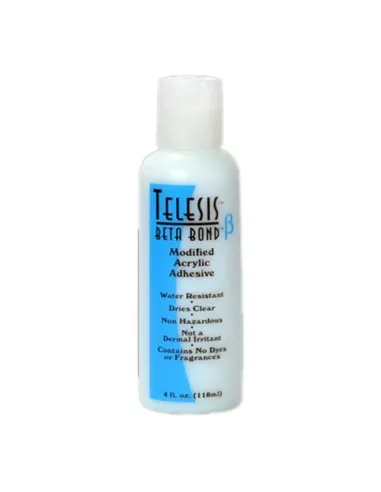
Telesis Beta Bond -Acrylic Adhesive-
271005002
Temporarily out of stock
€22.00
26,62 € Tax incl.
26,62 € Tax incl.
Medical-grade acrylic adhesive for silicone and latex prosthetics. Dries clear, strong vertical hold, non-flammable. 118 ml.
Telesis Beta Bond is a medical-grade acrylic adhesive developed by Premiere Products Inc (PPI) for bonding silicone and latex prosthetics directly to skin. It dries clear, offers exceptional vertical hold, and its non-flammable formula makes it the safest and most versatile option for special effects, prosthetic makeup, and clinical use.
Technical specifications
| Feature | Detail |
|---|---|
| Adhesive type | Acrylic polymer |
| Grade | Medical / cosmetic (FDA-licensed manufacturer) |
| Colour when dry | Clear |
| Flammability | Non-flammable |
| Compatibility | Platinum silicone, latex, skin |
| Miscibility | Water, alcohol, acrylic paints (within certain limits) |
| Contents | 118 ml |
| Shelf life | 24 months |
| Carcinogens / reproductive toxins / cytotoxins | None (tested by independent laboratory) |
What it is used for
Beta Bond is the go-to adhesive in special effects workshops and prosthetics clinics when a strong, durable, and safe bond to skin is required. Its clear drying and compatibility with acrylic paints make it especially useful when visual integration of the piece is critical.
- Bonding platinum silicone prosthetics to skin
- Adhering latex pieces for theatrical, film, and TV character work
- Clinical prosthetic use and facial rehabilitation
- Special effects (FX) makeup on film sets and live stages
- Applications requiring vertical hold without sagging
- Adhesive base mixable with acrylic paints to blend the adhesive into the colour of the piece
How to use it
- Clean and degrease the area of skin where the prosthetic will be bonded; skin must be dry and free of creams or oils.
- Apply a thin, even coat of Beta Bond to the inner surface of the prosthetic (silicone or latex) using a brush or applicator.
- Allow the adhesive to lose its initial sheen (tacky stage); this ensures maximum adhesion.
- Optionally apply a second thin coat to the skin if an extreme bond is required; again, wait until it reaches the tacky stage.
- Press the prosthetic firmly onto the area and hold pressure for a few seconds until contact is complete.
- Adjust the edges with a tool if necessary before the adhesive has fully cured.
- To remove the prosthetic, use Telesis 8 Thinner or another skin-safe remover; never pull the piece off dry.
Safety notice: Although Beta Bond contains no known carcinogens, reproductive toxins, or cytotoxins according to independent laboratory testing, always work in a well-ventilated area. Avoid contact with eyes and mucous membranes. Perform a patch test 24 hours before use on sensitive skin. If irritation occurs, discontinue use and consult a doctor.
Tips for use
Temperature and application time
Ambient temperature directly affects the time to the tacky stage. In warm environments (above 25 °C) the adhesive reaches the contact point more quickly; in cooler conditions it may take a little longer. Do not apply the prosthetic before the adhesive loses its sheen: you will bond before the polymer is at its optimal adhesion point.
Mixing with acrylic paints
Beta Bond accepts controlled mixing with water- or alcohol-based acrylic paints, allowing you to lightly tint the adhesive so the edges of the prosthetic blend better with the skin tone of the actor or patient. Use low pigment ratios (no more than 10–15% by volume) to avoid compromising adhesion.
Safe removal and skin care
Beta Bond's bond is very strong: never remove the prosthetic by direct pulling without first softening the adhesive with a suitable remover. Apply the remover along the edges of the piece and work from the outside inward in small sections. After removing the prosthetic, clean any adhesive residue from the skin before reapplying.
Frequently asked questions
Is it safe to use this adhesive directly on skin?
Yes. Beta Bond is formulated to medical grade by an FDA-licensed manufacturer and has been tested by independent laboratories for dermal irritation and inhalation levels. It contains no known carcinogens, reproductive toxins, or cytotoxins. Even so, a patch test is recommended for people with sensitive skin before prolonged use.
What is the difference between an acrylic adhesive and a silicone adhesive for prosthetics?
Acrylic adhesives such as Beta Bond offer very strong adhesion, clear drying, and compatibility with latex and silicone. Silicone adhesives, such as Telesis 8 Adhesivo de Silicona, are specially formulated for platinum silicone pieces where greater flexibility at the bond point is desired. The choice depends on the prosthetic material and conditions of use.
Can this adhesive be thinned or its viscosity modified?
Yes, within certain limits. Beta Bond is miscible with water, isopropyl alcohol, and acrylic paints. To adjust viscosity more precisely you can use a compatible thinner such as Telesis 8 Thinner. Do not over-thin: an excessively diluted adhesive loses bonding strength.
How is this adhesive correctly removed from skin?
Always use a skin-safe remover, such as Telesis 8 Thinner. Apply it along the edges of the prosthetic and allow it to penetrate for a few seconds before slowly lifting the piece. Never pull the prosthetic off dry: you can damage the skin and ruin the piece.
Does it work on latex as well as silicone?
Yes. Beta Bond is especially suited for latex and platinum silicone pieces. It is one of the few medical-grade adhesives that offers good adhesion on both substrates, making it highly versatile in a workshop handling different types of pieces.
How long does the bond hold under filming or stage conditions?
Beta Bond's bond is strong and long-lasting even under moderate sweating and heat from stage lighting. For extended use outdoors in intense heat or during heavy physical activity, reinforce the edges of the prosthetic with a second coat and keep the adhesive and remover on hand for touch-ups during the shoot.
Can I mix this adhesive with another prosthetic adhesive to adjust properties?
Mixing adhesives with different chemical bases is not recommended. If you are looking for an acrylic adhesive with a slightly different profile, PROTAC Adhesivo acrílico para maquillaje FX is another option in the range that you can compare according to your application needs.
How long do I have to work the prosthetic once the adhesive has been applied?
Once applied, you must wait for the adhesive to reach the tacky stage (loses its sheen) before placing the prosthetic. From that point the working time is short: once contact is made, the bond forms quickly. Plan the placement before applying to avoid having to reposition multiple times.
No reviews
Tap to zoom