Shopping Cart


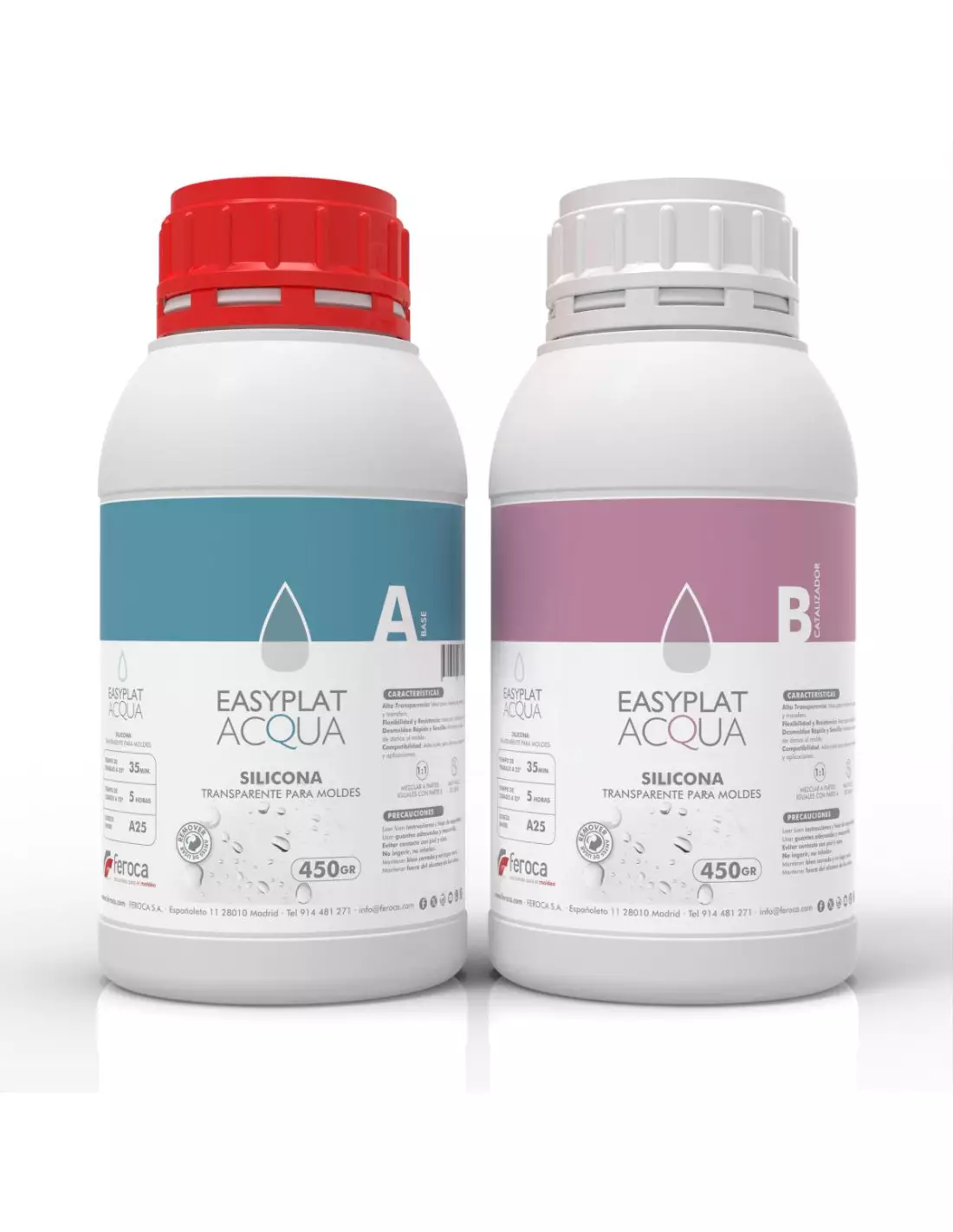
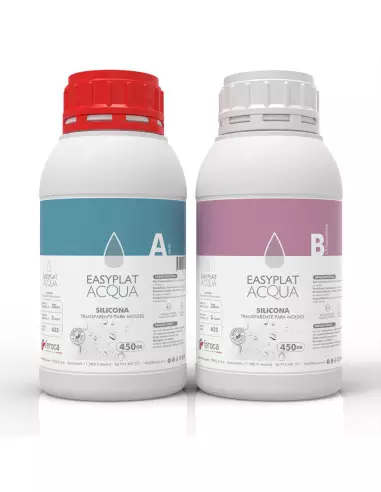
EasyPlat ACQUA
201354301
€24.00
29,04 € Tax incl.
29,04 € Tax incl.
Transparent (in thin layers up to 1 cm) platinum silicone Shore A25, 1:1 mix ratio, 30 min pot life, 5 h cure and heat resistance up to 220 °C. Ideal for cut moulds and FX.
EasyPlat ACQUA is a platinum (addition) silicone, transparent (in thin layers up to 1 cm), with Shore A25 hardness and a 1:1 mix ratio by weight or volume. Its transparency allows you to see the original piece inside the mould for precise cut lines, and its heat resistance up to 220 °C makes it suitable for a wide range of applications in professional and semi-professional workshops. Low shrinkage, high elongation and a simple mixing process make it a go-to choice for visibility moulds, special effects and texture transfers.
Technical specifications
| Parameter | Value |
|---|---|
| Type | Platinum silicone (addition) |
| Colour | Transparent in thin layers, up to 1 cm |
| Mix ratio | 1A : 1B by weight or volume |
| Shore Hardness | A25 |
| Mixed viscosity | 5,000 cps |
| Density | 1.20 g/cm³ |
| Pot life (25 °C) | 30 minutes |
| Demould time (25 °C) | 5 hours |
| Elongation | 300 % |
| Tear resistance | 100 pli |
| Heat resistance | 220 °C |
| Shrinkage | Negligible |
What it's used for
The transparency of EasyPlat ACQUA is its key advantage over other workshop silicones. It lets you visually locate the original piece without opening the mould, which is critical when marking and executing the cut line on pieces with complex geometries or pronounced undercuts. Its Shore A25 hardness provides the flexibility needed to demould without damaging either the reproduction or the mould, and its high heat resistance broadens the range of castable materials.
- Cut moulds: visualise the inner piece to mark the cut line with precision
- Moulds for wounds, special effects and encapsulated silicone in FX
- Texture transfers for prosthetics and character makeup
- Props and flexible utility elements with fine detail
- Moulds for resins, waxes and low-to-medium temperature materials
- Artistic reproductions requiring visual monitoring of the process
How to use it
- Prepare the original piece: make sure it is clean, dry and free of any inhibiting contaminants (sulphur, tin, latex, vinyl). Apply Release agent 34D if the piece material may bond to the silicone.
- Weigh or measure components A and B in a 1:1 ratio, either by weight or by volume.
- Mix both parts for 3–4 minutes, scraping the sides and bottom of the container thoroughly, until you obtain a homogeneous mass with no streaks.
- If you need to apply on vertical or inclined surfaces, add a few drops of Thixo Additive before mixing to increase consistency without affecting cure time.
- Pour the mixture slowly from a low point in the mould to minimise bubble entrapment. If you have a vacuum chamber, degas before pouring.
- Allow to cure at 25 °C for 5 hours without moving or vibrating the assembly. Heat accelerates the cure if needed.
- Demould carefully. Thanks to the transparency, locate the piece and mark the cut line before opening the mould if necessary.
Warning: platinum silicone inhibition
EasyPlat ACQUA is a platinum (addition) silicone sensitive to inhibition through contact with certain materials. Curing may be partially or completely prevented if the original piece, the containment mould or the tools have been in contact with: sulphur or sulphur-containing clays/plasticines, tin silicone (condensation), latex, vinyl, freshly cast polyester or epoxy resins, urethane rubbers and some unsealed metals. Before pouring, always perform a small compatibility test by applying a drop of mixed material to the surface and confirming it cures correctly within the stated time.
EasyPlat ACQUA is a platinum (addition) silicone sensitive to inhibition through contact with certain materials. Curing may be partially or completely prevented if the original piece, the containment mould or the tools have been in contact with: sulphur or sulphur-containing clays/plasticines, tin silicone (condensation), latex, vinyl, freshly cast polyester or epoxy resins, urethane rubbers and some unsealed metals. Before pouring, always perform a small compatibility test by applying a drop of mixed material to the surface and confirming it cures correctly within the stated time.
Usage tips
Use the transparency for cutting
Once the mould has cured, before cutting it, hold it up against a light source and mark the cut line directly on the silicone with a marker. EasyPlat ACQUA lets you see the inner piece clearly, eliminating guesswork and reducing errors in two-part moulds or pieces with complex geometries.
Temperature control to speed up curing
At 25 °C demoulding occurs after 5 hours, but placing the mould in an oven or heat chamber at 60–70 °C can significantly reduce that time without affecting the final properties. Bear in mind that heat also shortens the pot life, so only apply heat after you have poured and sealed the mould.
Pigmentation and customisation
Although transparency is its main asset, you can add small amounts of Key-Pigments to colour specific areas of the mould or create chromatic effects in FX applications. Use minimal amounts to preserve translucency if you need it for visual monitoring.
Frequently asked questions
What materials can inhibit the cure of a platinum silicone?
Platinum silicones like EasyPlat ACQUA may not cure correctly if they come into contact with sulphur, sulphur-containing clays or plasticines, tin silicone (condensation), latex, vinyl, freshly cast polyester or epoxy resins, urethane rubbers and some unsealed metals. A compatibility test is essential before using the product with unknown materials.
Can I use a tin silicone to make the containment mould and then cast platinum silicone inside it?
No. Platinum silicone is inhibited by contact with tin silicone and will not cure correctly. To cast EasyPlat ACQUA, the containment mould must be made from a compatible material: plaster, fibreglass, fully cured epoxy resin or platinum silicone.
How can I avoid bubbles in the mould?
The most effective method is to degas the mixture in a vacuum chamber for 1–2 minutes before pouring. If you do not have a vacuum chamber, pour from the lowest possible point in a thin, continuous stream and let the silicone flow through the mould on its own. EasyPlat ACQUA has a viscosity of 5,000 cps, manageable for hand pouring.
Can I accelerate the cure by applying heat?
Yes. Heat accelerates the cure of EasyPlat ACQUA without compromising its final properties. You can place the already-poured mould in an oven at 60–70 °C to reduce demould time. Remember that heat also shortens the pot life, so do not heat the mixture before pouring.
Do I need to use a release agent with this silicone?
It depends on the material of the original piece. EasyPlat ACQUA does not adhere to most surfaces on its own, but with porous materials or unsealed plaster, wood or resin pieces it is advisable to apply Release agent 34D to aid demoulding and protect the original piece. Never use petroleum jelly or tin-based products, as they can inhibit the cure.
Is it suitable for food contact or skin contact?
EasyPlat ACQUA is a general-purpose platinum silicone. If you need a silicone with FDA certification for Food Safe use or for Life Cast applications in direct contact with skin, consult Feroca about the specific options in the range, such as KEY-FORM for body impression work.
Can I add a thixotropic additive to brush-apply the silicone or work in layers?
Yes. Adding Thixo Additive to the EasyPlat ACQUA mixture gives you a paste-like consistency that does not sag, ideal for brush application on blanket moulds or vertical surfaces. The thixotropic additive does not alter the cure time, only the viscosity.
What ratio of deadener is used with platinum silicones for encapsulated prosthetics?
For prosthetic applications with encapsulated silicone, the typical deadener ratio is between 180 % and 200 % of the total mix (1A : 1B : 180–200 % D). If your project requires a softer silicone for skin-contact prosthetics, also consider PlatSil Gel-00 for lower Shore hardnesses.
No reviews
Tap to zoom