Shopping Cart



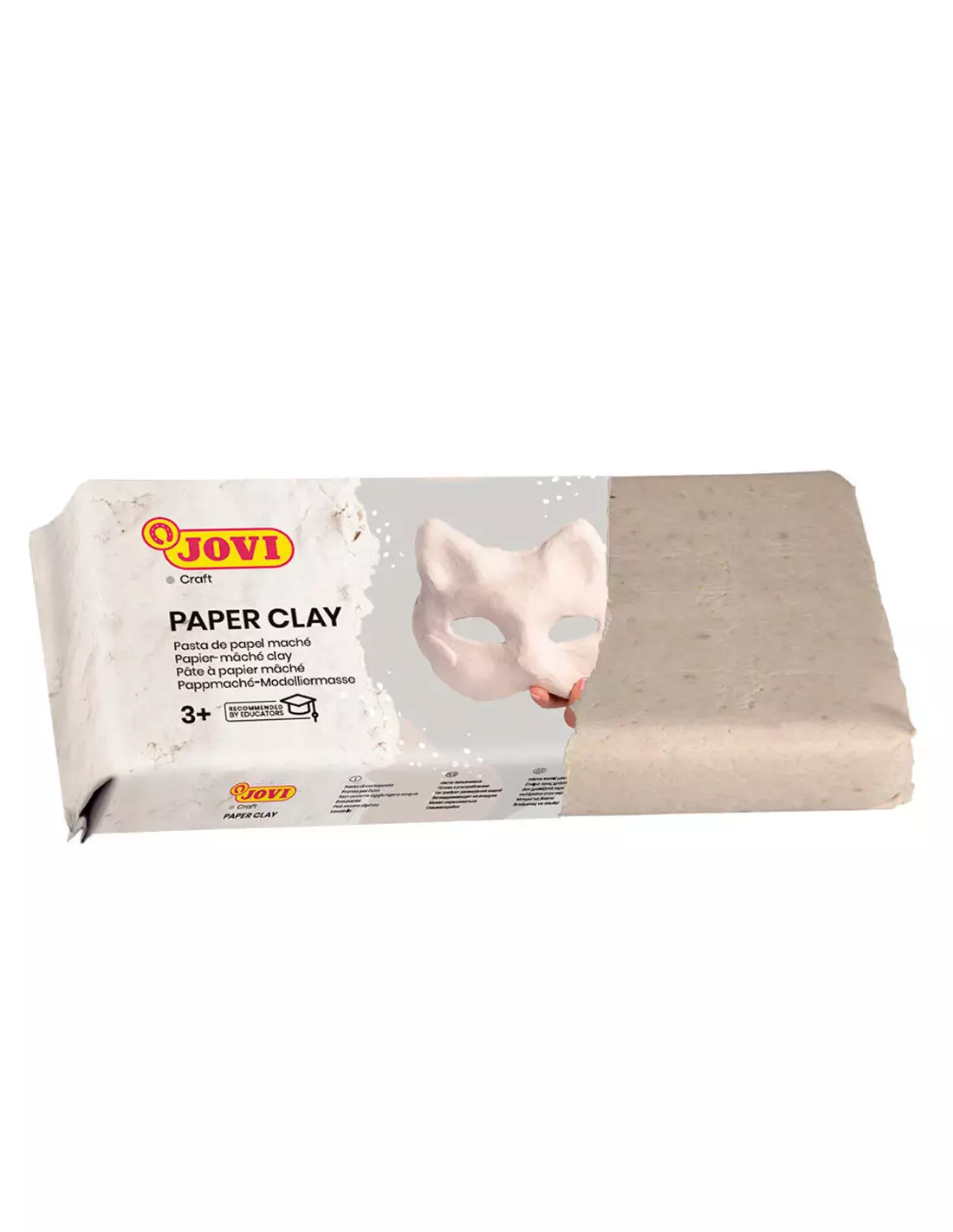
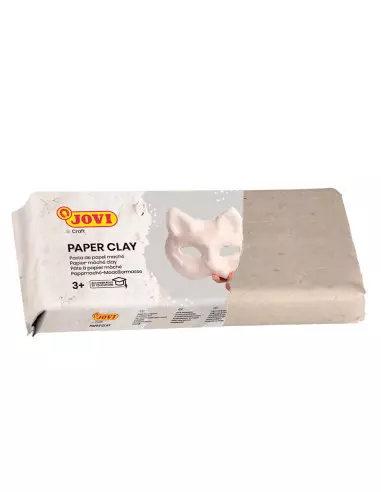
Paper Clay - Paste de papiermache
210051005
€7.00
8,47 € Tax incl.
8,47 € Tax incl.
Ready-to-use wet papier-mâché paste, 680 g. Air-dries in 24–48 h, no firing required. Lightweight, clean and suitable for moulds.
Paper Clay is a ready-to-use wet papier-mâché paste requiring no mixing or prior preparation. It can be easily shaped by hand, air-dries in 24–48 hours without needing an oven, and once cured it is extremely lightweight. It is the cleanest and most convenient option for free-form sculpting, volumetric figures, masks and decorative pieces.
Technical specifications
| Parameter | Value |
|---|---|
| Format | Ready-to-use wet paste |
| Content | 680 g |
| Drying time | 24 – 48 hours (air dry) |
| Firing | Not required |
| Dry colour | White / cream |
| Final weight | Very lightweight |
| Staining | Non-staining |
| Suitable for moulds | Yes |
| Storage | Airtight seal for reuse |
| Washable | Yes (before drying) |
What it is used for
Paper Clay is designed for creative, educational and decorative modelling. Its smooth texture and ease of use make it suitable for both fine arts professionals and beginners alike. It is especially useful when a clean, lightweight and versatile paste is needed that requires no special equipment.
- Volumetric decorative figures and sculptures
- Masks and lightweight prop pieces
- Covering and coating base forms (balloons, cardboard, wire)
- Free-form modelling by hand or with tools
- casting or pressing into rigid or flexible moulds
- Prototypes, models and lightweight scenography elements
- Educational projects and art workshops
- Pieces to be painted with tempera, acrylics or varnishes
How to use it
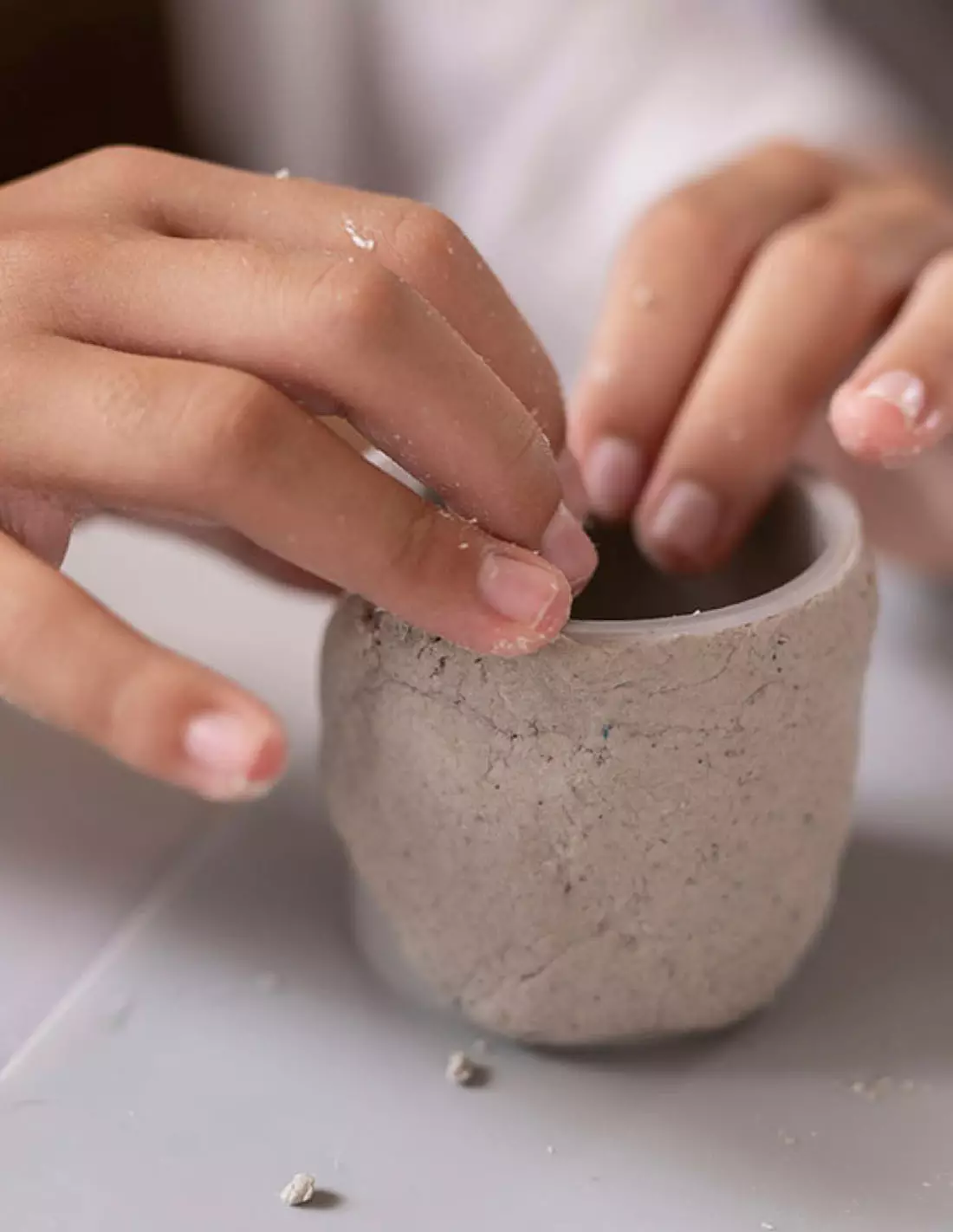
- Open the container and take out the required amount of paste. No mixing or prior preparation is needed.
- Knead the paste with your hands for a few seconds to homogenise its texture and temperature.
- Shape directly with your hands or with modelling tools. For hollow or relief pieces, apply over a base form.
- If using a mould, press the paste firmly against the mould walls, ensuring uniform contact with no air bubbles.
- Leave the piece to air-dry for 24–48 hours. For thicker pieces drying time may increase; make sure the interior is completely dry before handling.
- Once dry, sand, trim or add details with tools as needed.
- Paint with tempera, acrylics or varnishes according to the desired finish.
- Seal the container airtight to preserve any leftover paste and prevent it from drying out.
Usage tips
Uniform thickness for even drying
The thicker the piece, the longer it will take to dry and the greater the risk of internal cracks. For bulky pieces, build up in successive layers allowing each one to dry before applying the next, or work over a lightweight core (wire, crumpled cardboard, polystyrene) to reduce the actual thickness of the paste.
Preventing cracks during drying
Avoid placing the piece near direct heat sources (radiators, fans, intense sunlight). Drying too quickly on the outer surface while the interior is still wet causes cracking. If minor fissures appear, you can fill them with fresh paste and allow to dry again. You can also cover the piece with a slightly damp cloth during the first few hours to slow down surface drying.
Finishes and decoration
The dry surface accepts any water-based or solvent-based primer and paint. For a smooth finish, sand gently with fine-grit sandpaper (220 or higher) before painting. If you want a waterproof finish, apply a coat of acrylic varnish or sealer after painting. The paste is not formulated for permanent outdoor use; if the piece is to be exposed to the elements, protect it with a suitable exterior varnish.
Frequently asked questions
Do I need to add water or mix anything before starting?
No. Paper Clay is a ready-to-use wet paste from the moment you open the container. It requires no mixing, dilution or preparation time. If the paste has been stored for a while and seems slightly dry on the surface, knead it for a few seconds; if it is still too firm, you can add a few drops of water and knead until the original texture is restored.
How long does it take to dry and what does it depend on?
Standard drying time is 24 to 48 hours in open air under normal temperature and humidity conditions. The thickness of the piece is the most determining factor: thin layers can dry in under 24 hours, while solid and bulky pieces may need more time. High ambient humidity also slows the process down.
Can it be used in silicone or plaster moulds?
Yes. Paper Clay is compatible with both rigid and flexible moulds. In silicone moulds no Release agent is needed thanks to the non-stick nature of the material. In plaster or porous material moulds, it may be advisable to apply a thin coat of petroleum jelly or Release agent to ease demoulding. Remove the piece carefully once it has gained enough firmness not to deform.
What happens if the paste hardens inside the container?
If the container has not been sealed airtight and the paste has lost moisture, it can be partially recovered by adding a small amount of water and kneading patiently. If it has hardened completely, the paste cannot be recovered. To prevent this, always close the container with the interior fully sealed and, if possible, cover the paste with plastic film in direct contact before closing the lid.
Which paints and varnishes are compatible once it is dry?
Once dry, the surface accepts tempera, acrylic paints and water-based varnishes without any issues. It is also compatible with oil paints and enamels, although in this case it is advisable to apply an acrylic base coat first to reduce absorption. For projects requiring water resistance or continuous handling, always seal with a protective final varnish.
Is it safe for use with children?
Paper Clay is a clean paste, non-toxic under normal conditions of use and easily washable with water before drying, making it suitable for educational workshops and supervised use with children. As with any modelling material, ingestion and prolonged contact with the eyes should be avoided. If in doubt, always consult the product safety data sheet.
Is the finished piece resistant or fragile?
Once dry, the piece has moderate resistance for decorative use, but it is not designed to withstand strong impacts or high mechanical stress. Its main advantage is its extremely light weight. To increase surface resistance, apply one or more coats of varnish or acrylic resin over the finished and painted piece.
Can a dried piece be repaired if it breaks or cracks?
Yes. You can apply fresh paste to the damaged area, slightly moisten the dry surface to promote adhesion, and leave to dry again. For very fine cracks, you can also use a thick mixture of paste and water as a filler. Once the repair is dry, sand and repaint the affected area.
No reviews
Tap to zoom