Shopping Cart


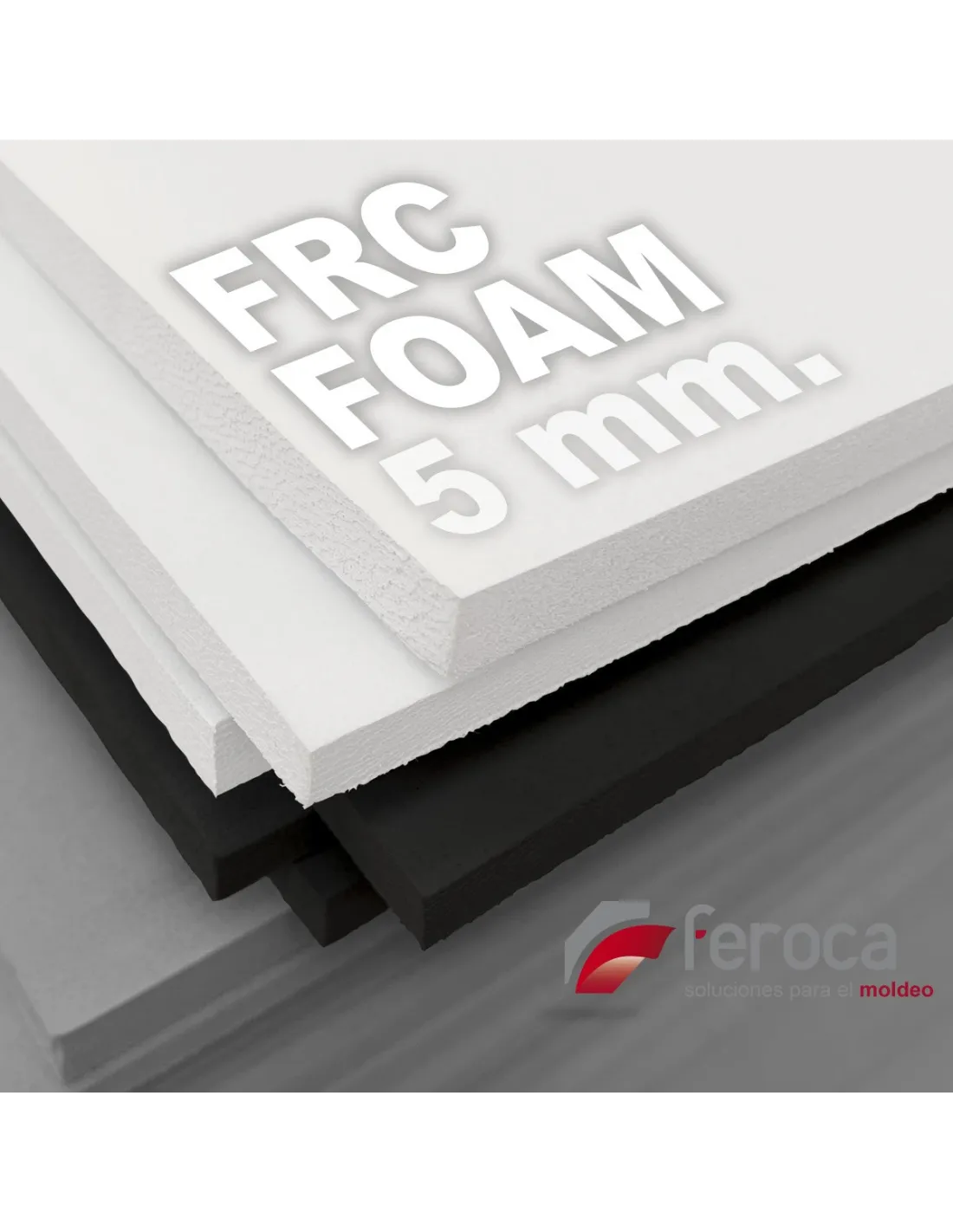
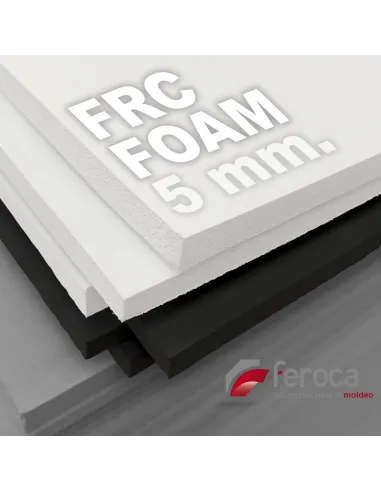
FRC FOAM WHITE 5mm -High Density EVA Rubber-
208255201
€13.00
15,73 € Tax incl.
15,73 € Tax incl.
High-density EVA foam (156 kg/m³) in 5 mm thickness. Ideal for cosplay, props and scenography. Easy to cut, heat-shape and paint.
FRC FOAM White 5 mm is a high-density EVA foam (156 kg/m³) of outstanding quality, designed for cosplay, props and scenography projects that demand precision and durability. Its combination of density, flexibility and compatibility with thermoplastics such as Worbla or Thibra makes it one of the most versatile materials in the creative workshop.
Technical specifications
| Property | Value |
|---|---|
| Material | EVA foam (Ethylene Vinyl Acetate) |
| Colour | White |
| Thickness | 5 mm |
| Density | 156 kg/m³ (high density) |
| Hardness | 30º – 35º Shore |
| Size / Format | Size L (approximate dimensions; shipped rolled) |
| Available colours | White, Grey, Black |
| Available thicknesses | 2 mm, 5 mm, 10 mm |
What it is used for
FRC FOAM 5 mm offers the perfect balance between rigidity and manageability: thick enough for structured builds, yet light and flexible enough for pieces worn for hours at a time. It is the most in-demand thickness in the workshop for:
- Armour, shields and helmets for cosplay and LARP
- Stage props and theatrical set dressing
- Exhibition scenography and display sets
- Base pieces combined with thermoplastics such as Worbla or Thibra to add surface detail
- Lightweight padding and cushioning in costumes and accessories
- Scale models and volume prototypes
How to use it
- Design and pattern: draw or print the pattern piece on paper and transfer it onto the FRC FOAM using a marker or stylus.
- Cut: use sharp scissors for curved shapes or a craft knife with a metal ruler for straight cuts. The high density ensures clean, fray-free edges.
- Heat-shape: apply even heat with a heat gun or hot air stripper until the material softens. Shape it with your hands or over a form and hold the pressure until it cools. Once cold, the piece permanently retains its shape.
- Bond the parts: join pieces with cyanoacrylate adhesive or a contact adhesive specifically designed for EVA. Press firmly for 30–60 seconds.
- Clean up the seams: gently sand the joints with fine-grit sandpaper or a variable-speed rotary tool for invisible finishes. Always wear a dust mask when sanding to avoid inhaling EVA dust.
- Paint and finish: apply acrylic paints directly onto the surface or use a spray primer for better adhesion. You can add metallic effects, weathering or textures using hand-painting techniques.
Heat source caution: heat guns and hot air strippers reach very high temperatures and can cause serious burns. Always work with thermal protection gloves and in a well-ventilated space. Sanding EVA foam generates fine dust: wear a particle mask (FFP2 or higher) at all times.
Tips and tricks
Temperature and shaping
The optimal shaping point for FRC FOAM is reached when the surface begins to shine slightly and the material yields without resistance to the touch (approximately 60–80 °C). Heat in short, even passes to avoid scorching or surface bubbles. If you overheat an area, let it cool and start again: the material withstands multiple heating cycles without degrading.
Bonding and joints
For structural joints that must withstand movement and tension (shoulders, armour articulations), contact adhesive applied to both surfaces gives better results than cyanoacrylate alone. Apply to both surfaces, allow to become touch-dry and press together firmly. Reinforce interior corners with a thin bead of contact adhesive and clamp with a wooden peg while it sets.
Combining with thermoplastics
FRC FOAM 5 mm works as a lightweight structural core onto which sheets of Worbla or Thibra can be applied. The thermoplastic bonds directly to the EVA when heated and adds rigidity, texture and fine surface detail. This EVA + thermoplastic sandwich is the standard technique in professional cosplay and prop workshops for achieving pieces that are both light and durable.
Frequently asked questions
What EVA foam thickness should I choose for my project?
It depends on the type of piece. For small details and thin parts (straps, trim, decorative layers), the 2 mm version is the most suitable. For medium-volume structures such as chest pieces, elbow guards or helmets, the 5 mm thickness — like this FRC FOAM White — offers the ideal balance. For very thick bases or pieces that need to hold their own shape without additional layers, the 10 mm thickness is the right choice.
Can I paint directly onto EVA foam?
Yes. FRC FOAM accepts acrylic paints directly onto its surface without any primer. For highly opaque colours or very smooth finishes, a thin coat of flexible spray primer improves adhesion and prevents cracking when the piece is bent. Do not use oil paints or solvent-based lacquers without first testing on a scrap piece, as some solvents attack EVA.
Is high-density EVA foam harder to cut than standard foam?
Not noticeably. FRC FOAM at 156 kg/m³ cuts easily with sharp scissors or a craft knife. The advantage of high density is that the cut edge is cleaner and more defined than with low-density foams, which reduces the finishing work required afterwards.
How many heating cycles can it withstand before degrading?
FRC FOAM tolerates multiple heating and reshaping cycles without losing its mechanical properties, as long as the temperature threshold that causes bubbling or surface scorching is not exceeded. If the foam starts to change colour or bubble, move the heat source away immediately. Under normal working conditions, you can reshape the same piece 3–5 times without any issues.
How do I prevent seams from showing in the final finish?
Sand the joints with fine-grit sandpaper (180–220) in circular motions. Then apply a coat of flexible sealer or spray primer and sand again with 320 grit. Repeat until the joint disappears visually. Always wear a dust mask when sanding.
Are the sheet dimensions exact?
Dimensions are approximate due to the factory cutting process. If your project requires precise dimensions, allow for a small margin of variation and always purchase slightly more material than strictly necessary. Sheets are shipped rolled for ease of transport.
Can it be used outdoors or in humid environments?
EVA foam is moisture-resistant and does not absorb water, making it suitable for outdoor use and humid environments. For pieces exposed to the elements over an extended period, apply a flexible sealer or varnish to protect the paint and surface from UV and rain damage.
Which adhesive works best for bonding EVA foam?
For quick, clean bonds, cyanoacrylate adhesive (superglue) works well on small surfaces. For structural joints over larger surface areas — such as those in a full armour build — contact adhesive applied to both sides and allowed to become touch-dry before joining offers greater strength and flexibility at the joint.
Video tutorials
★STAR WARS★ helmet tutorial 𝗘𝗩𝗔 𝗙𝗢𝗔𝗠 🛸 MANDALORIAN Armour ► [Boba Fett] cosplay
Feroca Live: EVA Foam, creating a mask step by step
FRC FOAM for cosplay: the foundation of every armor
High-density EVA rubber FRC FOAM (156 kg/m³) is the starting material for most cosplay armor. It cuts with a utility knife, heat-forms with a heat gun and bonds with contact adhesive. Unlike craft foam, it holds its shape under heat, accepts texturing with thermal tools and survives an entire convention without warping.
- 2 mm — details, beveled edges, secondary layers and small pieces
- 5 mm — main armor panels: chest plates, bracers, greaves
- 10 mm — voluminous pieces: pauldrons, helmets and structural bases
For rigid armor with fine detail, combine it with Worbla Finest Art: encapsulate the foam between two layers of Worbla for rigidity with minimal weight. Add volume and three-dimensional textures with EVA AIR Foam Clay.
```No reviews
Tap to zoom