Shopping Cart



Mold Putty - Alumilite Silicone Putty
290051500
€25.00
30,25 € Tax incl.
30,25 € Tax incl.
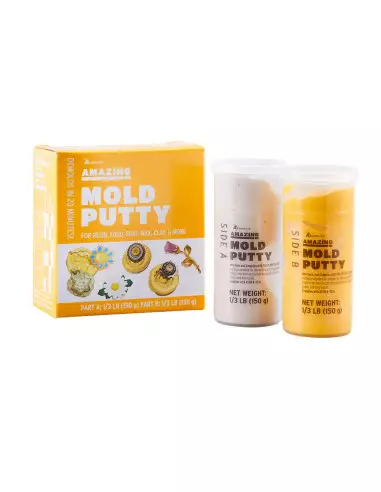
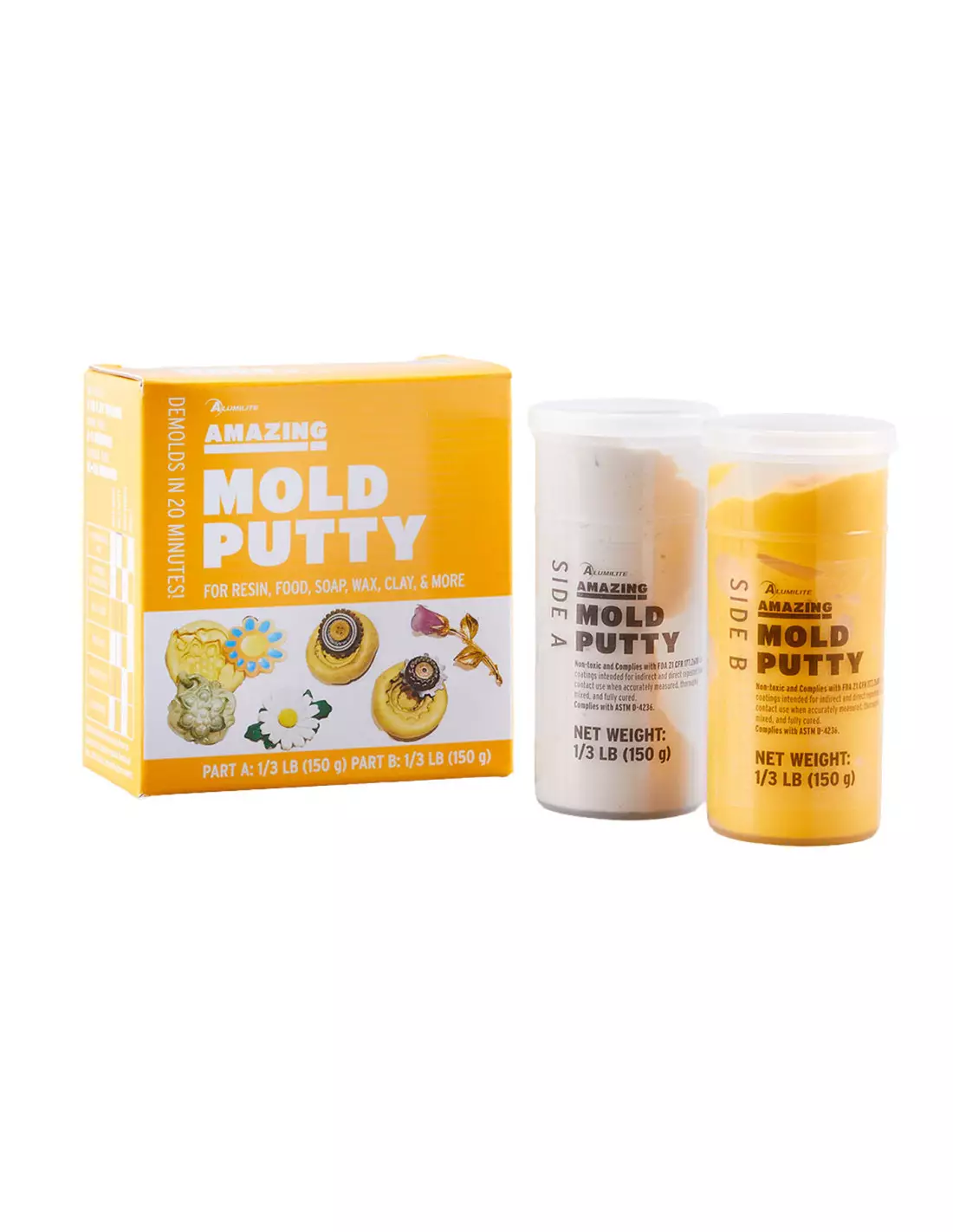
Two-part Food Safe (FDA) silicone putty (A+B 50/50). Hand-mix, 2–3 min working time, cures in 20 min. 150 g.
Mold Putty by Alumilite is a two-part Food Safe (FDA) silicone putty that mixes in equal parts by hand, with no equipment or scale required. With just 2–3 minutes of working time and a full cure in 20 minutes, it is the fastest solution for capturing detail from small objects, creating ready-to-use molds, or getting started with mold making without any learning curve.
Technical specifications
| Property | Value |
|---|---|
| Silicone type | Addition (platinum) |
| Mix ratio | 1A : 1B (50/50 by volume) |
| Working time | 2–3 minutes |
| Cure time | 20 minutes |
| Mixing method | Hand kneading |
| Food Safe | Yes (FDA) |
| Contents | 150 g part A + 150 g part B (300 g total) |
| Format | Two-part putty |
What it is used for
Mold Putty is designed to capture detail quickly and without special equipment. Being FDA-certified, it can be used in contact with food, which greatly expands its range of applications:
- Molds for chocolates, fondant, sweets and other food preparations
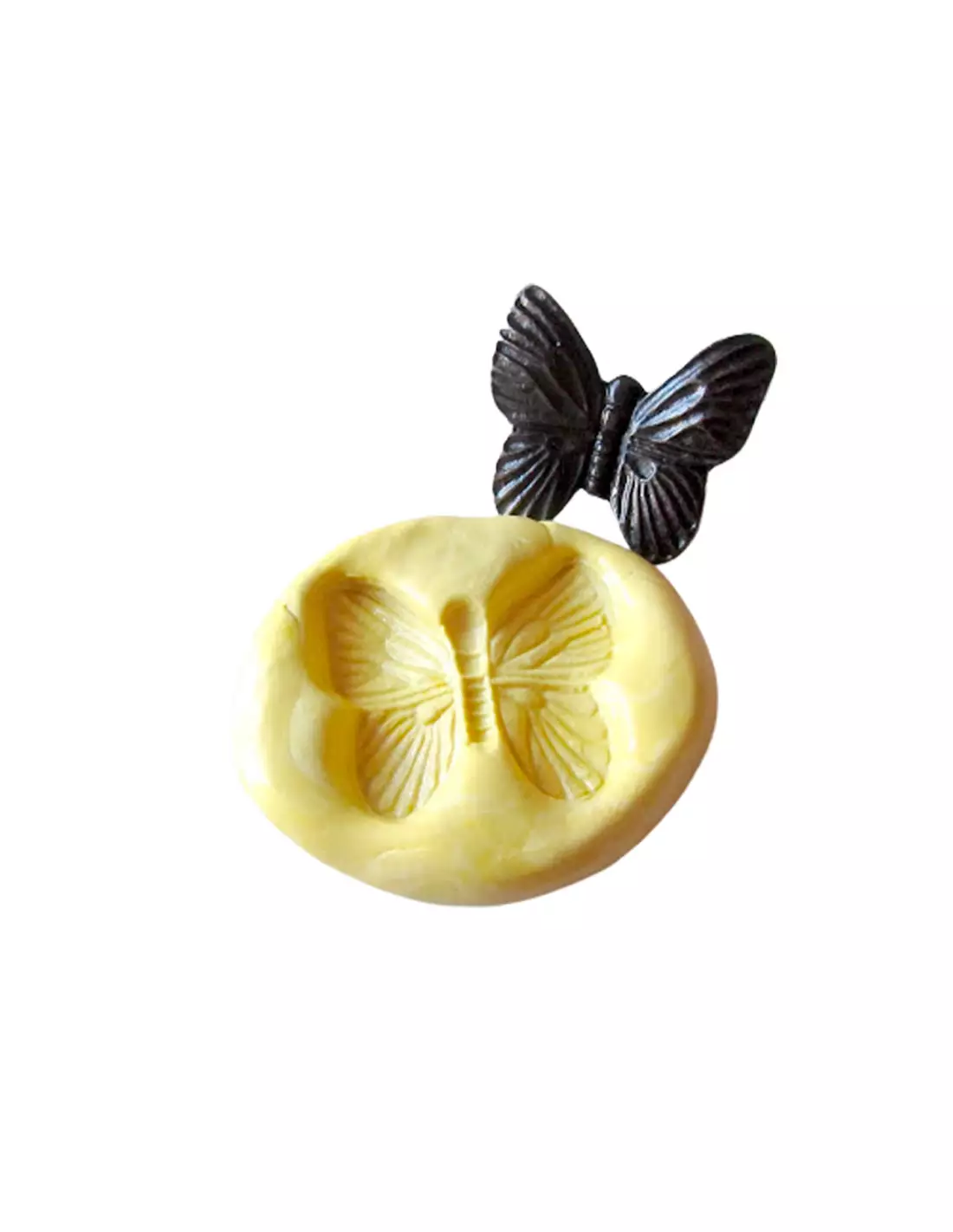
- Quick reproduction of small objects: jewellery, stamps, coins, keys, buttons
- Molds for resins, plaster, wax or decorative cement in small-format pieces
- Rapid prototyping and concept testing in the workshop
- Educational use and workshops with participants with no prior experience
- Impressions and replicas in special effects and artistic make-up (small pieces)
- Texture capture for subsequent casting with pourable silicones
How to use it
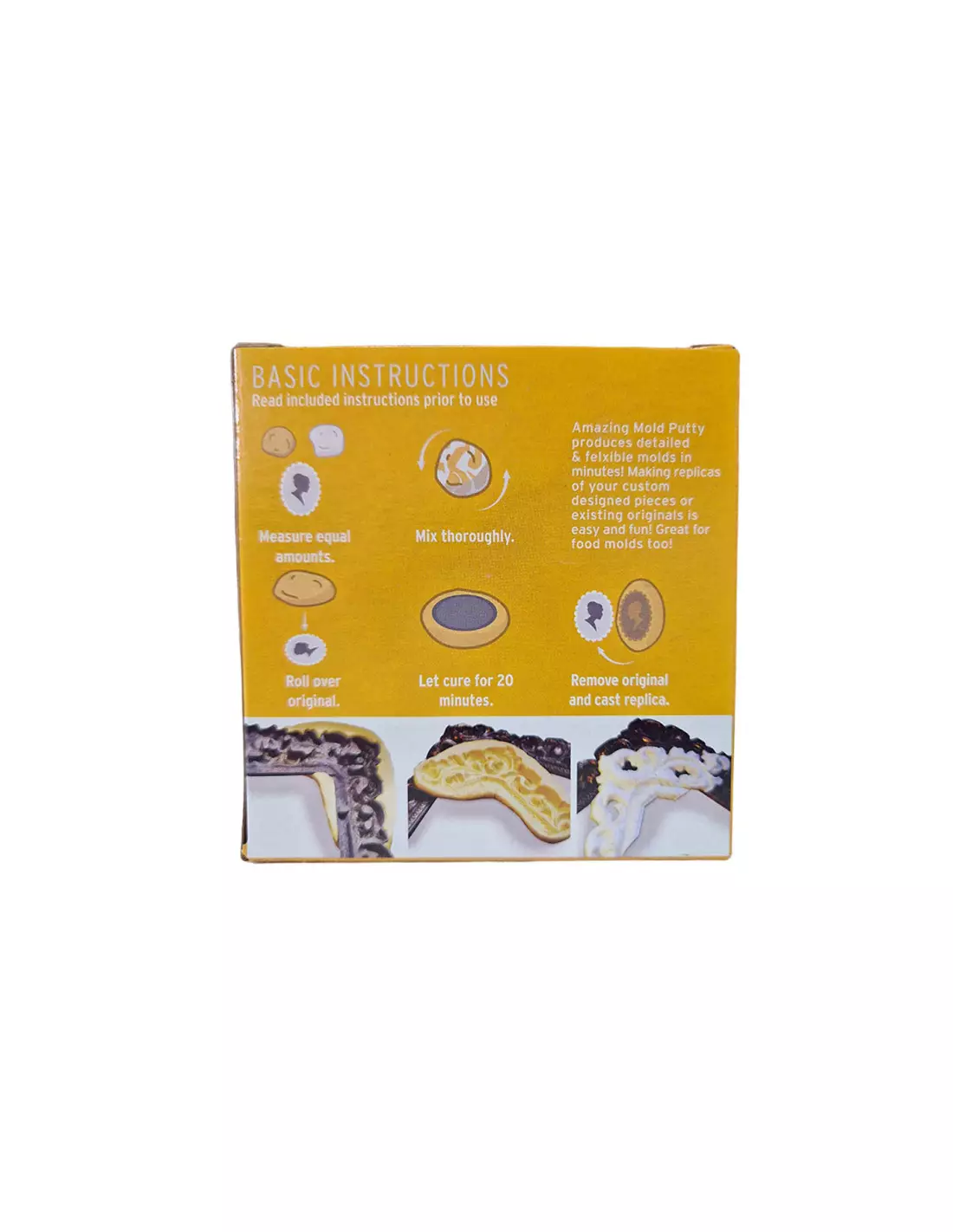
- Separate equal amounts of part A (white) and part B (coloured) by eye or with a scale: the ratio is 50/50 by weight and volume.
- Bring both parts together and knead by hand for 20–30 seconds until you achieve a uniform colour with no streaks. This indicates the mix is homogeneous.
- Press the putty onto the object to be reproduced, or press the object into the putty, ensuring full contact with the surface you want to capture.
- Hold the object in position during the cure time: approximately 20 minutes at room temperature.
- Once cured, demould carefully. The mold is ready for immediate use.
- Pour your chosen casting material into the mold: melted chocolate, resin, plaster, wax, etc.
Warning — inhibition risk (platinum silicone): Mold Putty is a platinum-cured addition silicone. Some materials prevent it from curing on contact. Do not use it on or in contact with: sulphur-containing clays or plasticines, latex, uncured urethane rubbers, freshly cast epoxy or polyester resins, cyanoacrylate adhesives, or surfaces contaminated with residues of these materials. If the mold remains tacky after curing, inhibition is the most likely cause. Clean the object with isopropyl alcohol and run a small test with a small amount of material before using the full quantity.
Usage tips
Work fast but calmly
Working time is 2–3 minutes from the moment you start mixing. That is not a short amount of time, but it does require you to have your object ready before you begin kneading. If the putty starts to resist shaping and loses plasticity, discard it and prepare a fresh amount: forcing the cure produces molds with poor detail.
Ambient temperature and clean hands
The heat from your hands activates the cure, which in this product is an advantage. However, if the workshop is very warm (above 25 °C), working time will be even shorter. In summer or warm environments, work quickly. Make sure your hands are clean and free of creams, oils or residues from other materials, as these can inhibit the platinum or contaminate the mold.
Food use: hygiene before casting
Although Mold Putty has FDA Food Safe certification, the mold should be washed with water and mild soap before its first use in contact with food. If you are repairing or extending a food-use mold, use only materials with the same certification: a silicone without Food Safe certification in contact with the mold would void the FDA certification of the assembly.
Frequently asked questions
Can this putty be used to make food-safe molds?
Yes. Mold Putty has FDA certification, making it suitable for food contact. You can use it to mold chocolates, fondant, sweets or any preparation requiring a safe silicone mold. Remember to wash the mold with water and soap before first use.
Do I need a scale or special equipment to mix it?
No. The ratio is 50/50 by volume, so you can separate the two parts by eye or using any measuring container. Mixing is done directly by hand in 20–30 seconds. No mixers, cups or equipment of any kind are needed.
Why is the mold still tacky after curing?
The most common cause is inhibition of the platinum catalyst. Mold Putty will not cure correctly if it comes into contact with sulphur-containing materials (such as some plasticines), latex, uncured urethane rubbers, freshly cast epoxy or polyester. Clean the object with isopropyl alcohol, allow it to dry thoroughly, and run a small test with a small amount of putty before continuing.
Can it be used for large objects?
Mold Putty is designed for small- and medium-format pieces. For large objects or molds requiring a greater volume of material, it is more practical and cost-effective to use a two-part pourable silicone that allows the material to be poured around the piece.
How many times can the resulting mold be used?
Platinum silicone molds are durable and support multiple uses when handled with care and stored correctly, away from dust and materials that could inhibit the platinum. The exact number of uses depends on the casting material and the geometry of the mold.
Can the putty be pigmented to tell molds apart?
The two parts already come in different colours (typically one white and one coloured) precisely to let you see when the mix is homogeneous. Adding untested external pigments is not recommended, as some colorants may contain traces of platinum-inhibiting materials.
Is it suitable for children and school use?
Its handling is straightforward and requires no tools, making it suitable for educational environments. However, it must always be used under adult supervision, kept away from eyes and mucous membranes, and the safety instructions in the product's technical data sheet must be followed.
Can it be used alongside tin silicones?
Not in direct contact. Mold Putty is a platinum (addition) silicone, and tin (condensation) silicones inhibit its cure. If you need to combine materials in a project, make sure there is no direct contact between the two types of silicone without a suitable separator layer.
No reviews
Tap to zoom