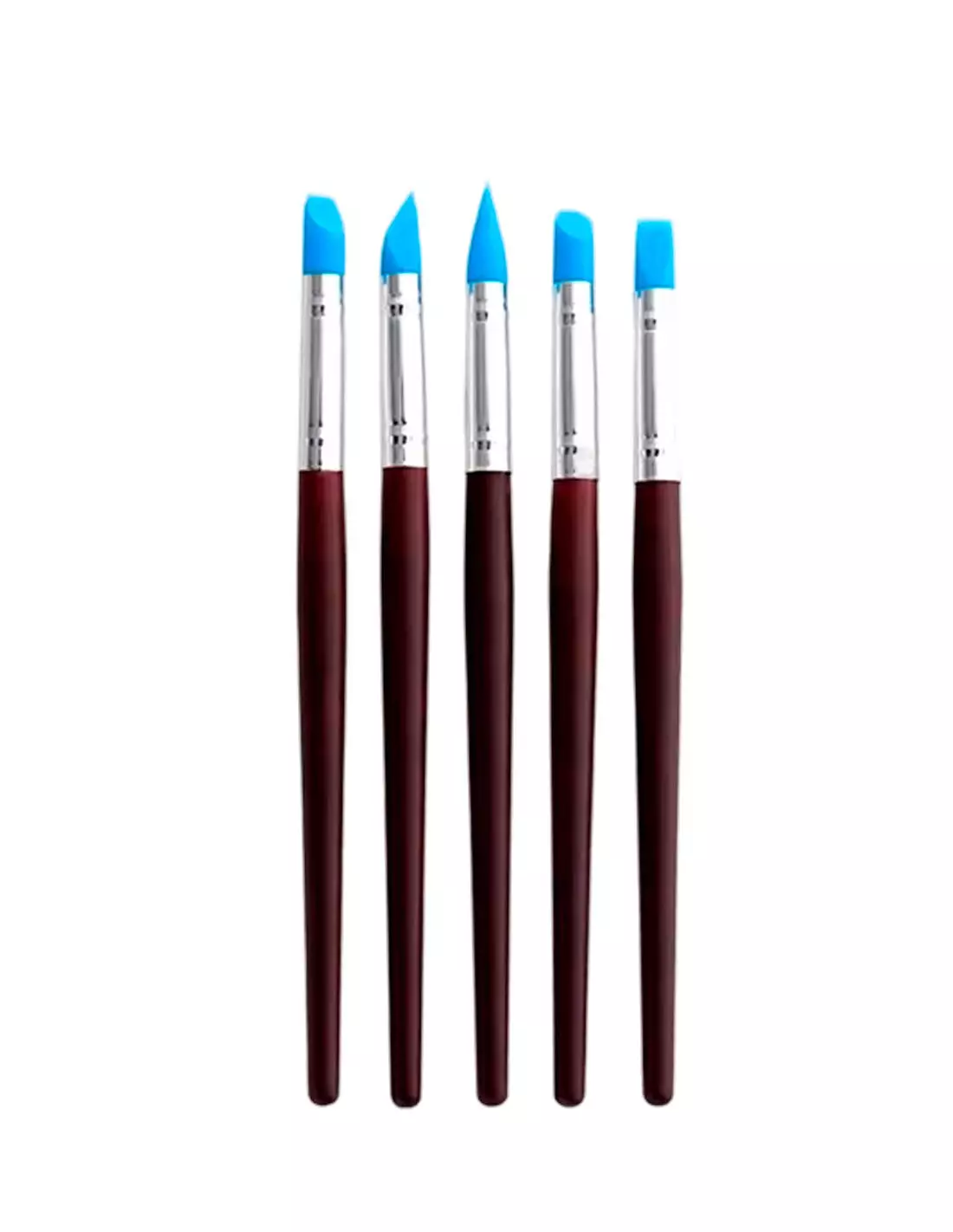
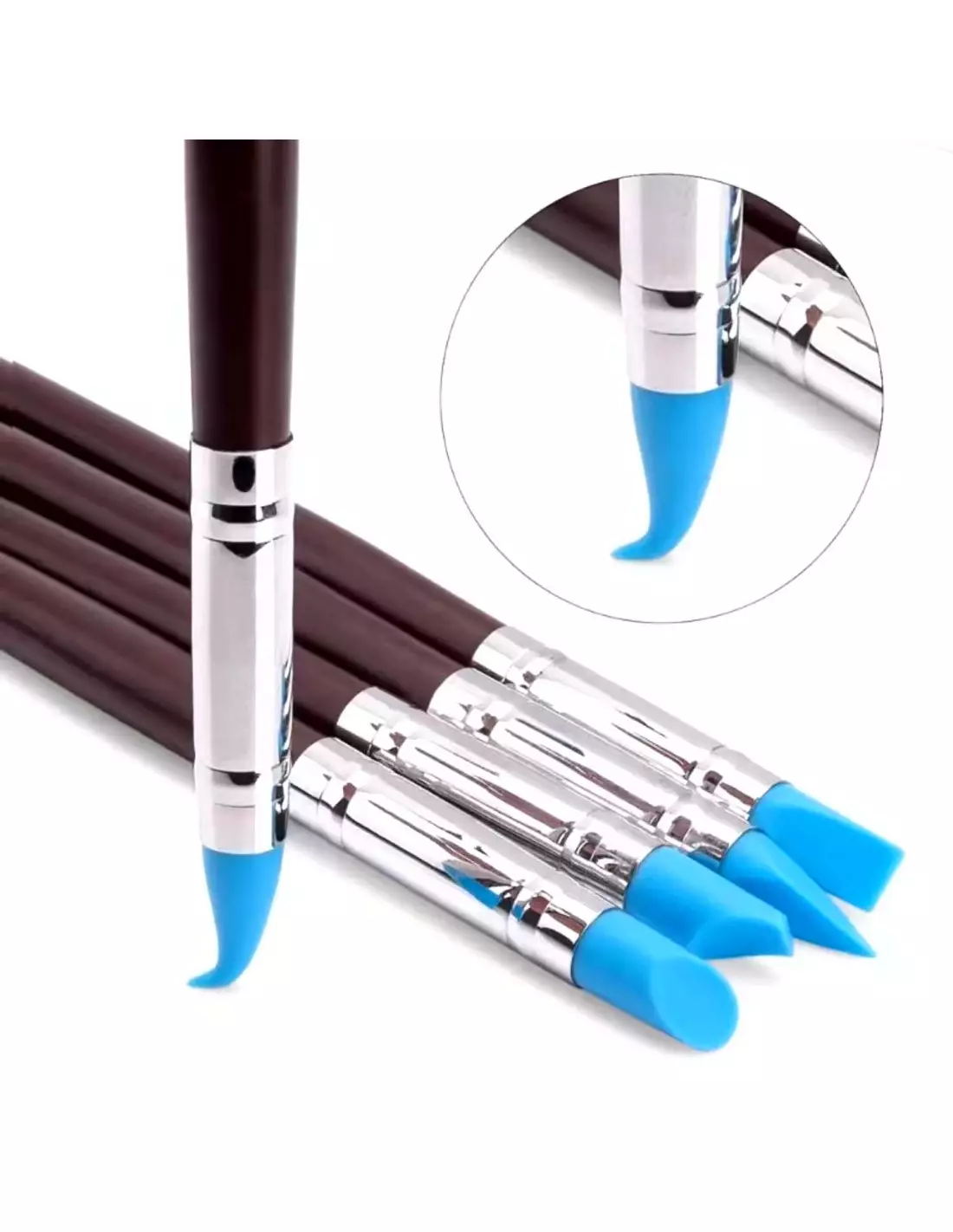
Rubber-tip modelling brushes are an essential tool for any sculptor working with clays, putties or soft materials. This set of 5 pieces brings together different tip shapes and angles to give you total control over detail, smoothing and texture in every project.
Technical specifications
| Set contents | 5 modelling brushes |
|---|
| Tip material | Flexible rubber |
|---|
| Tip shapes | Various shapes and angles (including flat, conical and angled tips) |
|---|
| Main use | Sculpting, detailing and surface smoothing |
|---|
| Compatible materials | Modelling clays, epoxy putties, polymer clay, modelling pastes |
|---|
What it's used for
These rubber-tip brushes are designed to work with soft or semi-soft materials, allowing you to move, smooth, texture and define surfaces with a precision that metal spatulas cannot offer. They are ideal for both special effects sculpture and artistic modelling and prototyping.
- Surface smoothing and fingerprint removal on clay
- Definition of wrinkles, folds and fine anatomical features
- Localised texturing in small areas
- Blending added material without visible seams
- Detail work on sculptures for silicone or resin moulds
- Modelling prosthetics and special effects pieces
- Sculpting miniatures and collector figures
- Refining polymer clay pieces before baking
How to use it
- Select the brush with the tip shape best suited to the area you are working on: flat tip for broad surfaces, conical tip for narrow areas, angled tip for corners and edges.
- If working with clay or putty, make sure the material is at the right temperature and consistency to respond well to rubber pressure.
- Apply gentle pressure and short strokes to move the material in a controlled way. The rubber allows you to pull, push and smooth without leaving hard marks.
- To smooth surfaces, make long strokes with the flat face of the tip, using circular or linear movements depending on the desired effect.
- Combine different tips from the set in the same working session to alternate between fine detail and broader area work.
- Clean the rubber tip with a dry or slightly damp cloth between material or area changes to avoid residue transfer.
Tips and advice
Combine the set with metal tools for complete results
The rubber tip is perfect for smoothing and moving material, but for clean incisions, defined lines and precise holes you will need rigid-tip tools. Combine this set with the Tiranti BM Series Modelling Tools to cover the full range of sculpting techniques without constantly switching tools.
Material temperature — key to control
With oil-based modelling clays, the heat from your hands can soften the material too much and make fine detail difficult. If you notice the material losing consistency, let the piece rest for a few minutes in a cool place before continuing. With polymer clay, working in a cool environment extends working time and improves the response to rubber brushes.
Tip maintenance
Avoid leaving cured epoxy putty residue on the rubber tips. If working with epoxy putty, clean the tool before the material hardens. To remove stubborn residue, a little 99.9% isopropyl alcohol on a cloth can help without damaging the rubber. Do not use aggressive solvents that could degrade the tip.
Frequently asked questions
What type of clay are these rubber brushes designed for?
They are compatible with oil-based clays (such as those used in special effects sculpture and prototyping), polymer clay and water-based modelling pastes. The rubber tip works best with materials that have some plasticity; it is not designed for already cured or rigid materials.
Can these brushes be washed?
Yes. The easiest cleaning method is with a dry or slightly damp cloth. For more stubborn residue from uncured materials, a cloth with isopropyl alcohol is effective. Avoid submerging them in strong solvents or exposing them to high temperatures, as these can affect the integrity of the rubber.
How many different tips does the set include and how do they differ?
The set includes 5 brushes with tips of different shapes and angles. Each one is designed for a specific task: smoothing broad surfaces, working in narrow areas, defining edges, texturing and fine detail. Having all 5 on hand allows you to switch technique without interrupting your workflow.
Can these brushes be used with two-component epoxy putties?
Yes, as long as the putty is in its working phase (uncured). With putties such as Epoxy Putty 610, the rubber tip allows you to smooth and shape the surface during the open time window. It is essential to clean the tool before the material cures.
Can I use these brushes for digital modelling or only for traditional sculpture?
These are tools for physical and traditional sculpture. However, they are very useful for preparing original sculptures that are later digitised or used as masters for making moulds with silicone or resin.
What is the difference between a rubber tip and a metal spatula?
The rubber tip is flexible and adapts to the surface of the material, allowing you to smooth without creating hard marks and move material gradually. The metal spatula is rigid and better suited to cutting, incisions and clean lines. Both are complementary; the Tiranti BM Series Modelling Tools are a good option to complete your toolkit with metal tips.
How can I get advice on which tool to use for my project?
You can write directly to [email protected] with a description of your project and the materials you use, or call 914 481 271. The Feroca technical team will guide you on the most suitable tool combination.