Shopping Cart



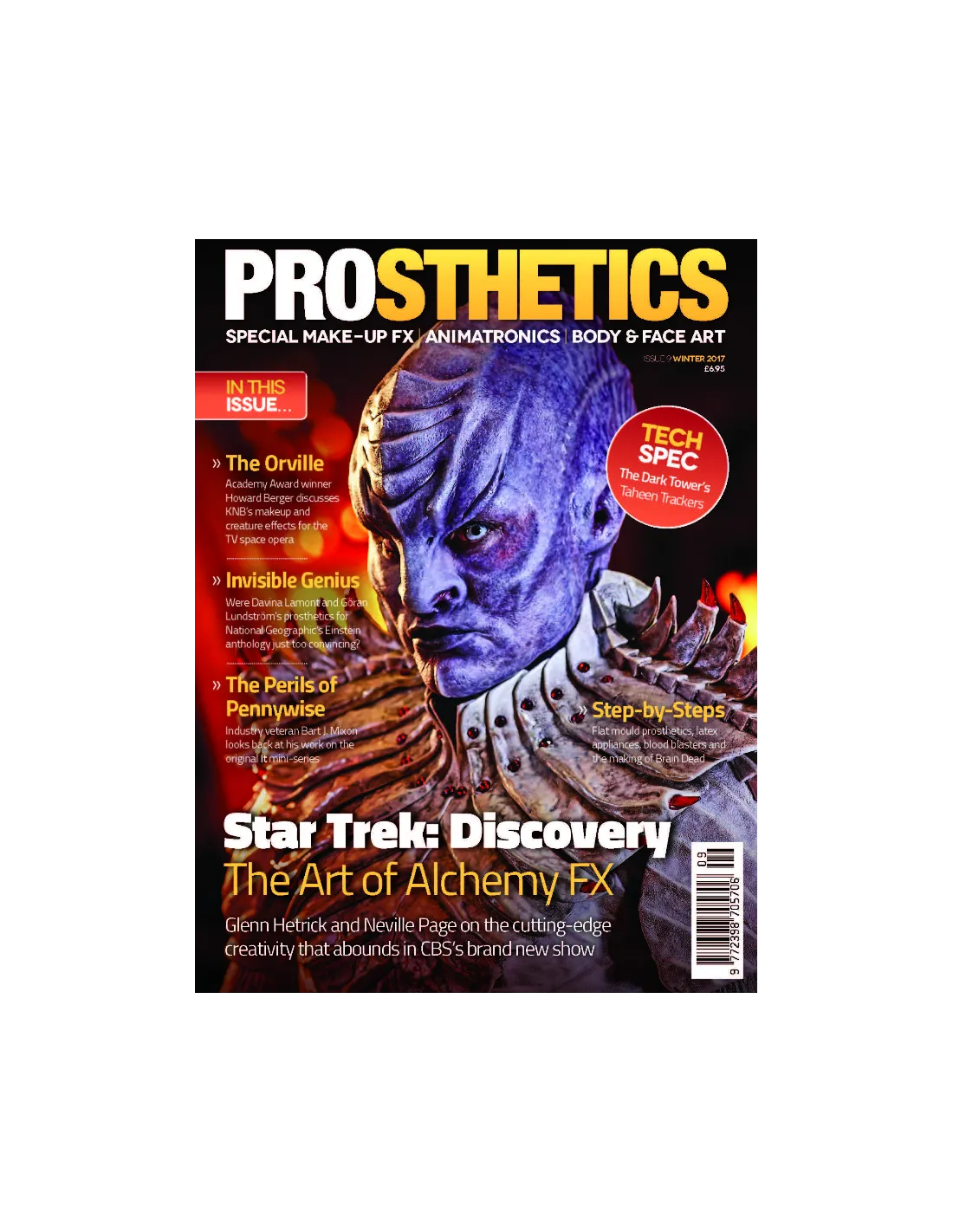
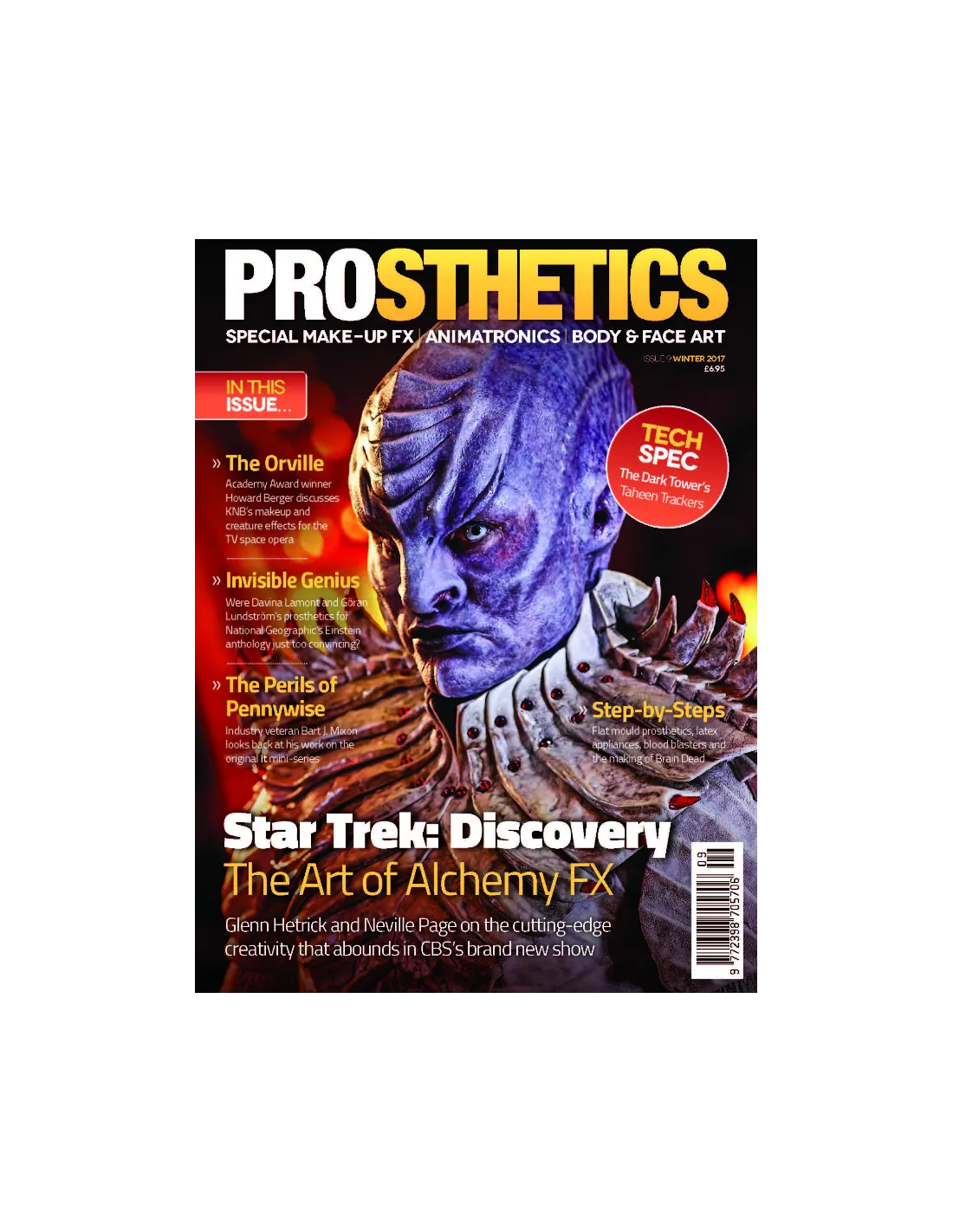
Prosthetics Magazine Nº9
600000010
Temporarily out of stock
€10.30
10,71 € Tax incl.
10,71 € Tax incl.
Specialist magazine on FX and prosthetics for film and TV, produced by Neill Gorton. Tutorials, interviews and professional techniques.
Prosthetics Magazine is the first independent magazine specialising in makeup special effects and prosthetics, produced by Neill Gorton, one of the most internationally recognised FX artists. Each issue brings together detailed tutorials, interviews with industry professionals and technical analysis of the materials and processes used in top-tier film and television productions. If you work in the world of FX makeup, prosthetics sculpting or special effects, this is the reference resource you shouldn't be without in your workshop.
Contents of issue 9
| Section | Description |
|---|---|
| Production | Neill Gorton, internationally renowned FX artist and educator |
| Main topic | Prosthetics for film and television, professional FX makeup |
| Key content | Step-by-step tutorials, in-depth interviews, technical information on materials |
| Level | Semi-professional and professional |
| Language | English |
| Format | Printed magazine |
What it's used for
Prosthetics Magazine Nº9 is a training and reference tool for anyone working in or looking to develop skills in the field of applied special effects. It covers both the creative and technical sides, with information directly applicable to the workshop.
- Learn prosthetics fabrication techniques for audiovisual productions
- Discover the materials used by professionals on real film sets: platinum silicones, latex foams, gelatines and more
- Follow detailed tutorials carried out by world-renowned FX artists
- Explore complete workflows, from sculpting through to painting and prosthetics application
- Stay up to date with industry trends and techniques through interviews with leading professionals
- Expand your knowledge of extreme character makeup, ageing, wounds and creature effects
How to get the most out of this magazine
- Read the technical articles first to familiarise yourself with the materials and processes mentioned in the tutorials.
- Identify the tutorials that match your current level and the materials you already have available in your workshop.
- Before executing any technique, review the materials section of the tutorial to make sure you have the right products or their equivalents.
- Study the professional interviews: they often include practical tips and references to processes that don't always appear in formal tutorials.
- Use the magazine as a recurring reference: many articles gain in value as you accumulate hands-on experience.
Tips for use
Combine reading with immediate practice
The techniques described in Prosthetics Magazine are designed to be taken straight to the workshop. Don't wait until you've read the entire issue before you start practising: work through each tutorial as soon as you finish reading it, while the details are still fresh. The learning curve in FX accelerates enormously when reading and practice go hand in hand.
Pay attention to the materials mentioned
The artists who contribute to the magazine work with specific materials whose properties are key to the final result. When a tutorial mentions a platinum silicone, an encapsulated gelatine or an intrinsic pigment, take note: choosing a material with equivalent characteristics will make the difference between a professional result and one that falls short. In the Feroca catalogue you'll find the materials needed to replicate the processes described in the magazine.
Use it as a source of technical vocabulary
If you're just starting out in the professional FX world, Prosthetics Magazine is also an excellent resource for familiarising yourself with industry terminology in English, which is the standard language in the industry. Understanding the terms used by professionals will make it easier to access tutorials, forums and international resources more efficiently.
Frequently asked questions
What language is it published in?
Prosthetics Magazine is published entirely in English. It is the standard language in the international special effects industry, and the level of technical English required to follow the tutorials is accessible to most readers with a basic knowledge of the language.
Is it suitable for someone just starting out in FX?
Yes, although some articles are aimed at experienced professionals, the magazine includes content at different levels. The tutorials are typically laid out step by step, making them followable even for artists who are still learning. That said, a basic grounding in moulding and materials is recommended to get the most out of it.
What kinds of techniques are typically covered in the tutorials?
Prosthetics Magazine tutorials cover techniques such as sculpting prosthetics in clay and foam, mould making, casting silicones and encapsulated gelatines, painting with intrinsic and extrinsic pigments, applying prosthetics on set, and makeup for wounds, ageing and creature effects, among others.
Can I get the materials featured in the magazine through Feroca?
In most cases, yes. Feroca distributes the main materials used in the professional FX sector: platinum silicones, gelatines, pigments, foams, moulding materials and many more. If you're unsure which product in the Feroca catalogue is the equivalent of one mentioned in the magazine, you can check directly with the technical team.
Are the issues of the magazine independent of each other?
Yes. Each issue of Prosthetics Magazine is an independent publication with its own articles, tutorials and interviews. You don't need to have read previous issues to get value from any individual copy, although reading several issues in succession significantly enriches your learning.
Who is Neill Gorton and why is he relevant in the industry?
Neill Gorton is a makeup special effects artist with an established career in international film and television productions. He is also an educator and founder of one of the leading FX schools in the United Kingdom. His direct involvement in the production of Prosthetics Magazine ensures that the content is aligned with the real standards of the professional sector.
Where can I preview the content before buying?
On the product page in the Feroca store you will find a link to view the first pages of issue 9, giving you a sense of the editorial style and quality of the content before placing your order.
No reviews
Tap to zoom