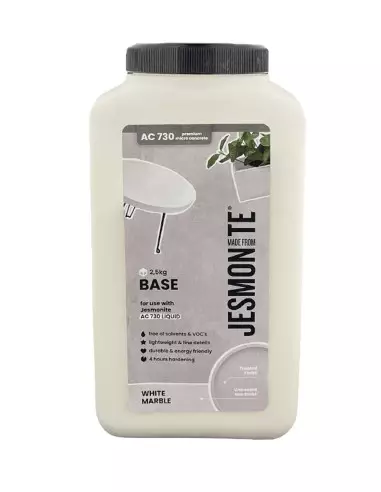
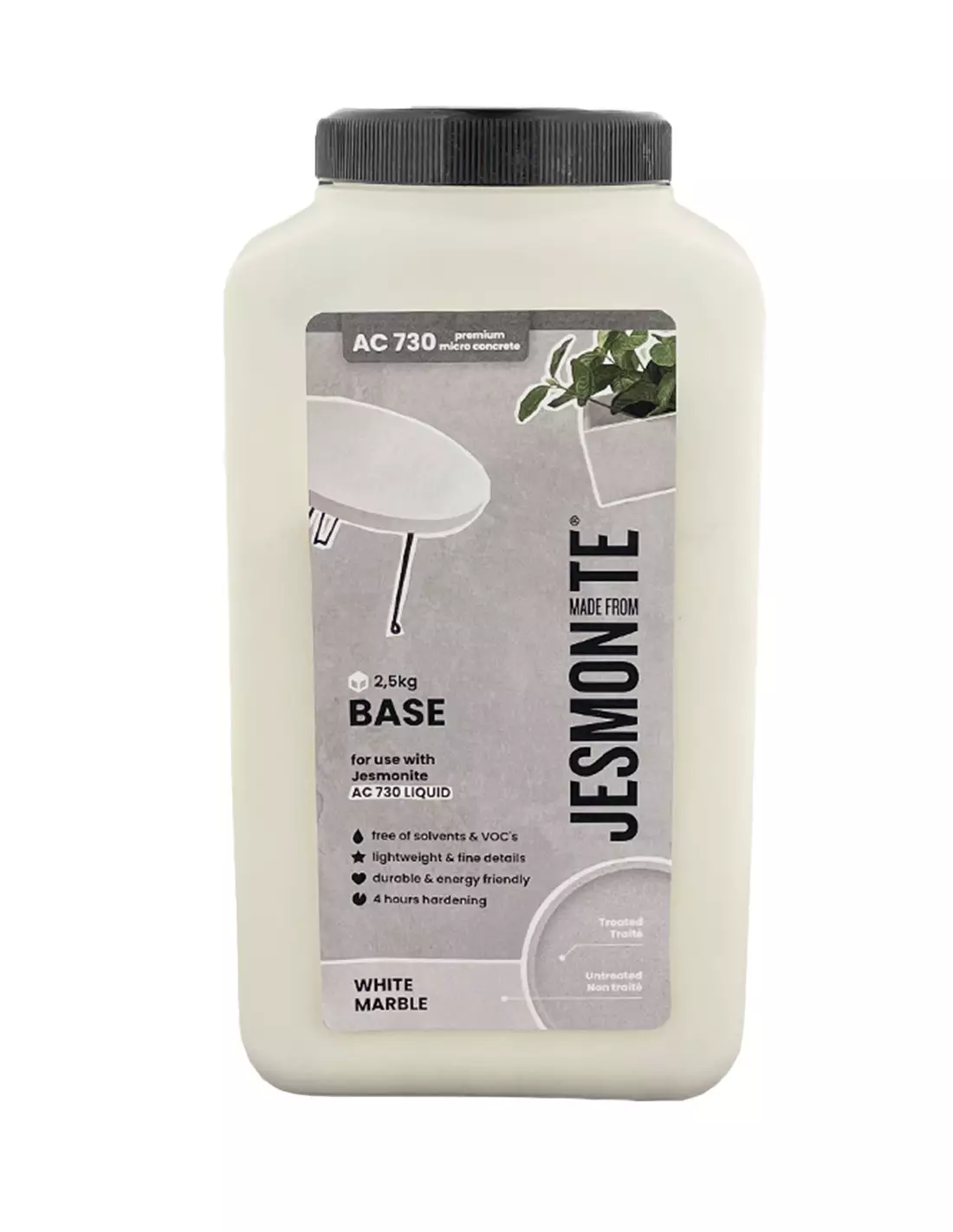
Jesmonite AC730 is a fast-curing modified acrylic cement system, specifically formulated for hand lamination reinforced with fibreglass and for small-format decorative castings. It delivers a natural stone texture finish, solvent-free and zero VOC, with excellent fire resistance, impact resistance and weatherability. If you need a lightweight, durable material with an authentic mineral finish, AC730 is the professional choice.
Technical specifications
Parameter
Value
System
Two-component acrylic cement (powder base + acrylic liquid)
Main application
Hand lamination with fibreglass / decorative casting
Solvents / VOC
Solvent-free, 0 VOC
Fire resistance
Yes
Impact resistance
High
Shrinkage
Low (compensated shrinkage material)
Permeability
Low
Alkalinity
Low (reduces efflorescence compared to Portland cement)
Surface finish
Natural stone effect, slightly porous
Outdoor use
Suitable, resistant to weather conditions including water
Available formats
3 kg Kit / 6 kg Kit
What it is used for
AC730 is designed for professionals and craftspeople who need decorative pieces with a mineral look, lightweight and resistant. Its low alkalinity and integrated decorative additives allow consistent and reproducible stone finishes, especially after treatment with brick cleaner or acid etching. It is ideal for both serial production and unique large-format pieces laminated with fibre.
Outdoor and indoor furniture with stone effect (tables, benches, planters)
Sculptures and decorative architectural elements
Natural stone reproductions for scenography and special effects
Small-format decorative castings in moulds
Cladding and veneering on lightweight structures
Signage and corporate pieces with mineral finish
How to use it
Prepare the mould. Apply an even coat of APM WAX release wax over the mould surface and allow to dry. Buff with a soft cloth. Repeat at least twice on new moulds.
Mix the system. Pour the acrylic liquid into a clean container. Gradually add the base powder while mixing with a mixing paddle until you obtain a smooth, lump-free paste. Always follow the ratio indicated in the manufacturer's technical data sheet.
Colour if required. Add the Jesmonite pigments into the liquid before mixing with the powder for uniform dispersion.
Apply the first coat (gel coat). Spread a thin layer of the mix over the prepared mould with a brush or spatula. This coat defines the surface finish of the piece.
Laminate with fibre. Before the first coat fully cures, lay the fibreglass fabric and apply another coat of AC730 fully saturating it. Smooth out to remove air bubbles.
Add additional layers. Depending on the required thickness, repeat the lamination process. Each layer should be applied when the previous one has gelled but is still green (tacky).
Allow to cure. Respect the full curing time before demoulding. Curing is exothermic and the time varies depending on ambient temperature and piece thickness.
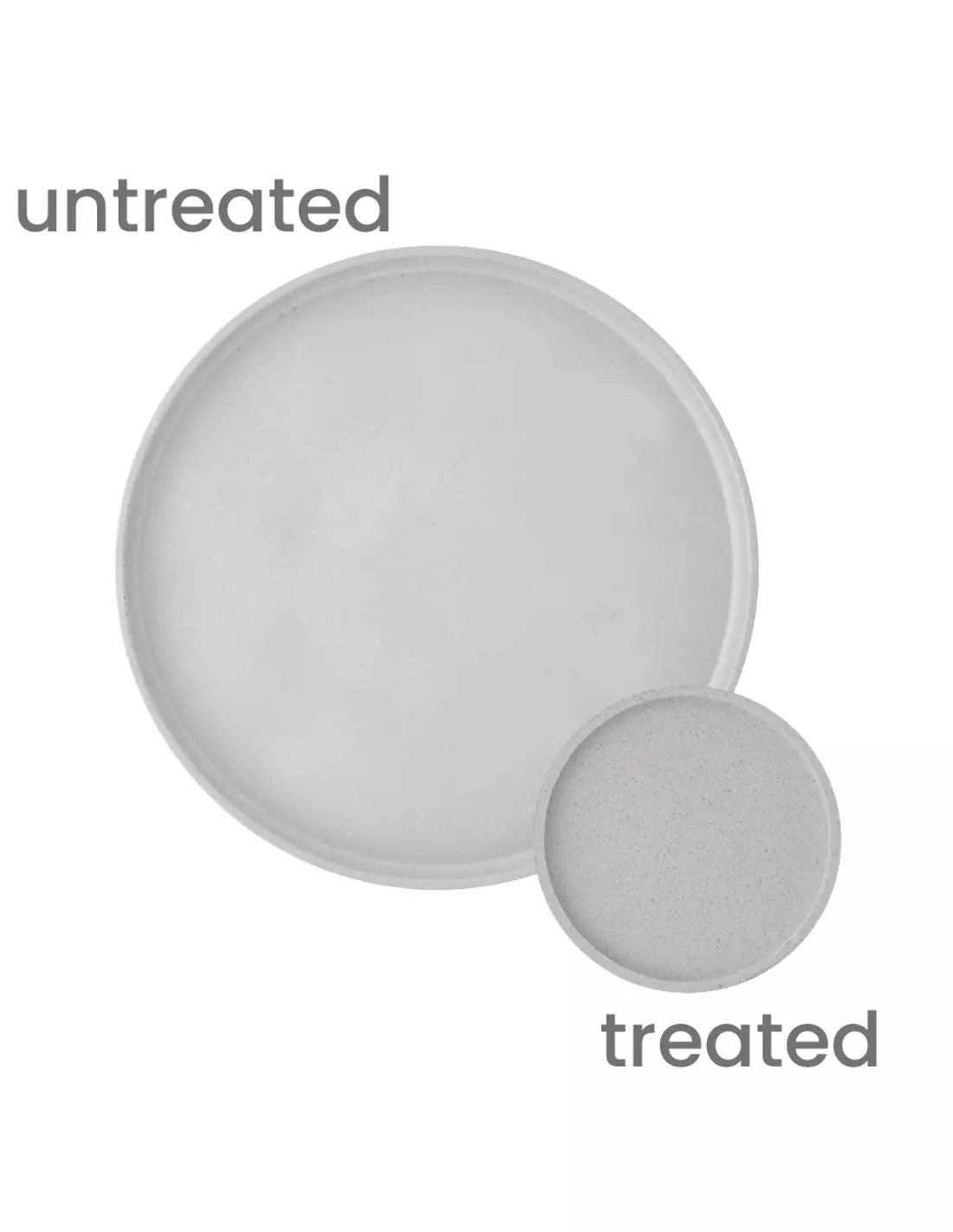
Demould and finish. Carefully remove the piece. To enhance the stone effect, apply brick cleaner or acid etching to the surface.
Usage tips
Control your working time
AC730 cures quickly, especially at high ambient temperatures. Prepare only the amount you can apply within the available working time. If you need more time for complex pieces or large surfaces, use Jesmonite Retarder, the official retarder additive for the system, which extends working time without compromising the final properties of the piece.
Workshop temperature and humidity
Work between 18 °C and 25 °C. Below 15 °C curing slows down considerably and adhesion problems between layers may occur. Above 30 °C the gel time shortens dramatically. High relative humidity does not affect curing (it is a water-based system), but may influence the surface finish if condensation forms on the mould.
Finishes and surface treatments
AC730 incorporates decorative additives and powder pigments that give a porous stone-type finish. To enhance the mineral effect and homogenise the surface, apply diluted brick cleaner or acid etching after demoulding. If you need a custom tone, add Jesmonite pigments into the liquid before mixing: they are compatible and do not alter the mechanical properties of the system. For outdoor pieces, protect the surface with a suitable water-repellent sealer for cementitious materials.
Frequently asked questions
Can this material be used without fibre reinforcement?
Yes. Jesmonite AC730 can also be used for small-format decorative castings without fibre reinforcement. However, for large pieces or those subject to mechanical stress, lamination with fibreglass fabric is essential to ensure structural strength and prevent breakage.
How much time do I have to work the mix before it gels?
Working time depends on ambient temperature, mix thickness and the quantity prepared. Under standard conditions (20 °C) you have several minutes before the mix begins to gel. To extend that window, use Jesmonite Retarder following the manufacturer's instructions.
Can it be pigmented, and when should the colour be added?
Yes, the system can be pigmented with Jesmonite pigments, specially formulated for this system. Add the pigment to the acrylic liquid before incorporating the powder: this ensures uniform dispersion and gives you a consistent colour throughout the piece.
Is it suitable for outdoor use and water contact?
Yes. AC730 is a low-permeability material designed to withstand all external weather conditions, including prolonged water contact. Its low alkalinity also reduces the efflorescence typical of conventional cements. For outdoor use, it is recommended to apply a suitable water-repellent sealer for cementitious materials.
What is the difference between this product and Acrystal resin?
Both are two-component acrylic resins, but with different profiles. Acrystal Prima resin gives a smoother, more sealed finish, while Jesmonite AC730 offers a more porous finish with a mineral texture, characteristic of the stone effect. The choice depends on the finish you are looking for in your piece.
What type of mould should I use?
You can use silicone moulds, fibreglass moulds, wood or MDF moulds. On porous moulds (wood, MDF) apply several coats of sealer before the release agent. In any case, always use APM WAX release wax to facilitate demoulding and protect the mould surface.
Can I add metallic fillers or aggregates to the system?
Adding bronze powder or other metallic fillers directly to AC730 is not recommended, as they may alter the curing process and final properties. For metallic effects, Feroca stocks specific products from the Jesmonite range formulated for that purpose. For fine mineral aggregates, always consult the manufacturer's technical data sheet before making any modifications.
Can I see finish samples before buying?
Yes. Feroca stocks the Jesmonite AC730 Sample Box, which allows you to evaluate the real material finish, chromatic effects and surface texture before purchasing the full kit.
Cookies on this site are used to personalise content and ads to deliver social media features and to analyse traffic. We also share information about your use of the site with our social media partners for advertising, personalisation and web analytics.. More information.