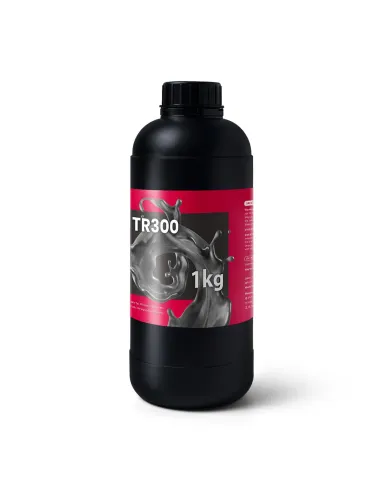
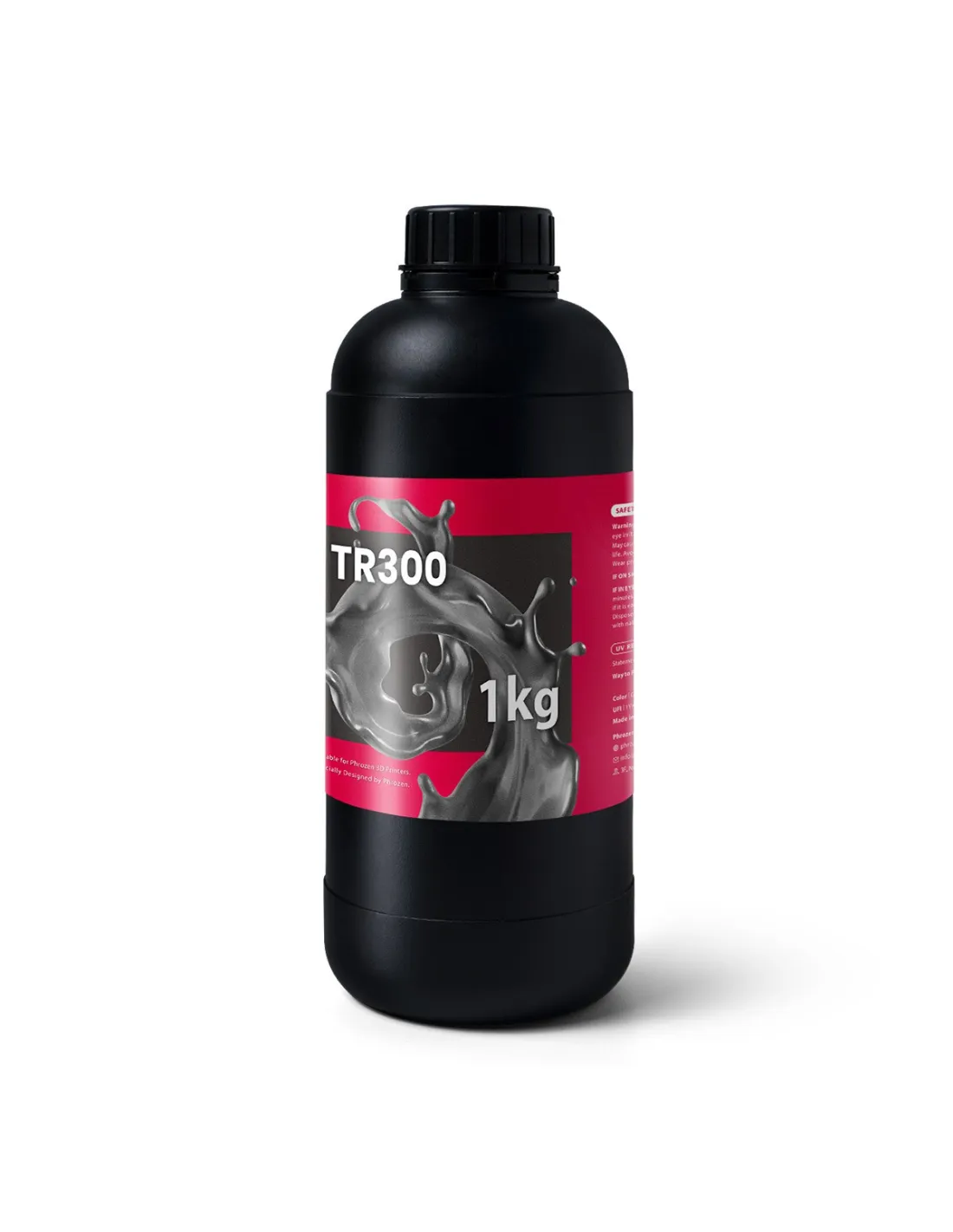
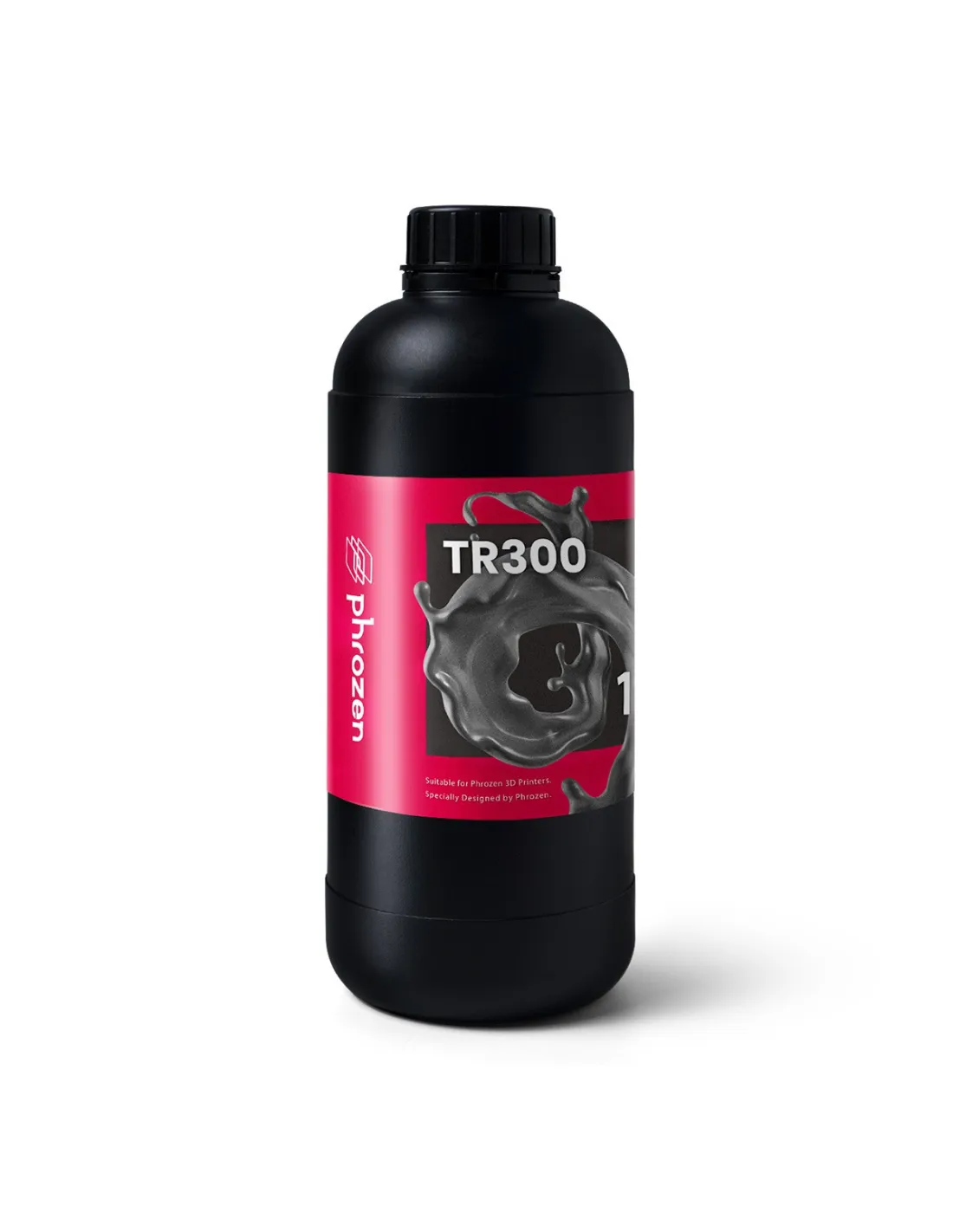
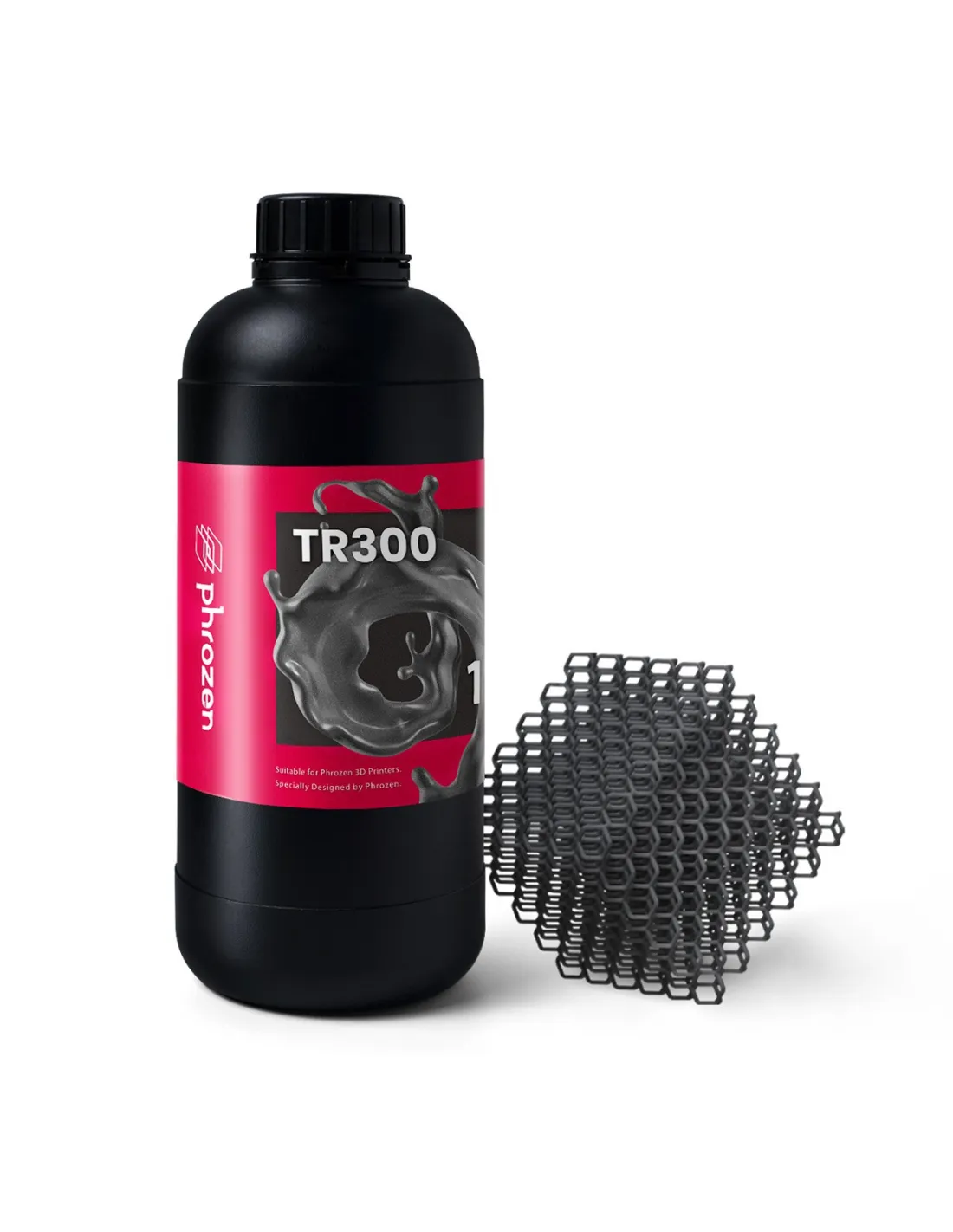
High thermal resistance 3D resin (HDT 190 °C, 80 Shore D) for dental thermoforming, jewellery and industrial prototypes. Low viscosity and low shrinkage.
The Phrozen TR300 Gray is a high thermal resistance photopolymer resin designed for resin 3D printers (MSLA/LCD). With a heat deflection temperature of 190 °C and a surface hardness of 80 Shore D, it is the professional choice for dental thermoforming, industrial prototyping and jewellery creation requiring dimensional precision and stability at high temperatures. Its low viscosity facilitates both printing and post-print cleaning.
Technical specifications
Parameter
Value
Colour
Grey
Weight per bottle
1 kg
Density
1.17 g/cm³
Viscosity
120–200 cps
Surface hardness
80 Shore D
Tensile strength (UTS)
32 MPa
Tensile modulus
1857 MPa
Elongation at break (EAB)
2 %
Izod impact resistance (notched)
8 J/m
Glass transition temperature (Tg)
220 °C
HDT @ 0.45 MPa
190 °C
Compatible technology
MSLA / LCD
What it is used for
The TR300 Gray is designed for applications that require dimensional stability at high temperatures and mechanical properties superior to those of standard resins. It is especially valued in dental and prototyping environments where the part will be exposed to heat or mechanical stress after printing:
Dental models for vacuum thermoforming (splints, retainers, aligners)
Industrial prototyping of functional parts subject to heat
3D-printed jewellery with high surface definition
Moulds and tooling for short runs requiring thermal resistance
Study models with high surface hardness and low shrinkage
How to use it
Shake the bottle well before pouring the resin into your printer's vat. A minimum of 30–60 seconds is enough to homogenise the pigment and monomers.
Set the print parameters according to your printer and the profile recommended by Phrozen for TR300. Adjust exposure time based on the light source size of your equipment.
Print the part making sure the workspace is well ventilated throughout the entire process.
Remove the part from the build plate carefully using a spatula and nitrile gloves. The part is still in a green state (partially cured) and is more fragile.
Clean the part by submerging it in isopropyl alcohol 99.9% for 2–3 minutes per bath. Use two consecutive baths for optimal results and dry with compressed air.
Post-cure the part in a UV station. A dry post-cure is recommended for TR300, as water curing can affect the final thermal properties. Check Phrozen's recommended times based on part size.
Inspect the result: the part should have a uniform matte grey surface, hard to the touch and free of tacky areas. If there is tackiness, increase the post-cure time.
Warning: Phrozen TR300 is an acrylate-based photopolymer resin. In liquid state it can irritate skin, eyes and respiratory tract. Always work with nitrile gloves, protective goggles and in a well-ventilated space. Avoid direct contact with uncured resin. The isopropyl alcohol used for cleaning is flammable: keep it away from heat sources and the UV post-cure station while wet.
Usage tips
Dry post-cure to maximise thermal resistance
The HDT of 190 °C is only achieved with a correct and complete post-cure. Unlike other resins, TR300 must not be post-cured in water: wet heat can generate internal stresses and reduce the actual deflection temperature of the part. Use a dry UV station and make sure the part is completely clean and dry before placing it inside.
Vat management and storage
TR300 has a relatively low viscosity (120–200 cps), which promotes FEP filling and layer recoating. However, if the resin has been sitting in the vat between print sessions, stir it again with a silicone spatula before resuming work to prevent pigment sedimentation. Store the bottle in a cool, dry place away from direct light. Once opened, seal the cap tightly after each use.
Orientation and supports for dental parts
For dental thermoforming models, an orientation between 15° and 45° relative to the build plate reduces peel force per layer and minimises deformation. Use medium supports with small contact points to avoid damaging critical areas of the model (preparation margins, interproximal zones). TR300's low shrinkage rate helps maintain dimensional accuracy, but poor orientation can compromise the clinical result.
Frequently asked questions
Is this resin compatible with any resin printer?
Phrozen TR300 Gray is compatible with standard MSLA and LCD printers. It uses the same technology as Phrozen's own machines, but can be used in any resin printer with a 405 nm UV light source. Adjust the exposure parameters (base layers and normal layers) according to your printer's specifications and the chosen layer thickness.
What cleaner should I use after printing?
The most effective and common method is washing with isopropyl alcohol 99.9%. Two consecutive baths of 2–3 minutes each are recommended to properly remove uncured resin residue. Avoid water alone as a cleaner: it does not dissolve acrylate monomers effectively.
Can it be used to make dental models for direct intraoral use?
Phrozen TR300 Gray is designed for working models (thermoforming, study), not for direct intraoral applications such as prosthetics or in-mouth splints. Those applications require resins with specific biocompatibility certification. TR300 is ideal as a base model for thermoforming aligners, retainers or vacuum splints.
Why do my parts have tacky areas after post-curing?
Residual tackiness indicates the part has not completed the post-curing process. The most common causes are: insufficient post-cure time, a dirty part (resin residue not properly washed off) or low UV lamp power. Increase the exposure time in the UV station and make sure the part is perfectly clean and dry before dry post-curing. Remember that TR300 must be post-cured dry.
What temperature can the cured part withstand?
With a heat deflection temperature (HDT) of 190 °C at 0.45 MPa and a Tg of 220 °C, Phrozen TR300 handles the vacuum thermoforming processes common in dentistry and the working temperatures of most industrial prototypes with ease. It is one of the highest thermal resistance 3D printing resins available on the market for MSLA/LCD use.
How long does the resin last unopened and once opened?
Unopened and correctly stored (cool, dry place, no direct light), the shelf life is approximately 12 months from the manufacturing date. Once opened, use it preferably within the following 3–6 months and seal it well after each use. If you notice the resin has become gelatinous or has lumps that do not dissolve when shaken, it has started to polymerise and must not be used.
Is it possible to mix this resin with others to modify its properties?
Mixing resins from different formulations is not recommended. TR300 is designed to deliver its thermal and mechanical properties (HDT 190 °C, 80 Shore D) as a complete system. Mixing it with other resins can alter the required exposure times, reduce final thermal resistance and produce unpredictable results. Always use it pure as supplied.
Is TR300 suitable for investment jewellery casting (lost-wax casting)?
Phrozen TR300 Gray is not formulated as a castable resin. Its high thermal resistance and ash composition after burnout do not make it suitable for direct lost-wax casting techniques. For 3D-printed jewellery with subsequent casting, you need a specific castable resin. TR300 is suitable for making display jewellery models or high-hardness tooling.
Video tutorial
How to do the printing test for Sonic Mighty 4K - Phrozen LCD 3D Printer
Cookies on this site are used to personalise content and ads to deliver social media features and to analyse traffic. We also share information about your use of the site with our social media partners for advertising, personalisation and web analytics.. More information.