Shopping Cart


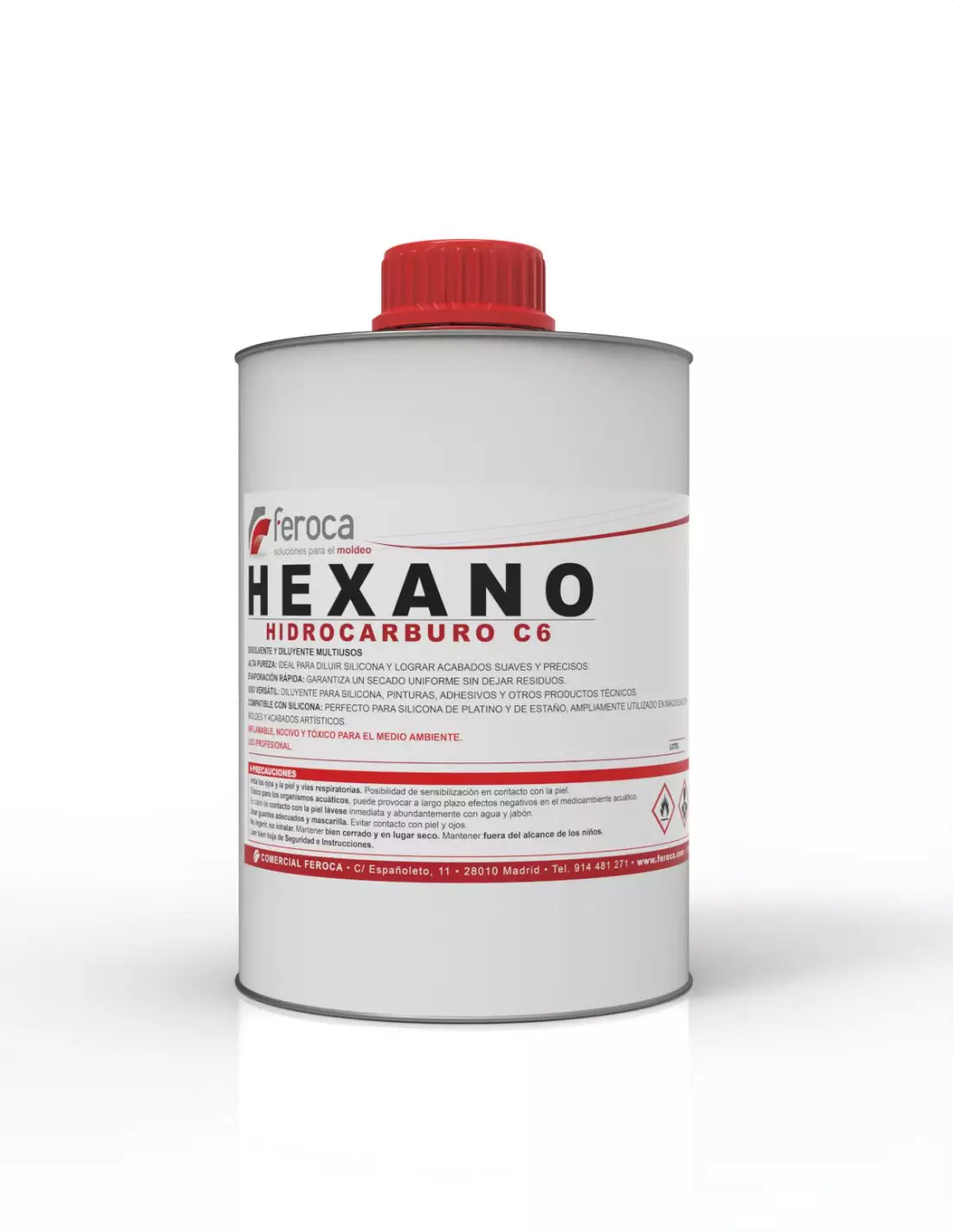
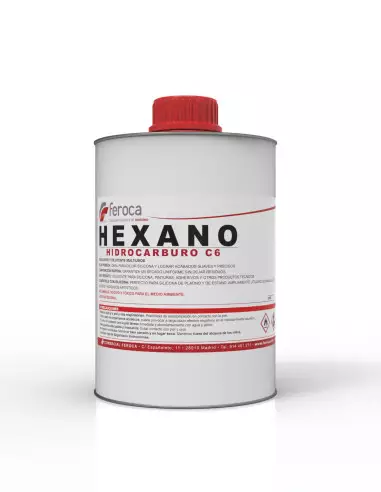
Hexane - Solvent
304230500
€4.00
4,84 € Tax incl.
4,84 € Tax incl.
This product cannot be shipped by air. To the Balearic Islands it is sent by sea freight. For deliveries to the Canary Islands, please contact us before ordering.
Hexane aliphatic solvent, colourless. Highly volatile, flammable, miscible with organic solvents. Boiling point 68–70 °C. Professional use.
Hexane is a liquid aliphatic hydrocarbon for professional use, widely used as a high-purity solvent in workshops, laboratories and industry. Its high volatility and ability to dissolve fats, waxes, resins and adhesives make it a versatile tool whenever a powerful, fast-evaporating solvent is needed.
Technical specifications
| Property | Value |
|---|---|
| Physical state | Liquid |
| Colour | Colourless |
| Odour | Characteristic, similar to petrol |
| Boiling point | 68–70 °C |
| Melting point | -20 °C |
| Density | ≈ 0.66 g/cm³ |
| Water solubility | Practically insoluble |
| Miscibility | Miscible with ether, acetone and most organic solvents |
| Volatility | Very high (low boiling point) |
| Flammability | Highly flammable — flammable vapours at room temperature |
What it is used for
Hexane is used in applications requiring a non-polar, fast-evaporating solvent that leaves no residue. It is common in special effects workshops, laboratories and industrial cleaning and extraction processes:
- Cleaning and degreasing of metal surfaces, moulds and tools prior to moulding.
- Thinning and cleaning of adhesives, waxes and uncured resins.
- Extraction of oils, fats and pigments in laboratory processes.
- Cleaning of application equipment (spray guns, brushes, rollers) after use with oily materials.
- Surface preparation prior to application of release agents or adhesion primers.
- Controlled dilution of solutions in analysis or formulation processes.
- Cleaning of uncured silicone residues from moulds and tools.
How to use it
- Always work in a well-ventilated space or with local exhaust ventilation. Hexane vapours are flammable and can accumulate at floor level.
- Wear nitrile gloves of adequate thickness (minimum 0.2 mm), chemical splash goggles and, if exposure is prolonged, a respirator with an organic vapour filter (type A).
- Pour the required amount of hexane into a clean, sealable container. Never work directly from the original container with the cap open.
- Apply hexane to the surface to be cleaned or dissolved using a suitable cloth or brush. Rub gently if necessary to loosen the residue.
- Allow the hexane to evaporate completely before applying any material to the treated surface. Evaporation is rapid thanks to its low boiling point.
- Place soaked cloths and materials in a metal container with a lid, away from heat sources or sparks.
- Seal the container tightly after each use and store in a cool, ventilated place away from ignition sources.
Safety warning — Highly flammable
Hexane generates flammable vapours at room temperature that can accumulate at floor level and reach ignition sources far from the point of use. Keep away from flames, sparks, electric heating elements and cigarettes. Do not use near electric motors without explosion-proof protection. Repeated or prolonged inhalation is harmful to the nervous system. Always consult the Safety Data Sheet (SDS) before using this product.
Hexane generates flammable vapours at room temperature that can accumulate at floor level and reach ignition sources far from the point of use. Keep away from flames, sparks, electric heating elements and cigarettes. Do not use near electric motors without explosion-proof protection. Repeated or prolonged inhalation is harmful to the nervous system. Always consult the Safety Data Sheet (SDS) before using this product.
Usage tips
Ventilation — the absolute priority
Hexane has a very low boiling point (68–70 °C), which means it evaporates quickly even at room temperature. That same quality that makes it effective also makes it a solvent with high vapour concentrations in the working environment. Always open windows and use forced extraction if the space is small. In enclosed indoors, even small quantities can exceed occupational exposure limits within minutes.
Correct containers and storage
Store hexane exclusively in original containers or in approved containers for flammable solvents (generally metal or approved high-density polyethylene). Never transfer it to glass bottles without a suitable screw cap or to incompatible plastic containers. Keep stock away from heat sources, direct sunlight and oxidising products.
Combining with other solvents
Hexane is miscible with most organic solvents, which allows it to be combined with acetone, isopropyl alcohol or naphtha to adjust evaporation rate or solvent power depending on the task. However, any mixture increases the complexity of waste management: always treat it as flammable hazardous waste.
Frequently asked questions
Can I use this solvent to clean silicone moulds?
Yes, hexane is effective at removing uncured silicone residues, fats and waxes from mould surfaces. Apply it with a cloth and allow it to evaporate completely before pouring any material. Note that in platinum silicone moulds, any remaining contaminant can cause cure inhibition; make sure the hexane has evaporated completely.
How long does it take to evaporate completely?
Thanks to its low boiling point (68–70 °C) and high volatility, hexane evaporates very quickly at room temperature, generally within a few minutes under normal ventilation conditions. On porous surfaces or with thick layers the time may be somewhat longer. Always confirm there is no residual odour before applying the next material.
Is it compatible with all types of protective gloves?
Not all gloves offer the same protection against hexane. Thin latex gloves have very limited resistance. The use of nitrile gloves with a minimum thickness of 0.2 mm is recommended, or for prolonged exposure, butyl gloves. Always consult the PPE manufacturer's instructions regarding specific chemical resistance to aliphatic hydrocarbons.
Can it be used to thin adhesives or resins?
Hexane is a good solvent for oil-based or non-polar adhesives and resins. However, it is not suitable for all types: epoxy resins, polyurethanes or acrylics may require more polar solvents such as acetone or isopropyl alcohol. Always carry out a small test before using hexane as a thinner in a formulation.
How should I dispose of hexane waste?
Hexane and cloths or materials soaked in it are flammable hazardous waste. Do not pour them down the drain or dispose of them in household waste. Place them in closed metal containers and take them to an authorised hazardous waste collection point or waste management facility, in accordance with local regulations.
Can I combine hexane with other solvents?
At what temperature should it be stored?
Store hexane in a cool place, between 5 °C and 25 °C, well ventilated and away from heat sources, direct sunlight and any ignition source. Avoid areas where the temperature may regularly exceed 30 °C, as this increases vapour pressure and the risk of flammable vapour accumulation.
Is hexane soluble in water?
No. Hexane is practically insoluble in water. This characteristic makes it useful for cleaning surfaces where moisture is not wanted, but it also means it cannot be washed away with water in the event of a spill: use inert absorbent materials (sand, vermiculite) and manage them as hazardous waste.
No reviews
Tap to zoom