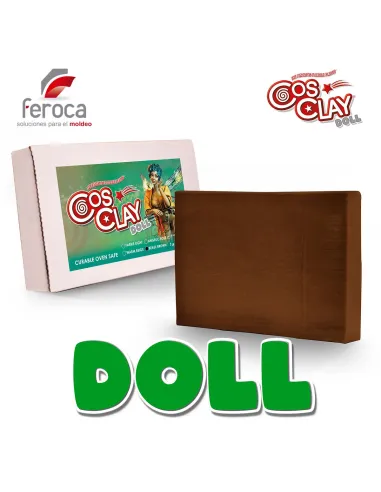
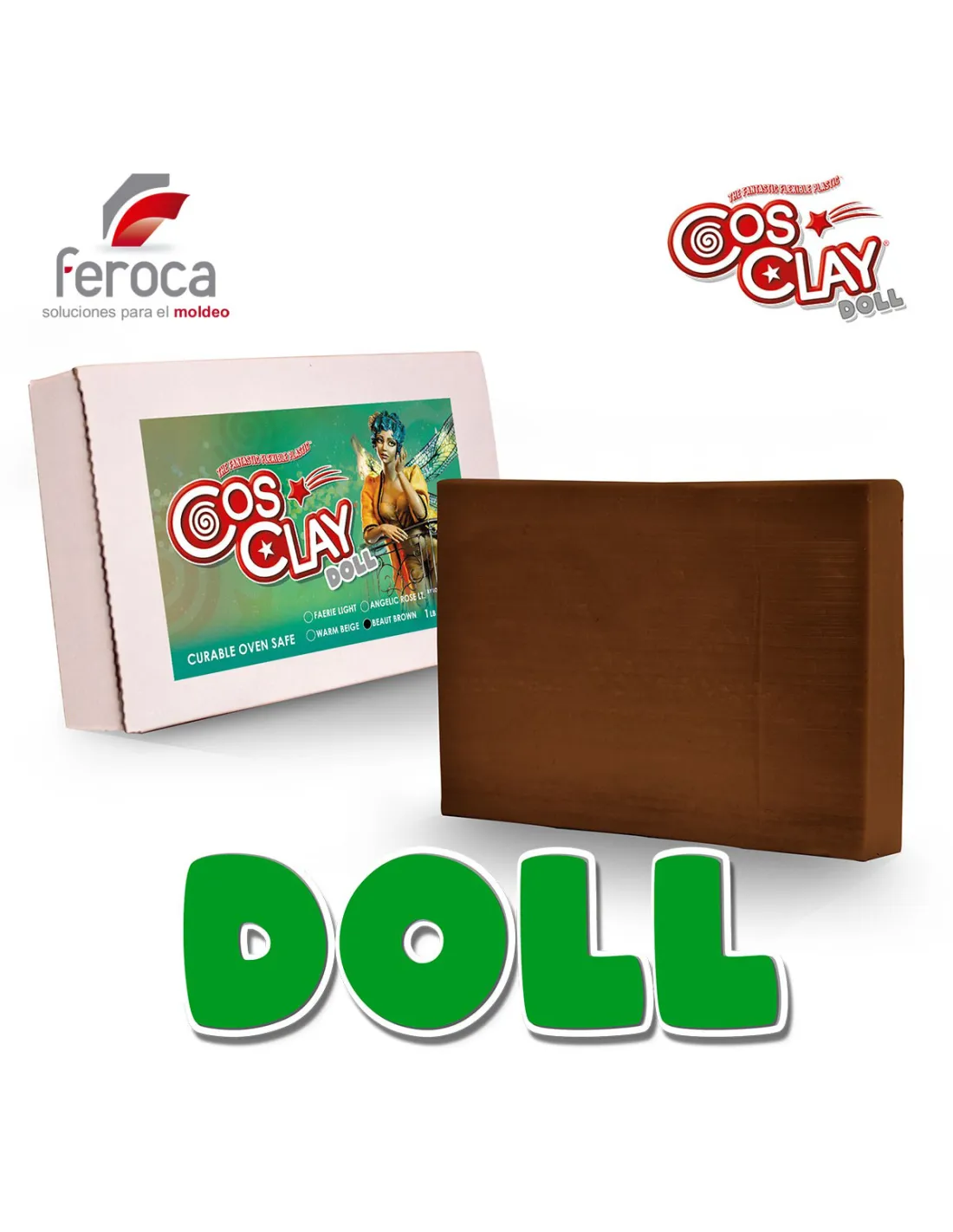
Cosclay Doll Beaut Brown is a plastic/rubber hybrid polymer clay that, once baked at 135 °C, retains a lasting flexibility that no conventional polymer clay can match. Its warm Beaut Brown tone is designed specifically for sculpting dolls and figures with an organic look, reducing the need for post-painting. At 226 g per block, it is the ideal format for stop motion projects, articulated OOAK dolls and character sculpting.
Technical specifications
| Parameter |
Value |
| Format |
226 g block |
| Colour |
Beaut Brown (warm skin tone) |
| Cure temperature |
135 °C |
| Result after curing |
Flexible and durable |
| Shrinkage / expansion |
None (100% solid) |
| Type |
Plastic/rubber hybrid polymer clay |
| Mix compatibility |
Mixable with other Cosclay colours |
What it is used for
Cosclay Doll Beaut Brown is designed for sculptors and artists who need baked pieces with real bending capability without fracturing. Unlike conventional polymer clays, its hybrid nature allows thin pieces — fingers, ears, limbs — to withstand repeated bending and handling without breaking. The neutral warm Beaut Brown tone is especially useful in human or fantasy figure projects where the base colour already approximates the final skin tone.
- Articulated figures and dolls (OOAK dolls)
- Characters and puppets for stop motion
- Miniatures with thin and delicate parts (fingers, ears, tails)
- Dioramas with organic elements
- Character sculptures with skin or soft textures
- Artistic prototypes requiring impact resistance
- Pieces that withstand frequent handling without breaking
How to use it
- Condition the clay: work it with your hands until it is pliable and homogeneous. In cold environments, warm the block slightly before starting.
- Sculpt your piece: use standard sculpting techniques — pinching, coils, slabs — and use a modelling tool set for precise details. Loop tools are useful for creating hollow forms or adding textures.
- Add additional layers: you can add clay and bake in multiple sessions. New layers bond well to already-cured sections, making phased work easier.
- Preheat the oven: reach 135 °C before placing the piece inside. Use an oven thermometer to verify the actual temperature.
- Bake: calculate approximately 15 minutes per 6 mm of thickness at the thickest part of the piece.
- Cool slowly: let the piece cool inside the switched-off oven or on a surface that does not cause sudden temperature changes.
- Final finishing: once cool, the piece can be sanded, painted with acrylics or combined with other already-cured Cosclay pieces.
Usage tips
Temperature: the most critical point
A domestic oven may display incorrect temperatures. Invest in a standalone oven thermometer: baking above 150 °C can burn the piece and release unpleasant fumes; below 130 °C the cure will be incomplete and the final flexibility will not be correct. Always bake in a ventilated space.
Colour mixing and layering
Cosclay Doll Beaut Brown can be mixed with any other shade in the Cosclay range to obtain custom skin tones. You can also mix uncured clay with crushed already-cured clay (added in a small proportion) to modify the texture. If you work pieces in parts — head, hands, torso separately — bake each section and join them afterwards with fresh clay and a second bake.
Compatibility with platinum silicones
If you plan to make an addition cure (platinum) silicone mould from a Cosclay sculpture, bear in mind that polymer clays may contain compounds that inhibit the cure of these silicones. Always carry out a small inhibition test before moulding the full piece: apply a drop of platinum silicone onto the baked surface and allow it to cure. If it cures correctly, you can proceed. If not, seal the surface with lacquer or shellac before moulding.
Frequently asked questions
What is the difference between a flexible polymer clay and a conventional one?
Conventional polymer clays cure into a rigid piece that can fracture if bent. Cosclay Doll Beaut Brown incorporates a rubber phase in its hybrid formulation, so after baking it retains real flexibility: thin pieces such as fingers or ears can be bent without breaking — something essential in stop motion projects or articulated dolls.
Can I bake the piece in multiple sessions?
Yes. Cosclay allows phased baking. You can cure one part of the sculpture, add more fresh clay on top and bake again without the already-cured part degrading. This is especially useful when building complex figures in sections.
At what temperature and for how long should it be baked?
The recommended temperature is 135 °C. Baking time depends on thickness: approximately 15 minutes per 6 mm at the thickest part of the piece. Always verify the actual oven temperature with a standalone thermometer, as domestic ovens typically have deviations of ±10–20 °C.
Can it be painted after curing?
Yes. Once baked and cooled, the piece accepts acrylic paint without a primer in most cases. For highly detailed finishes or with oil paints, a thin coat of acrylic primer improves colour adhesion.
Can I mix this shade with other colours?
Cosclay Doll Beaut Brown is fully mixable with any other colour in the Cosclay range. You can create custom skin tones by combining different Beaut Browns or mixing with whites and ochres. Mixing with other brands of polymer clay is not recommended, as the rubber proportions may vary and the final result might not be as expected.
Can I make a silicone mould from a sculpture in this clay?
Yes, but you must be careful if using platinum (addition cure) silicone. Some polymer clays can inhibit the cure of these silicones. Best practice is to bake the sculpture first, clean it thoroughly and carry out a small compatibility test before moulding the full piece. If inhibition occurs, seal the surface with lacquer or shellac before pouring the silicone.
Does the clay shrink or expand when baked?
No. Cosclay is a 100% solid material with no solvents or water, so it shows no shrinkage or expansion during curing. The baked piece retains exactly the same dimensions as the original sculpt.
Is it suitable for beginners or is it aimed at professionals?
Cosclay Doll Beaut Brown can be used by both a professional artist and someone just starting out in sculpting. Its behaviour is similar to any polymer clay: soft before baking, with no limited working time and no components to mix. The key difference — flexibility after curing — makes it especially interesting for those working with articulated or delicate pieces. To get started with sculpting techniques, Feroca's tool sets are a great starting point.