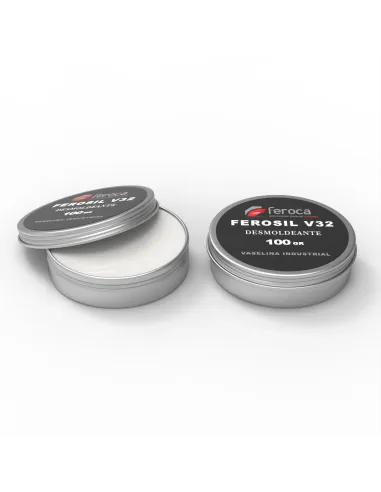
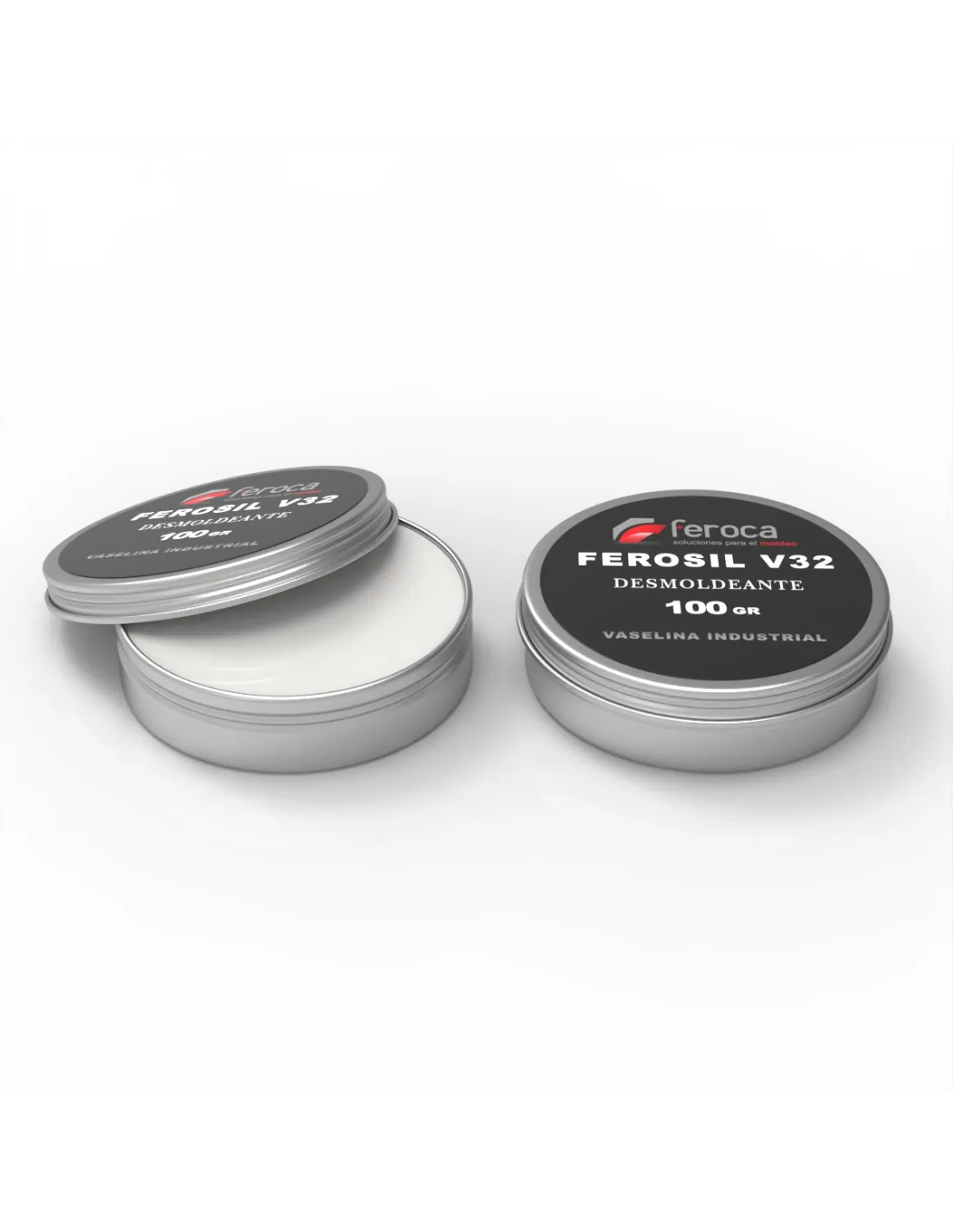
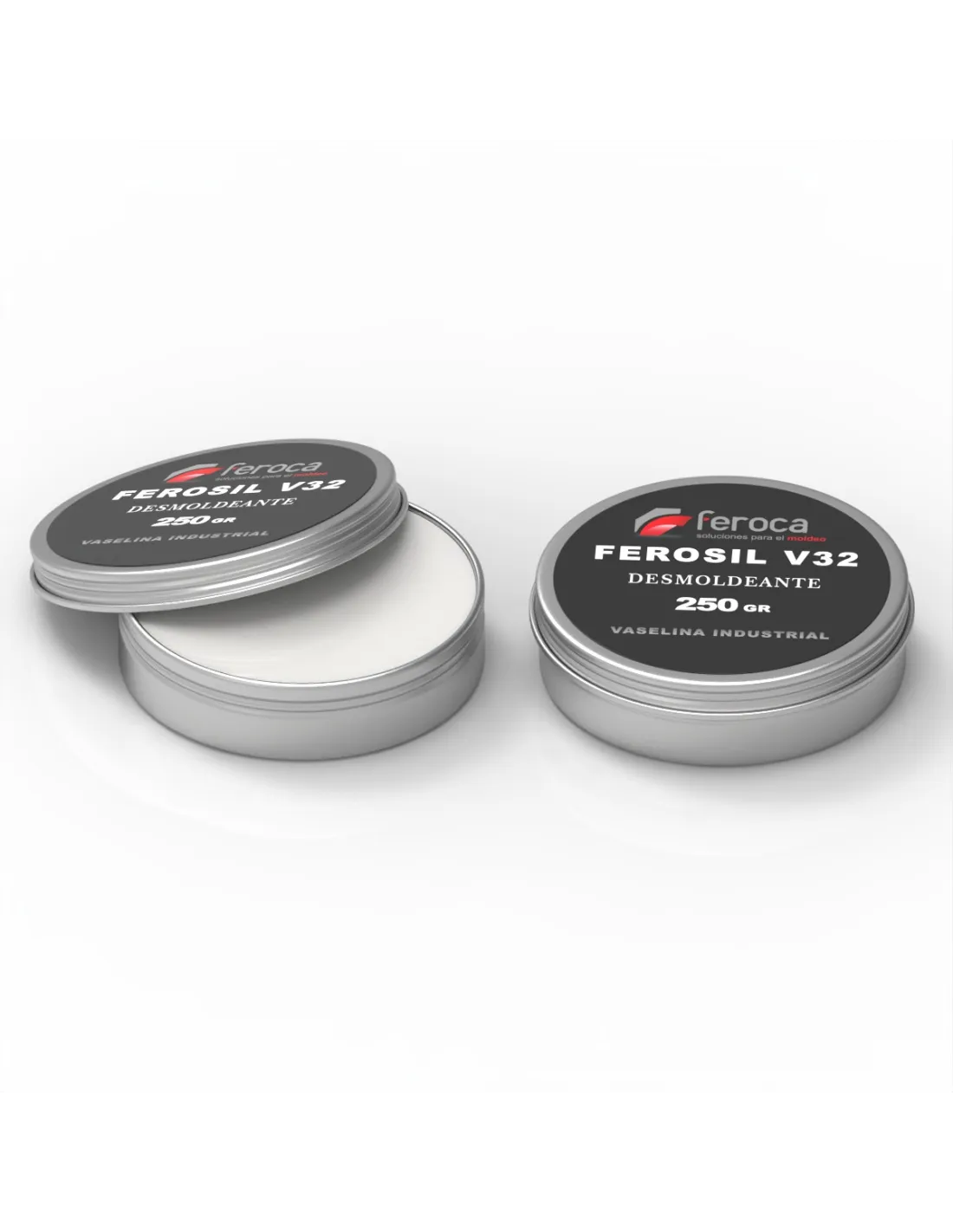
Ferosil V 32 is a vaseline-based paste release agent specifically designed for silicone work. Its main function is to act as a barrier between two layers of silicone —preventing them from bonding during the manufacture of multi-part moulds— and as a pore sealer on porous originals before pouring silicone. A basic, essential product in any professional moulding workshop.
Technical specifications
| Property |
Detail |
| Type |
Vaseline paste release agent |
| Format |
Paste |
| Application |
Manual (brush, sponge or finger) |
| Compatibility |
Condensation (tin) and addition (platinum) silicones |
| Main use |
Separation between silicone layers and sealing of porous surfaces |
What it is used for
Ferosil V 32 solves two of the most common problems in silicone mould making: preventing one layer of silicone from sticking to another, and preparing porous surfaces so that silicone does not penetrate or adhere to the original. It is the go-to release agent when working with bi-material or multi-part moulds.
- Separation between two silicone layers in two-part or multi-part moulds
- Pore sealing on originals made from plaster, gypsum, wood, ceramic or dried clay
- Release of delicate originals that could become trapped in the silicone
- Protection of surfaces where silicone adhesion is not desired
- Preparation of polystyrene or cardboard mould boxes before pouring silicone
- Use as a barrier in mother moulds to reproduce silicone counter-moulds
How to use it
- Clean and thoroughly dry the surface to be treated before applying the release agent.
- Take a small amount of paste with a soft brush, sponge or fingertip.
- Spread a thin, even layer over the entire surface to be released or sealed.
- Make sure to cover all contact areas without leaving paste build-up in corners or details, as excess can fill in surface textures on the original.
- Allow a couple of minutes for the vaseline to settle onto the surface.
- If the surface is very porous (plaster, wood, ceramic), apply a second coat and allow it to absorb well before pouring the silicone.
- Pour or apply the silicone —for example, Silastic 3481 or EASYL 3520— onto the treated surface following the manufacturer's instructions.
- Once the silicone has cured, demould as normal. If any vaseline residue remains in the mould, clean it off with a cloth or soapy water before making the first castings.
Tips for use
Apply thin coats, not thick ones
Vaseline is effective even in very thin layers. Applying too much is the most common mistake: excess accumulates in detailed areas and can fill in fine textures on the original, resulting in a less defined mould. Less is more: spread the paste carefully and remove any surplus with a clean brush if needed.
Essential in silicone-on-silicone moulds
When making a two-part or multi-part silicone mould, the second half of silicone can bond to the first if no release agent is applied between them. Ferosil V 32 acts as an effective barrier at that joint. Apply it over the first cured layer before preparing and pouring the second. Be sure to clearly define the parting line so as not to contaminate the area where the silicone is meant to bond to the mother mould.
Use alongside other release agents depending on the substrate
For moulds where the casting material is a polyurethane resin, you may need a more specific release agent such as Desmoldeante 34D, designed for other substrates. Combining Ferosil V 32 (to separate silicones from each other) with the appropriate release agent for the final material is the recommended practice in production workshops.
Frequently asked questions
Can I use regular vaseline instead of this release agent?
Technically vaseline has a similar composition, but Ferosil V 32 is formulated with a specific consistency and purity for workshop use. Pharmacy vaseline may contain additives or have a texture that makes it difficult to apply in a uniform thin coat. For consistent, reliable results in production, Ferosil V 32 is the better choice.
Is it compatible with platinum (addition) silicones?
Yes, Ferosil V 32 is compatible with addition (platinum) silicones. It contains no sulphur or components that could inhibit the cure of this type of silicone. Always apply in a thin coat and allow it to settle before pouring the silicone.
Does the release agent affect the definition of mould details?
Only if applied in excess. A thin, well-spread coat does not alter definition. Detail problems arise when the paste accumulates in relief areas, corners or fine textures. Work carefully and use a small brush for areas with the most detail.
Does the silicone mould need to be cleaned after demoulding if this product has been used?
It is advisable. Vaseline residue inside the mould can transfer to the first cast pieces and affect the surface finish. Clean the mould with a soft cloth or warm soapy water before the first production casting.
Can it be used on clay or plasticine originals?
Yes, but with caution. On dry or fired clay originals, Ferosil V 32 works well as a pore sealer. On plasticine, the vaseline can slightly soften the surface if left in contact for too long. Apply just before pouring the silicone and do not leave it to act longer than necessary.
How many coats should be applied on very porous surfaces?
On very porous materials such as plaster or untreated wood, two coats are recommended. Allow the first to penetrate the pores thoroughly before applying the second. The aim is for the surface to be sealed with a continuous vaseline film that prevents the silicone from adhering.
Can this release agent be used to separate silicone from a polyurethane resin?
Ferosil V 32 is optimised for separation between silicone layers. For separating silicone from resins such as Feropur PR55+E55, it may be sufficient in many cases, but for demanding production runs or with more adhesive materials it is recommended to complement it with Desmoldeante 34D.
Does the product need to be heated before application?
No. Ferosil V 32 has a paste consistency that allows it to be applied directly at room temperature. In very cold environments it may thicken slightly; in that case, simply work a small amount between your fingers to restore its application texture.
How much product do I need?Calculate the exact amount before buying and avoid wasting material.
Go to the calculator →