Shopping Cart

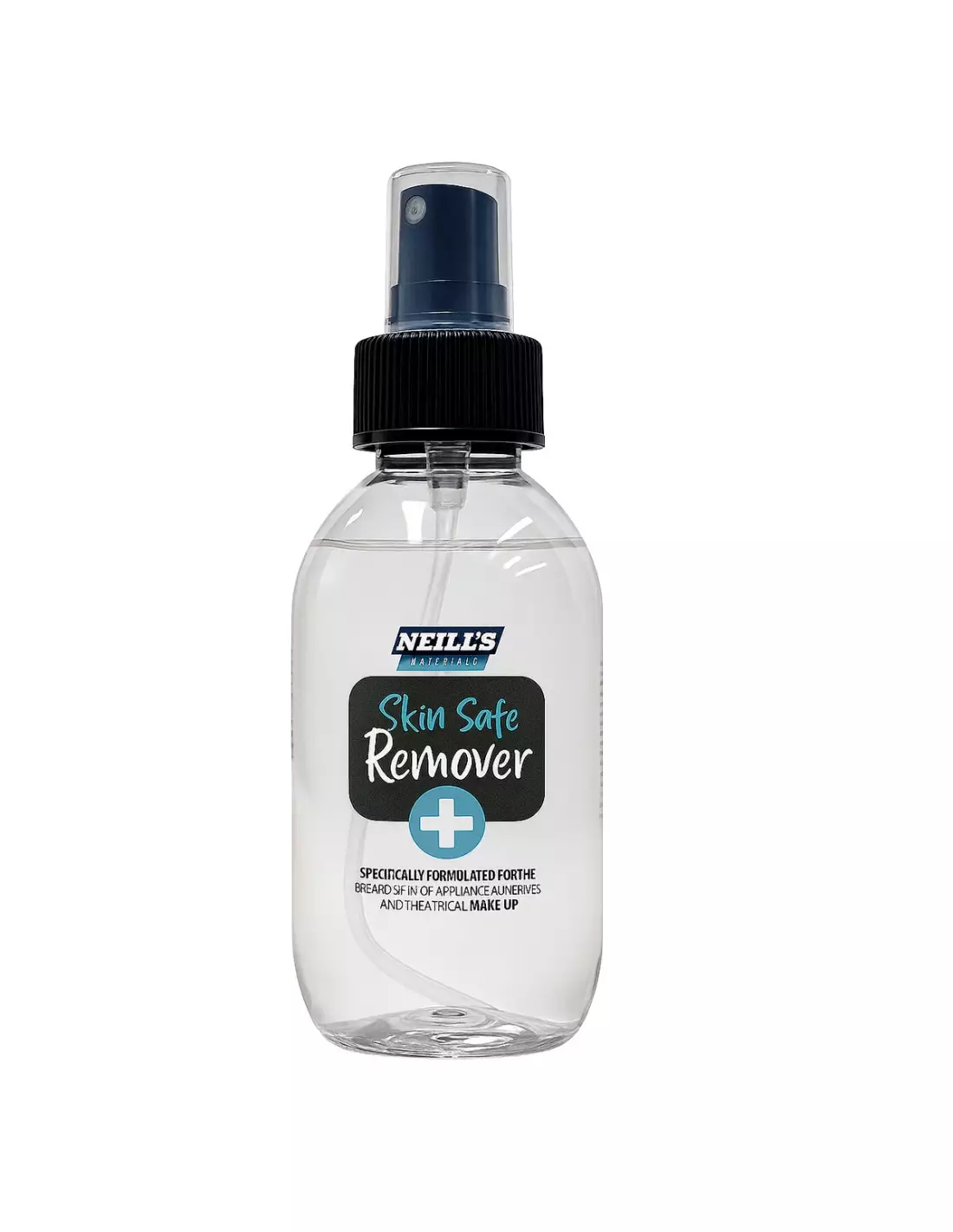
Neill's Remover Plus -Makeup Remover Cleanser-
590403000
€18.00
21,78 € Tax incl.
21,78 € Tax incl.
This product cannot be shipped by air. To the Balearic Islands it is sent by sea freight. For deliveries to the Canary Islands, please contact us before ordering.
Professional makeup remover for prosthetics, adhesives and PAX makeup. Gentle formula on skin. Available in 500 ml and 250 ml spray.
Neill's Remover Plus is the professional makeup remover formulated by special effects makeup artist Neill Gorton to effectively remove silicone prosthetics, adhesives, transfers and PAX makeup from skin without causing irritation. More powerful than conventional removers, it has become a standard on film, television and theatre productions. Applied with a cotton swab, gauze or brush, it is available in a 500 ml bottle and a 250 ml spray for added convenience on set.
Technical specifications
| Feature | Detail |
|---|---|
| Product type | Professional cleaner / makeup remover |
| Main use | Removal of prosthetics, adhesives, transfers and PAX makeup |
| Skin compatibility | Does not damage skin; gentle formula |
| Application method | Cotton swab, gauze or brush |
| Available formats | 500 ml (bottle) / 250 ml (spray) |
| Formula origin | Developed by Neill Gorton (Gorton Studio) |
What it is used for
Neill's Remover Plus is designed for the special effects makeup artist who needs to remove materials bonded to skin quickly, cleanly and without irritating the actor or supporting cast. Its formula penetrates the adhesive-skin interface to release the material without pulling sharply:
- Removal of silicone, foam latex or gelatin prosthetics bonded with adhesive
- Dissolving prosthetic and transfer adhesives
- Removal of silicone transfers from skin
- Cleaning PAX makeup (acrylic + silicone) and effect paints
- Removal of medical and FX-grade adhesive residues from sensitive skin
- Use on long shooting days where prosthetics are changed frequently
How to use it
- Soak a cotton swab, gauze or brush with Neill's Remover Plus.
- Apply the product to the edge of the prosthetic or to the area with adhesive, allowing it to work for a few seconds to penetrate.
- Gently massage using circular movements so the remover works beneath the prosthetic and loosens the adhesive.
- Carefully lift the edge of the prosthetic and continue applying more product as you go, without forcing it.
- Once the prosthetic has been removed, apply a small additional amount to any adhesive residue remaining on the skin.
- Remove the residue with a clean piece of gauze.
- Thoroughly clean the area with warm water and mild soap or a dedicated cleanser to leave the skin ready for the next application.
Usage tips
Always work from the edges inward
Trying to remove a prosthetic by pulling from a central point can damage both the piece and the actor's skin. Start at the perimeter, gradually introduce the remover and lift the prosthetic millimetre by millimetre. This extends the working life of the prosthetic and avoids discomfort.
Match the format to the job
The 250 ml spray format is very practical for shoots where you need speed and free hands: simply spray directly onto the edge of the prosthetic. The 500 ml bottle is more economical for workshops with a high volume of work or for refilling your own spray bottles. If you work with Isopropyl Myristate as a base makeup remover, Neill's Remover Plus can be used as a final step to clean the most stubborn adhesive residues.
Storage and basic precautions
Store the product in a cool place away from heat sources. Avoid prolonged contact with eyes and mucous membranes; if this occurs, rinse with plenty of water. Although the formula is designed to be gentle on skin, always perform a patch test on a small area if the actor has particularly sensitive skin or known allergies to cosmetics or solvents.
Frequently asked questions
Can this type of makeup remover be used on sensitive skin?
Neill's Remover Plus is formulated to be gentle on skin, but for highly reactive skin or those with a history of allergies, it is recommended to perform a patch test on a discreet area before full use. On professional sets it is standard practice to test any new product on the inside of the actor's forearm 24 hours in advance.
Does it work to remove all types of prosthetic adhesives?
Yes, Neill's Remover Plus is compatible with the most common adhesives used in special effects: acrylic, rubber and FX-grade medical adhesives. For specific silicone adhesives it may be more effective to complement it with Telesis Silicone Remover, designed specifically for that family of adhesives.
Does it damage silicone prosthetics when applied?
Under normal conditions of use, Neill's Remover Plus does not deteriorate silicone prosthetics. Always apply it at the interface between skin and prosthetic, not directly onto the painted face of the piece, to preserve the paintwork and the integrity of the material.
How much product do I need to remove a full prosthetic?
It depends on the size of the piece and the type of adhesive. For a full facial prosthetic, between 3 and 8 ml is usually sufficient. The key is patience: it is better to apply small amounts in several passes than to soak the area all at once.
Can it be used to clean PAX makeup as well as prosthetics?
Yes. PAX makeup (a mixture of acrylic paint and silicone oil) can be difficult to remove with conventional cleansers. Neill's Remover Plus effectively dissolves this type of makeup from skin. To clean brushes and tools used with PAX, use a suitable solvent for implements.
What is the difference between the spray format and the standard bottle?
The contents and formula are identical. The 250 ml spray allows direct and controlled application on set, while the 500 ml bottle is more economical per millilitre and convenient for the workshop. You can use the large bottle to refill a smaller spray bottle.
Is this remover better than Isopropyl Myristate for removing prosthetics?
They are complementary products. Isopropyl Myristate is a very gentle naturally derived ester, ideal for removing makeup and cleaning light residues. Neill's Remover Plus is more powerful for stronger adhesives and PAX makeup. Many workshops use both: the Myristate for day-to-day use and Remover Plus for more demanding jobs.
Is any special skin preparation needed before removing the prosthetic?
No prior preparation is necessary. Apply Neill's Remover Plus directly to the bonded area. If the prosthetic has been worn for a long time or the adhesive is very dry, it can help to apply a gentle burst of heat with a hairdryer on a low setting to slightly soften the adhesive before applying the remover.
No reviews
Tap to zoom