Shopping Cart


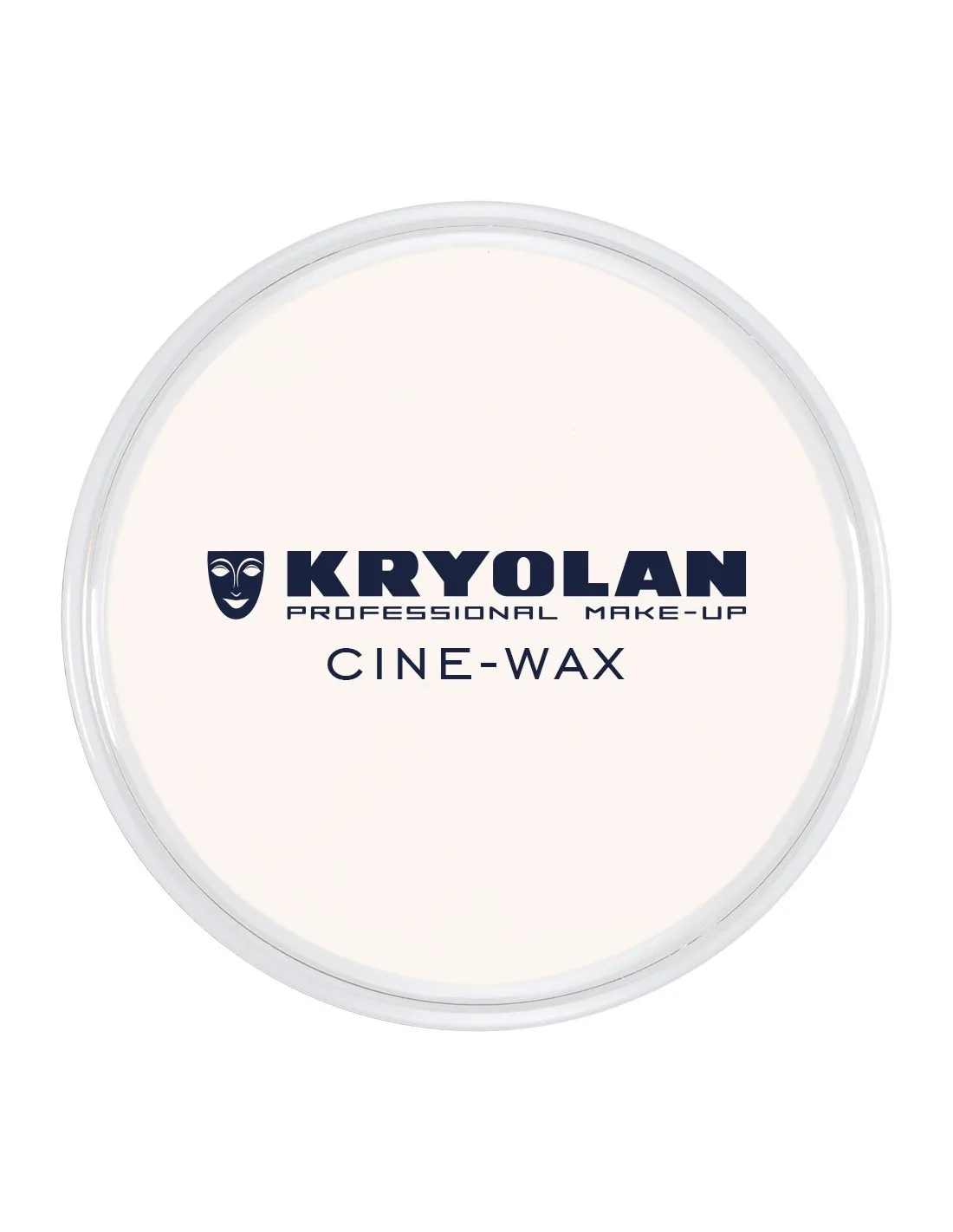
Cine-Wax -Artificial meat
272101001
€10.50
12,71 € Tax incl.
12,71 € Tax incl.
Professional wax for 3D skin effects. 50% organic composition, invisible transitions and self-adhesive. Ideal for FX make-up.
Cine-Wax is a professional wax formulated to create small three-dimensional effects directly on the skin: wounds, scars, burns, deformations and all kinds of lightweight prosthetic effects. Its composition based on natural and synthetic waxes —with 50% natural organic substances— gives it a soft, malleable texture that blends almost invisibly with the model's skin, with no additional adhesive needed.
Technical specifications
| Property | Value |
|---|---|
| Composition | Natural and synthetic waxes (50% natural organic substances) |
| Appearance | Semi-transparent, flesh colour |
| Application | Directly on skin, with spatula |
| Finish | Matte, natural, invisible transitions |
| Adhesive required | No (self-adhesive) |
| Removal | Spatula or gentle mechanical removal |
| Standard | Professional film and television use |
What it is used for
Cine-Wax is designed for special effects make-up artists who need fast results that are skin-safe and look completely natural. Its malleability allows both subtle effects and more complex recreations within the format of lightweight prosthetics applied on set or during filming.
- Simulation of open wounds, cuts and lacerations
- Creation of scars, burns and blisters
- Modelling of warts, bumps and skin deformations
- Broken nose or modified ear effects
- Rapid prototyping of 3D effects before fabricating definitive prosthetics
- Audiovisual production: film, television, advertising, music videos
- Training and practice in professional make-up schools
- Theatre and performing arts where high durability is not required
How to use it
- Clean and dry the area of skin where you are going to apply the effect. The skin must be free of grease, creams or sweat.
- Take the necessary amount of Cine-Wax with a spatula or with fingers lightly warmed by friction. Body heat softens the material and makes modelling easier.
- Place the wax on the desired area and begin to model with a spatula or fingertip, shaping the chosen effect (wound, bump, scar, etc.).
- Blend the edges gently until the transition between the wax and the skin is imperceptible. The semi-transparency of the material helps integrate the effect.
- Apply the usual make-up over the wax: foundations, shadows, setting powders and pigments to match the skin tone and add detail to the effect.
- To remove the effect when finished, gently lift the edges with a spatula and remove the wax mechanically. No harsh solvents are required.
Tips for use
Working temperature
Cine-Wax is sensitive to heat. In warm environments or under set lighting it may soften more than desired. Work in a cool environment whenever possible and, if you need to set the effect before filming, give it a few seconds of cold (avoid freezing sprays near the model). In hot weather, store the product in a cool place before use so it has the optimum consistency when you take it out.
Integration with make-up
To achieve a completely invisible finish, blend the outer edge of the wax with a fingertip very lightly moistened with water or alcohol. Then seal the surface with a make-up base and finish with Fleet Street DirtWorks setting powders to eliminate shine and add realistic texture. If the effect will be very exposed or under intense lights, consider using Skin Imitator to reinforce adhesion in high-movement areas.
Storage and preservation
Store Cine-Wax in a cool, dry place away from direct sunlight. If the product has softened excessively due to temperature, let it rest in a cool place before use. Close the container tightly after each use to prevent it from absorbing impurities. When properly stored, its shelf life is long.
Frequently asked questions
Is it safe to apply this type of wax directly on the skin?
Yes. Cine-Wax is formulated specifically for use on skin, with 50% natural organic components. It meets the standards of the film and television industry, where direct contact with the model's skin is a requirement. Even so, if the model has very sensitive skin, carry out a patch test on a small area before applying it to larger areas.
Do you need to use an adhesive to keep it in place?
No. Cine-Wax is self-adhesive on clean, dry skin, so in most applications no additional adhesive is needed. If the effect will be exposed to heavy sweating, heat or a lot of facial movement, you can reinforce the edges with Skin Imitator, a dermal-use adhesive silicone.
How is it removed at the end of a shoot or session?
Removal is very simple. Lift the edges carefully with a spatula and remove the wax mechanically. No harsh solvents are needed. If small residues remain, a gentle cleansing oil removes them without irritating the skin.
Does it hold up under set lighting?
Cine-Wax is stable under normal set conditions, but being a wax, intense and prolonged heat can soften it. For effects that must withstand long sessions under high-power lights, reinforce the edges with Skin Imitator and avoid direct exposure to the light between takes.
Can conventional make-up be applied over it?
Yes. Cine-Wax accepts conventional make-up bases, cream make-up and setting powders perfectly. It is important to apply make-up gently so as not to distort the already modelled effect. Fleet Street DirtWorks powders are especially useful for adding realistic texture and grime to the wax.
What are rooting needles used for in special effects projects?
Rooting needles are used to implant natural or synthetic hair into silicones or soft materials, which is common in facial prosthetics, reborn dolls or hyperrealism pieces that require inserted hair or fur. They are not used directly on Cine-Wax, as it is a quick-use, non-permanent material.
When is it better to use a platinum silicone instead of wax for effects?
Wax is ideal for quick, mould-free effects applied in a single session. If you need a durable, reusable prosthetic with ultra-thin blended edges or one that can withstand long shooting schedules, a soft platinum silicone such as PlatSil Gel-00 or PlatSil Gel-10 is the appropriate professional option.
What is ATTAGEL and what is it used for in FX make-up?
ATTAGEL is a thixotropic agent added to silicones and other materials to increase their viscosity and prevent them from flowing on relief surfaces or inclines. It is not used with Cine-Wax, but it is a common addition when working with platinum silicones for facial moulding.
No reviews
Tap to zoom