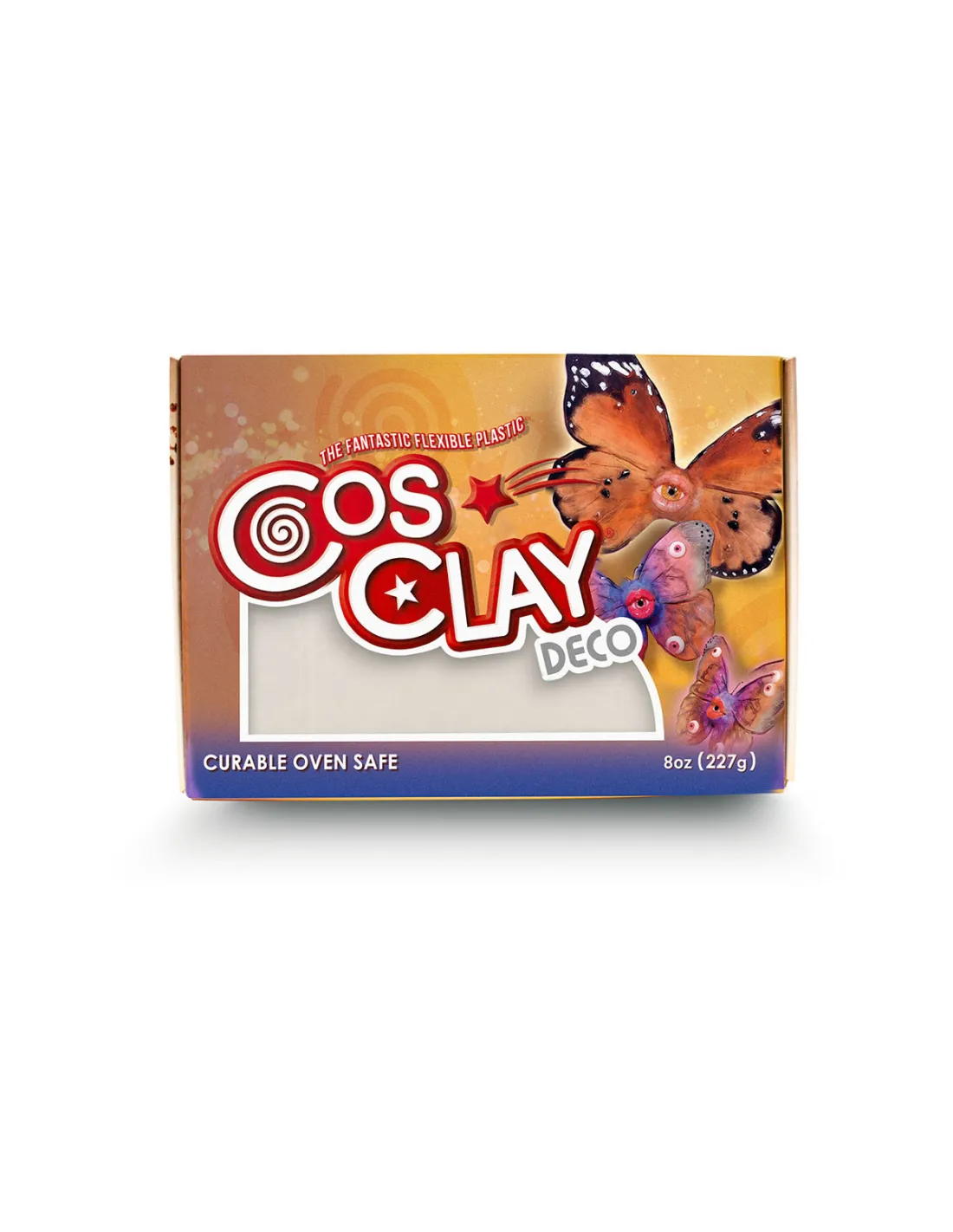
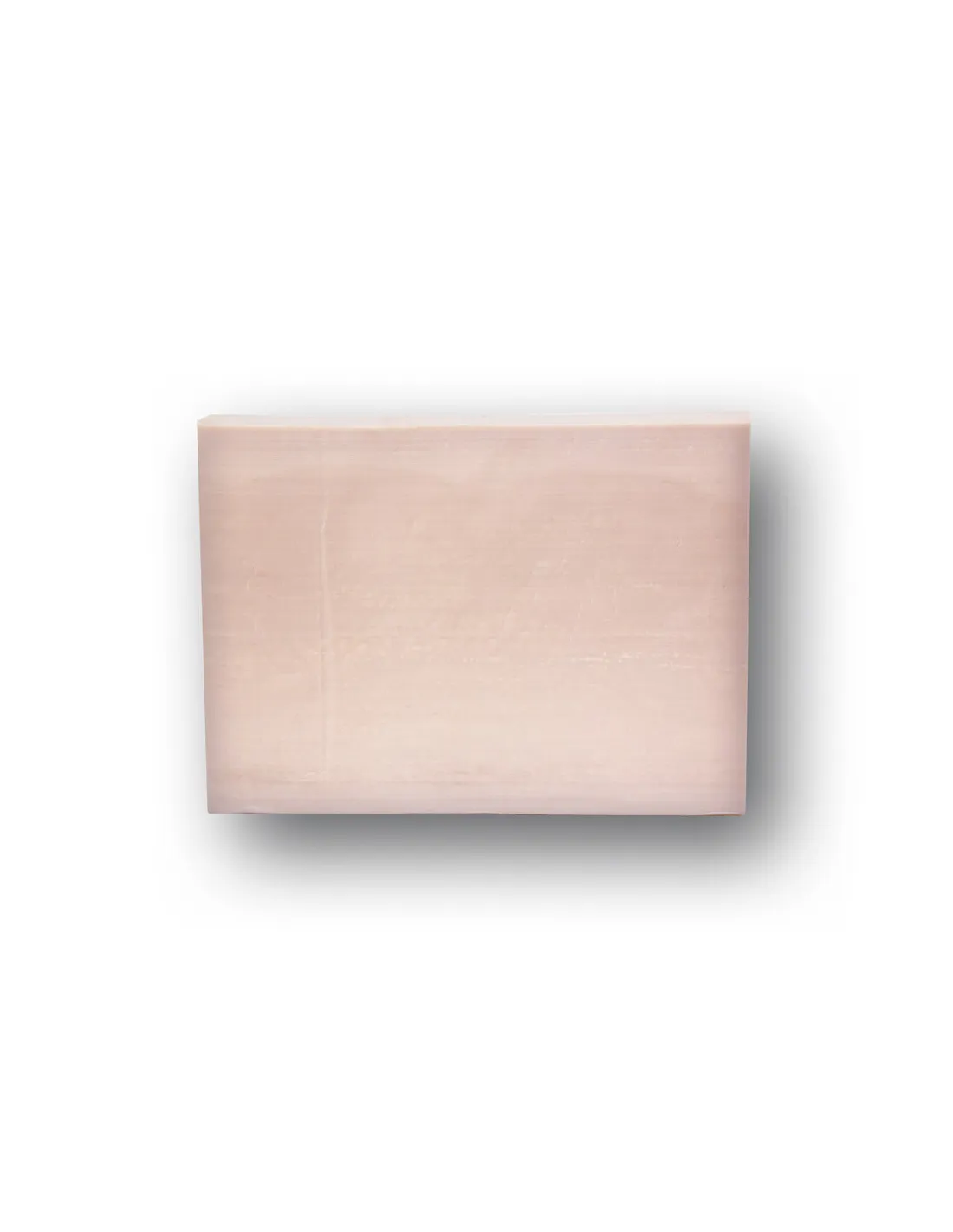
Cosclay Deco White is a hybrid plastic/rubber polymer clay that, once oven-cured at 135 °C, delivers real and lasting flexibility that conventional polymer clays simply cannot match. Its decorative white tone makes it a perfect base for painting with acrylics, tinting with pigments or blending colours, with no shrinkage or expansion during curing.
Technical specifications
| Parameter |
Value |
| Material type |
Flexible polymer clay (plastic/rubber hybrid) |
| Colour |
Decorative white (Deco White) |
| Presentation |
227 g block |
| Cure temperature |
135 °C in a conventional oven |
| Shrinkage / expansion |
No shrinkage or expansion (100% solid) |
| Flexibility after curing |
High — resists bending without breaking |
| Warping resistance |
Yes — does not warp or crack during baking |
| Detail capability |
High — reproduces fine textures and details |
| Paintability |
Excellent base for acrylics and other paints |
What it is used for
Cosclay Deco White is designed for sculptors, animators and artists who need cured pieces capable of flexing without breaking. Its white colour makes it easy to paint over or to blend with pigments directly in the raw clay. The most common applications are:
- Characters and puppets for stop motion that withstand repeated handling without crumbling
- Articulated figures and OOAK (One of a Kind) dolls with moving parts or flex zones
- Miniatures and dioramas where fine detail is required combined with impact resistance
- Lightweight FX prosthetics and appliances that must bend without deteriorating
- Decorative sculptures with thin parts that would break with conventional rigid clays
- Prototypes and models that need to withstand frequent handling during the review process
- Modelling base for pieces that will be painted, pigmented or patinated with acrylics
How to use it
- Condition the clay: work the block with your hands for a few minutes to soften it and improve its workability. In cold environments you can warm it slightly with your palms or in a warm spot.
- Sculpt your piece: sculpt with modelling tools or your fingers. Cosclay Deco White reproduces textures and fine details with ease; you can use colour shapers for repeated elements or uniform flat surfaces.
- Prepare the oven: preheat a domestic oven to 135 °C. Use an oven thermometer if possible; most domestic ovens have temperature variations that can affect curing.
- Bake the piece: place the sculpture on baking paper or a ceramic surface. Bake approximately 15 minutes per 6 mm of thickness. Thicker pieces require more time; do not raise the temperature to compensate.
- Cool before handling: remove the piece from the oven and allow it to cool to room temperature. Avoid sudden cooling with cold water.
- Paint and finish: once cool, the surface accepts acrylic paints directly. For more demanding finishes, apply a primer coat before detailed painting.
Tips and advice
Oven temperature control
Temperature is the most critical factor when curing Cosclay. An oven that is too hot can darken the surface or produce fumes; one that is too cool will leave the piece undercured, with brittle areas. Invest in a standalone oven thermometer and check the actual temperature before placing your pieces inside. If you are working with pieces of different thicknesses in a single session, calculate the time based on the thickest section.
Mixing with pigments and other clays
The white colour of Cosclay Deco White makes it the ideal base for tinting with paste or powder pigments directly in the raw clay. Mix thoroughly until you achieve a uniform colour before starting to sculpt. You can also combine it with other flexible polymer clays in the Cosclay range, such as Cosclay Sculpt Medium Firm Gray, to fine-tune the overall firmness according to the requirements of each part of the piece.
Storage and preservation
Store unused clay wrapped in cling film or in an airtight bag, away from heat sources and direct light. Refrigeration is not necessary. If it has hardened slightly due to prolonged storage, a small amount of polymer clay softener or mineral oil can restore its plasticity. Avoid mixing leftover Cosclay Deco White with clays that contain sulphur if you plan to use it later as a master for platinum silicone moulds, as sulphur inhibits the curing of those silicones.
Frequently asked questions
What is the difference between a flexible polymer clay and a conventional one?
Conventional polymer clays cure into a rigid mass that can break under impact or bending. Cosclay Deco White is a plastic/rubber hybrid: once cured it retains real flexibility, so it withstands bending, pressure and repeated handling without crumbling. This is the key difference for applications such as stop motion or articulated figures.
Can it be baked in a regular domestic oven?
Yes. Cosclay Deco White cures in a conventional oven at 135 °C. No special equipment is needed, although it is advisable to use a standalone oven thermometer to verify the actual temperature, as domestic ovens typically have deviations of ±10–20 °C that can affect the result.
Does the cured piece hold acrylic paint without a primer?
In most cases yes. The cured surface of Cosclay Deco White accepts acrylic paints directly thanks to its slightly porous texture. For very fine finishes or high-gloss varnishes, a thin coat of acrylic primer improves adhesion and evens out the result.
What happens if I bake the piece for too long or at a higher temperature?
Excess temperature can darken or burn the surface, especially in thin areas, and produce fumes. Do not raise the temperature to shorten the time: it is better to bake longer at the correct temperature (135 °C). If a thick piece needs more time, cover it with aluminium foil to protect the thinner areas.
Can it be used as a master for silicone moulds?
Yes, a cured Cosclay Deco White piece can be used as a master for moulds. If you are using platinum silicone (addition cure), make sure the piece contains no residues of inhibiting materials (sulphur, uncured epoxy, latex). For tin silicones (condensation cure) there are no inhibition restrictions.
Can it be combined with other polymer clays to adjust firmness?
Yes. You can blend Cosclay Deco White with other clays in the Cosclay range to adjust firmness or colour. It is also compatible with other conventional polymer clays, although the final flexibility of the result will depend on the proportion of each material. For comparison, Super Sculpey Firm Gray or Super Sculpey Beige are standard workshop references for rigid mastering.
How much do I need to sculpt a full medium-sized figure?
It depends on the size and thickness of the piece. For a doll head of around 5–6 cm over an internal armature, 227 g is usually sufficient. For full-body figures or bulkier pieces without an armature, it is advisable to have two or more blocks. Using an internal wire armature considerably reduces the amount of clay needed.
Does it produce dangerous fumes during baking?
At the correct cure temperature (135 °C) Cosclay Deco White does not produce dangerous fumes. However, as with any polymer clay, it is advisable to bake in a well-ventilated space and not to exceed the indicated temperature. If the material burns (due to excessive temperature) it can release irritating vapours: in that case switch off the oven, ventilate the area and discard the piece.