Shopping Cart


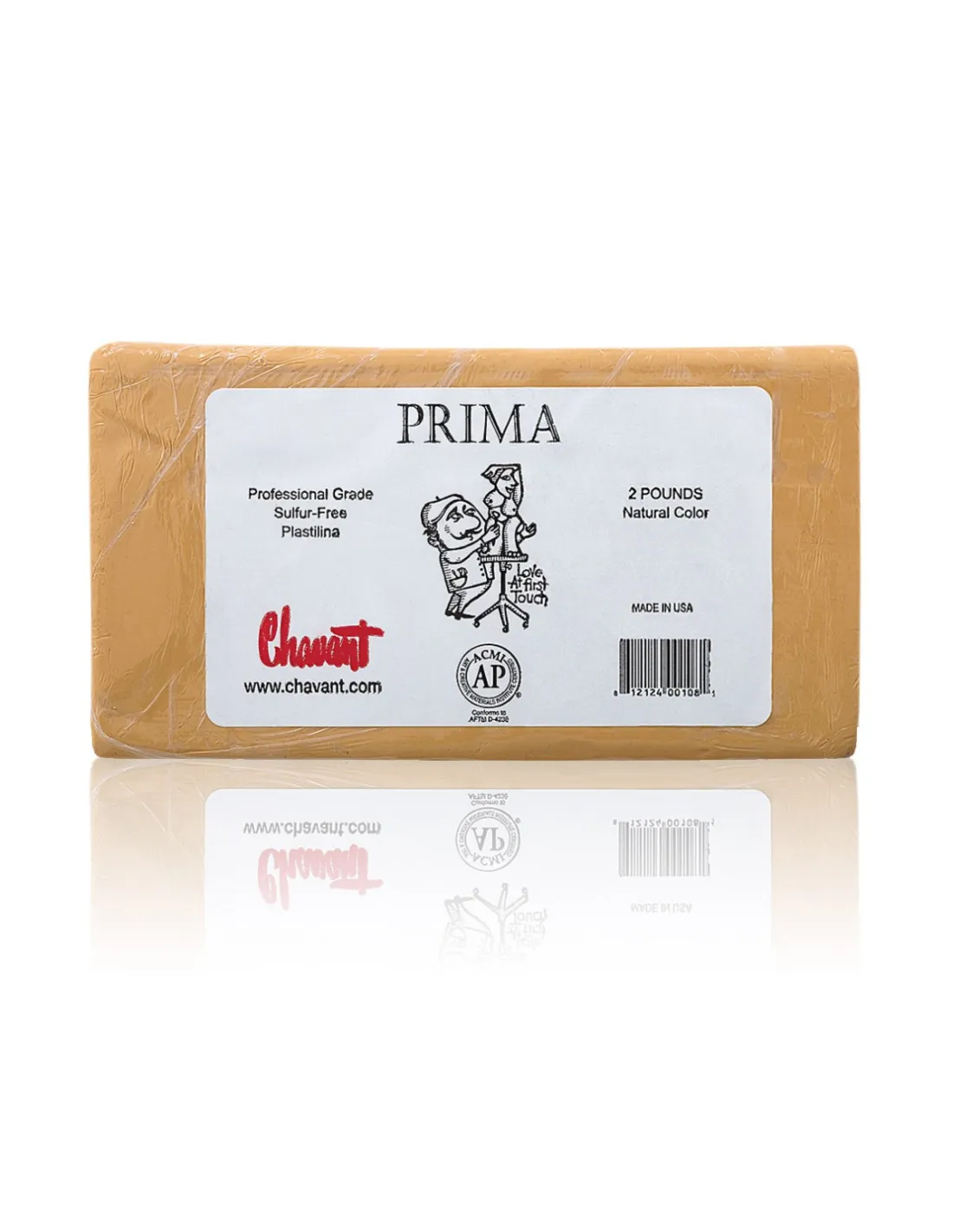
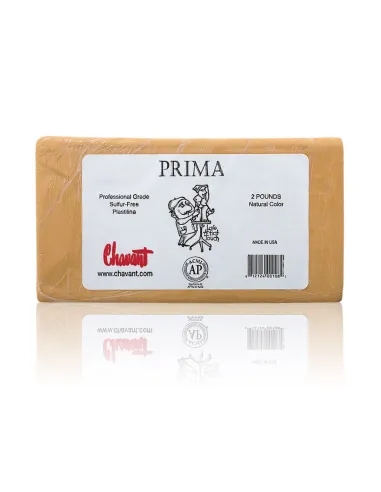
Prima Chavant Tan -Professional Plasticine for Modeling
204300910
€13.00
15,73 € Tax incl.
15,73 € Tax incl.
Professional Chavant Prima Tan sulphur-free oil-based clay. Does not harden in air. 906 g block. Ideal for sculpting originals for moulding.
Chavant Prima is a premium oil-based professional sculpting clay: it never hardens or changes with air exposure, contains no sulphur and has a neutral odour. Its soft texture and medium tack make it ideal for sculptors seeking a stable, long-lasting material that is compatible with platinum silicone moulds.
Technical specifications
| Presentation | 906 g block |
|---|---|
| Colour | Natural tan (Tan) |
| Base | Oil (oil-based) |
| Sulphur content | Sulphur-free |
| Odour | Neutral, non-aggressive |
| Air hardening | Does not harden |
| Working temperature | Room temperature |
| Softening temperature | ~49 °C |
| Tack | Medium |
What it is used for
Chavant Prima Tan is designed for sculptors, model makers and prototyping professionals who need a long-lasting, recyclable material that is compatible with moulding techniques. Its sulphur-free formulation makes it especially suitable when the original is to be moulded with addition-cure (platinum) silicones, which are inhibited by the presence of sulphur.
- Sculpting originals for silicone or latex moulds
- Character, bust and figure sculpture for special effects
- Prototyping of industrial and design parts
- Production of architectural and product scale models
- Restoration and sculptural reproduction work
- Sculpting large pieces with high surface detail
How to use it
- Work Chavant Prima at room temperature. The heat from your hands will gradually soften the material during initial kneading.
- If you need a softer consistency for working large volumes, warm the block to approximately 49 °C (low-temperature oven, heat lamp or warm spatula). Do not exceed this temperature to avoid degrading the material.
- Apply the material in layers, building up the overall volume before working on fine detail.
- To smooth and refine the surface, use small amounts of one of the following lubricants: water, citrus-based solvent, lighter fluid, turpentine or white spirit. Apply with a brush or fingers and work the surface with the desired tool.
- Once the original is finished, you can mould it directly. Being sulphur-free, it is compatible with other Chavant clays and with platinum silicones.
- Leftover material can be reused without restriction: it does not harden or age in air.
- When finished, wash your hands with soap and water.
Usage tips
Surface smoothing
The most effective trick for achieving a perfectly smooth surface is to work with a brush dampened in turpentine or white spirit. Stroke the brush with gentle, even movements over the area to be smoothed, applying very little solvent at a time. Excess solvent can over-soften the material and distort the detail. For very large surfaces, lighter fluid is a more economical alternative with faster evaporation.
Workshop temperature control
Chavant Prima is more sensitive to temperature than the harder grades. In warm workshops (above 25–28 °C) it may lose consistency during long sessions. If this happens, let the piece rest in a cool area or near a fan before continuing with fine detail. In cold workshops, gently warm the working surface with a heat gun held at a distance so the material is more receptive to the tool.
Compatibility with platinum silicones
Being sulphur-free, Chavant Prima Tan is one of the few clays you can use directly as an original for addition-cure (platinum) silicone moulds without risk of inhibition. However, if you have handled other sulphur-containing materials in the same workspace, clean your tools thoroughly before touching the original. A cure test on a corner of the mould before the final pour is always good practice.
Frequently asked questions
Does an oil-based clay harden over time?
No. Chavant Prima Tan does not polymerise or harden with air exposure, unlike polymer or water-based clays. You can leave the original uncovered for weeks or months and resume work in exactly the same state. This is one of its main advantages over other modelling materials.
What is the difference between the various hardnesses in this range?
Prima is the softest version in the Chavant family, designed for those who prioritise ease of sculpting and hand comfort. The Medium and Hard grades offer greater firmness, allowing finer detail capture and carving with tools without distorting the volume. As a general rule, the harder the grade, the finer the detail possible; the softer the grade, the greater the comfort for direct hand sculpting.
Can it be moulded directly without any prior surface preparation?
Yes, in most cases. Being oil-based, it acts as a natural release agent against many silicones. However, for polyurethane or plaster moulds it is advisable to apply a specific release agent to ensure a clean separation and protect the original.
Is it safe to use with platinum silicones?
Yes. Chavant Prima Tan is formulated without sulphur, which is the main inhibiting agent for addition-cure (platinum) silicones. You can use it as an original without any risk of cure inhibition, as long as there is no cross-contamination with other sulphur-containing materials in the workshop.
How much material is needed to sculpt a life-size head?
A life-size head built over an armature typically requires between 2 and 4 kg of clay, depending on layer thickness and whether you are working over a filled or solid base. The 906 g block of Chavant Prima Tan may be sufficient for smaller pieces or for adding detail over a volume already built up with another fill material.
Can the sculpted piece be painted or primed?
Chavant Prima Tan is not intended to be painted directly as a finished piece, as its oily surface can repel certain paints and primers. The usual approach is to use the sculpted original to make a mould, obtain a copy in resin or plaster, and paint the resulting copy. If you need to paint over the clay as a colour test, use diluted water-based paints or primers specifically formulated for oily surfaces.
Can leftover material be recycled?
Yes, completely. Any leftover material can be recovered, kneaded again and reused without any loss of properties. This is a significant advantage over resins or irreversible-cure materials. Store the scraps in a sealed container to prevent them from accumulating dust or workshop debris.
Which lubricants can be used to smooth the surface?
The most common ones with Chavant Prima are: water (for a very gentle effect), citrus-based solvent, butane lighter fluid, turpentine and white spirit. Each offers a different level of aggressiveness on the surface. Always start with the gentlest and test on an inconspicuous area before working the final finish.

No reviews
Tap to zoom