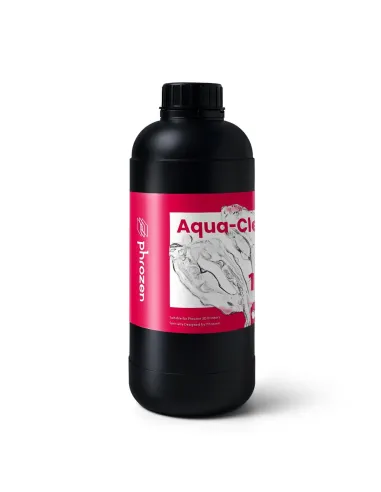
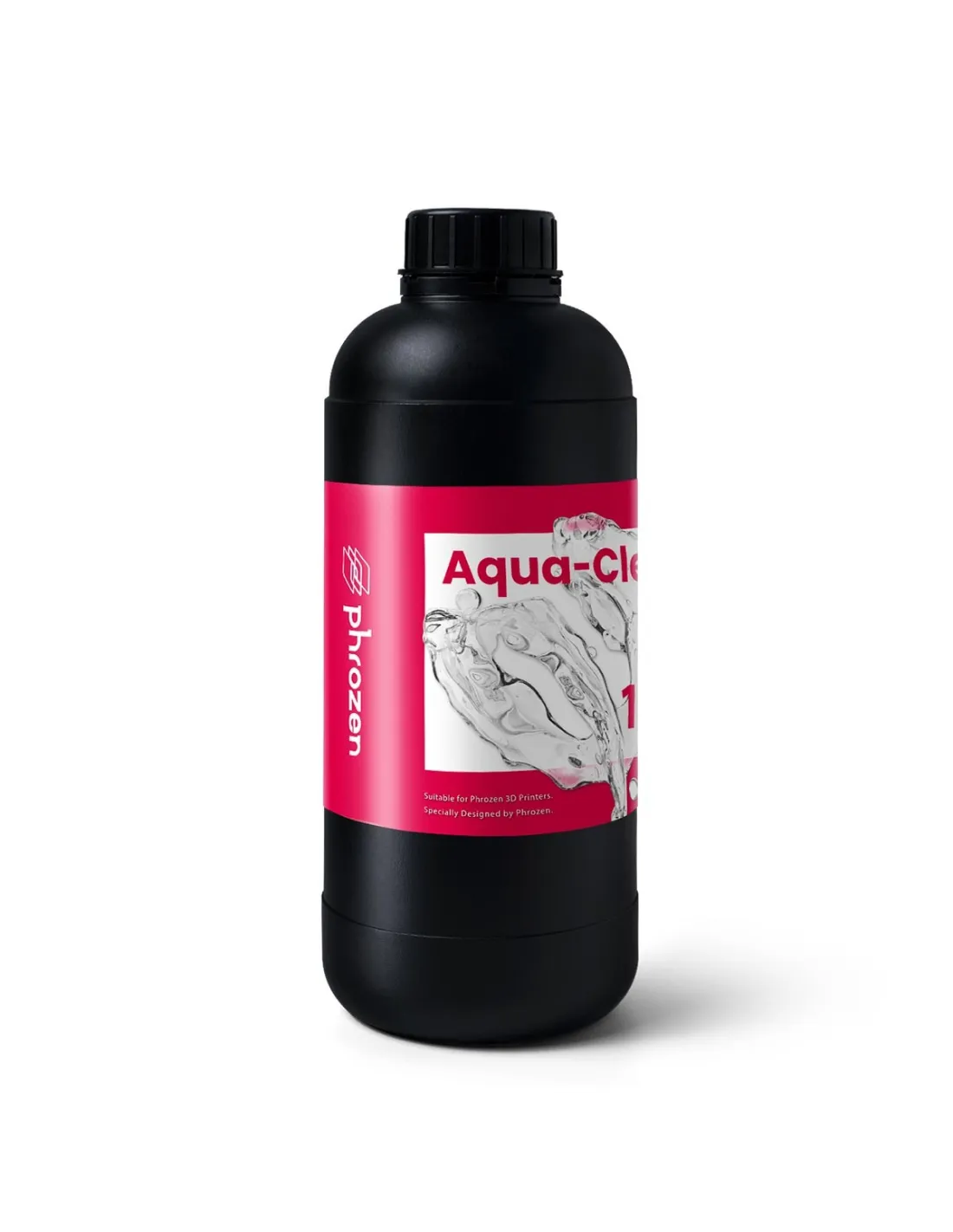
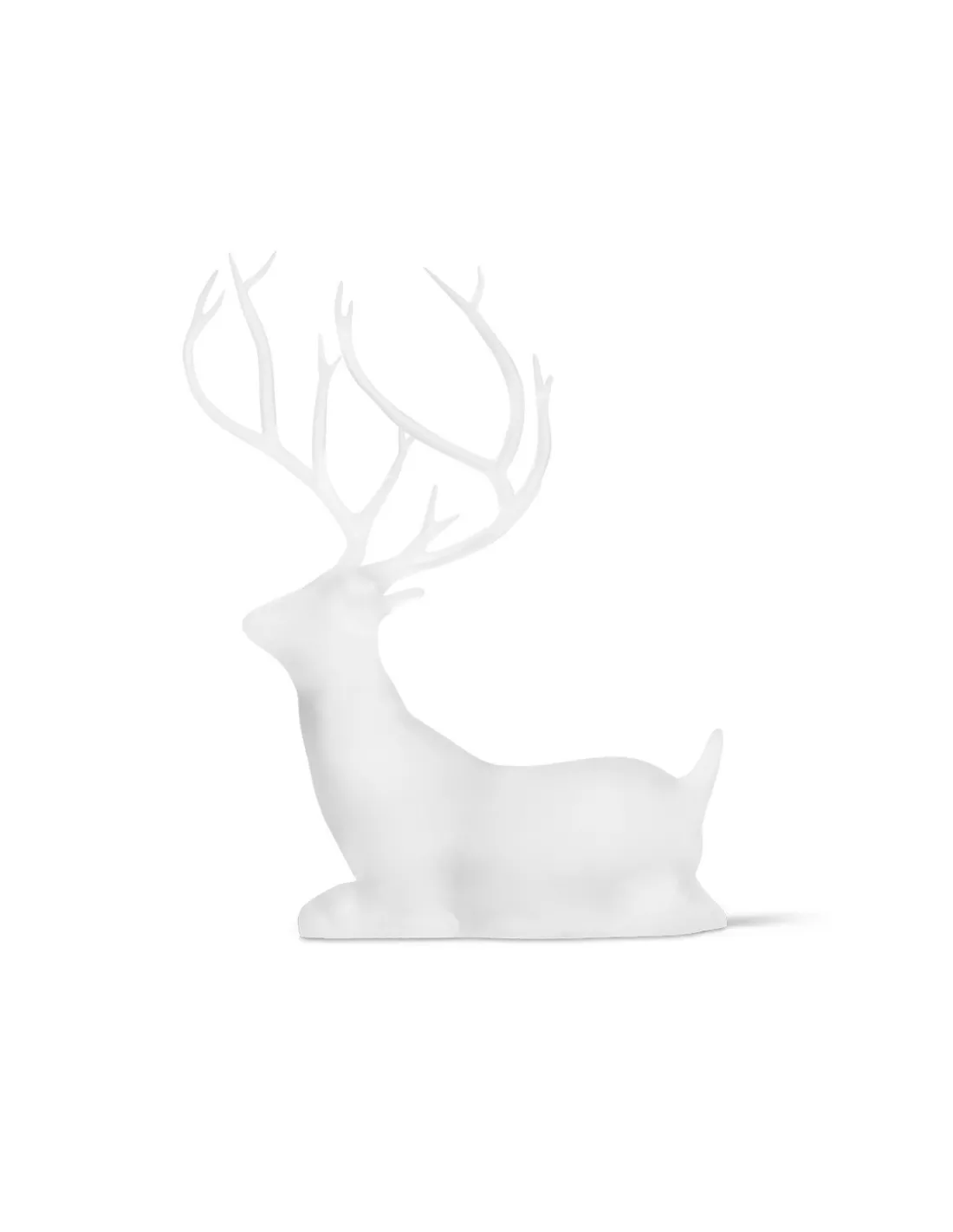
Phrozen Aqua Clear is a standard photopolymer resin designed for resin 3D printers (MSLA/LCD) that produces high-transparency models with low shrinkage and low odour. With a viscosity of 50–100 cps and a Shore hardness of 74 Shore D, it is the ideal choice when you need clear prototypes, optical parts or components that reveal their interior without sacrificing mechanical strength.
Technical specifications
Parameter
Value
Colour
Clear
Type
Standard
Format
1 kg per bottle
Density
1.1 g/cm³
Viscosity
50–100 cps
Surface hardness
74 Shore D
Tensile strength (UTS)
22 MPa
Tensile modulus
735 MPa
Elongation at break (EAB)
14 %
Flexural strength
29 MPa
Flexural modulus
701 MPa
Izod impact resistance (notched)
21 J/m
What it is used for
Aqua Clear is aimed at any application where material transparency is functional or aesthetic. Its low shrinkage makes it particularly reliable for precision parts and presentation prototypes.
Product prototypes where it is necessary to see the interior or simulate transparent materials (glass, acrylic)
Optical components and low-demand experimental lenses
Decorative pieces, jewellery or artistic elements that require transparency after post-processing
Dimensional check moulds thanks to its low shrinkage
Anatomical or medical visualisation models (not certified for clinical use)
Architectural scale models with simulated glazed elements
Lightweight industrial parts that require some flexibility (EAB 14 %)
How to use it
Shake the bottle thoroughly for at least 60 seconds before pouring the resin into your printer's vat. Component separation can affect colour and curing.
Set the exposure parameters according to your printer model and the desired layer thickness. Use Phrozen's official profiles as a starting point and adjust based on your results.
Print in a well-ventilated environment. Although Aqua Clear has low odour, uncured resin vapours are irritating; wear nitrile gloves and avoid skin contact.
Once printing is complete, remove the part with gloves and remove excess liquid resin with a silicone spatula before washing.
Wash the part with 99.9% isopropyl alcohol in two successive baths: first a rough wash (dirty) and then a finishing wash (clean). The recommended time is 1 to 3 minutes per bath depending on the size of the part.
Allow to dry completely in air or with compressed air before post-curing. Residual isopropanol interferes with UV curing.
Post-cure in a UV station following your equipment manufacturer's recommendations. Excessive post-curing can yellow the part and reduce its transparency.
To maximise transparency, sand progressively with wet-and-dry sandpaper (400 → 800 → 1500 → 2000) and polish with plastic polishing compound or coat with a high optical clarity clear varnish.
Caution — Uncured photopolymer resin
Liquid resin is irritating to skin, eyes and respiratory tract. Always work with nitrile gloves, eye protection and in a ventilated space. Do not pour uncured resin down the drain: treat it as chemical waste and cure it under UV light before disposal. Keep out of reach of children and pets.
Usage tips
How to achieve maximum transparency
The final transparency depends on both post-processing and print parameters. Avoid overexposure on bottom layers, as it causes deformations at the base that make subsequent sanding more difficult. Use layers between 0.05 and 0.1 mm to reduce layer lines visible when backlit. Mechanical polishing with fine wet-and-dry sandpaper followed by a high clarity finishing varnish is what makes the difference between a translucent result and a truly transparent one.
Storage and shelf life
Store the bottle upright in a cool, dry place away from direct sunlight and UV light sources. The ideal storage temperature is between 15 and 25 °C. Once opened, close the cap tightly after each use. The resin may separate over time: always shake before use. Do not mix remnants from different batches or resins of different formulations in the same vat without cleaning it first.
Printer compatibility and exposure parameters
Aqua Clear is optimised for MSLA/LCD printers with a 405 nm monochromatic light source. Being a transparent resin, light penetrates more easily than in opaque resins, which can cause overexposure if you copy profiles from grey or black resins. Reduce exposure times by 10 to 20% compared to a standard grey resin profile as a starting point and adjust using an exposure calibration tower.
Frequently asked questions
What type of printer do I need to use this resin?
Phrozen Aqua Clear is compatible with any MSLA or LCD resin printer that uses a 405 nm curing wavelength. It is not suitable for FDM (filament) printers. Verify that your equipment operates at 405 nm before using it.
How do I clean the printed part?
The recommended method is washing with 99.9% isopropyl alcohol in two successive baths of 1 to 3 minutes each. Always wear gloves and work in a ventilated space. Allow to dry completely before UV post-curing.
Does the part come out completely transparent straight from the printer?
Not directly. Fresh off the printer, the part has a matte surface with visible layer lines. To achieve true optical transparency, progressive sanding (from 400 to 2000 grit) and a polishing or clear varnish finish are required. The final result depends on the surface finishing applied during post-processing.
Can this resin be painted or varnished?
Yes. Once post-cured, Aqua Clear accepts acrylic paints, modelling primers and solvent-based or water-based varnishes. If you want to maintain transparency, apply only high optical clarity clear varnishes. Lightly sand the surface before painting to improve adhesion.
What is the hardness of the printed parts?
Parts reach a surface hardness of 74 Shore D after correct post-curing. It is a rigid resin with some impact absorption capacity (21 J/m Izod) and an elongation at break of 14%, making it less brittle than many standard resins on the market.
How long does the resin last unopened?
Under appropriate storage conditions (cool, dry place, no exposure to UV or sunlight, between 15 and 25 °C), the resin maintains its properties for at least 12 months from the manufacturing date. Check the expiry date printed on the bottle and always shake before use.
Can it be mixed with other transparent resins to adjust properties?
Mixing resins of different formulations without thorough prior testing is not recommended. Mixing can unpredictably alter exposure times, transparency and mechanical properties. If you need a different strength or rigidity profile, consider other resins from the Phrozen range available at Feroca.
How do I safely dispose of uncured resin waste?
Never pour uncured liquid resin down the drain or into general waste. Cure liquid residues under direct UV sunlight or with a post-curing station until they solidify completely, then dispose of them as solid waste. Isopropanol contaminated with uncured resin must also be managed as chemical waste in accordance with local regulations.
Video tutorial
How to do the printing test for Sonic Mighty 4K - Phrozen LCD 3D Printer
Cookies on this site are used to personalise content and ads to deliver social media features and to analyse traffic. We also share information about your use of the site with our social media partners for advertising, personalisation and web analytics.. More information.